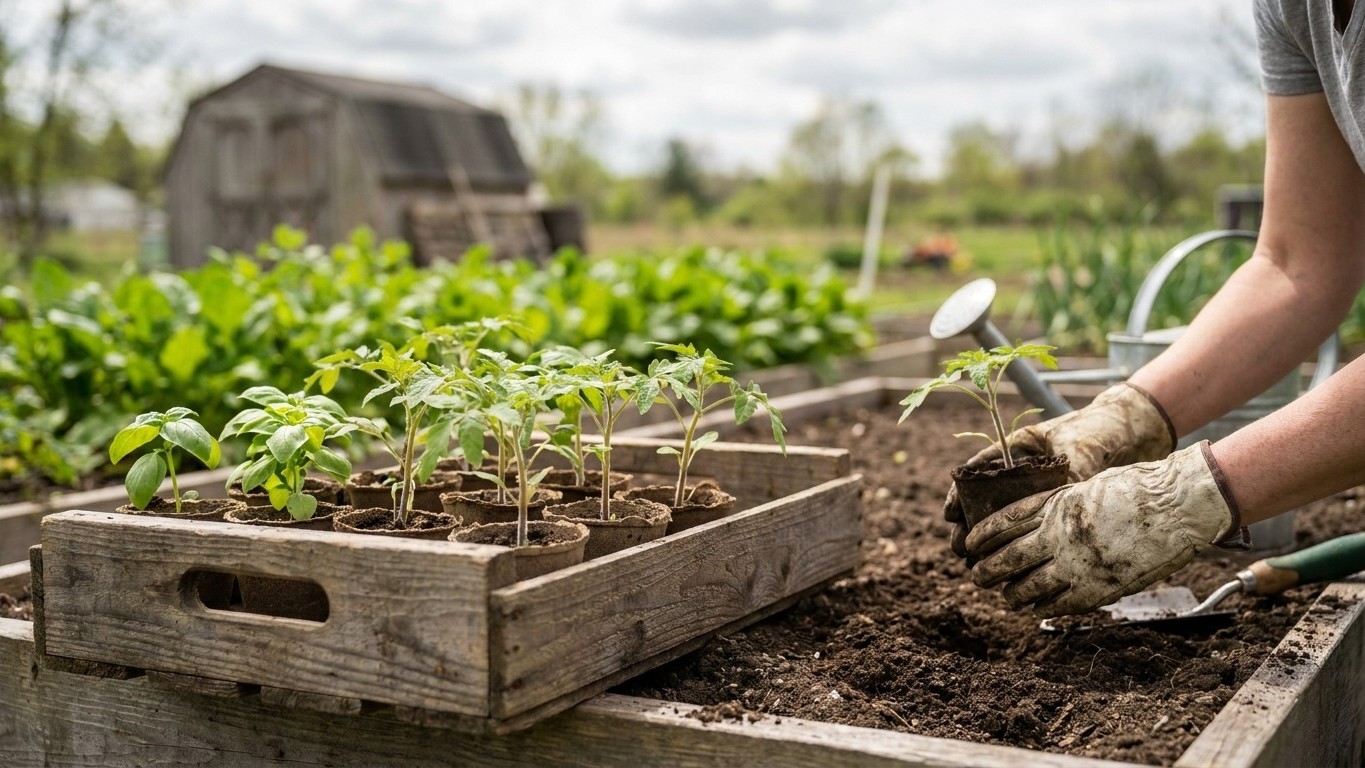

By May, New York’s growing season is in full swing for most of the state. In New York City, the last spring frost typically falls between March 23 and April 3, so gardeners there are weeks past that risk by the time May starts. Cool-season crops go in early, warm-season transplants follow once soil has warmed, and by month’s end most beds are full. Upstate gardeners should expect a later start.
What goes in the ground in May

The calendar says May, but the soil decides what actually survives. In New York City, the last frost window (March 23 to April 3) is behind you by the time this month opens, which means the risk of a killing freeze has dropped sharply for most of downstate New York. That buffer is exactly why May reads as the state’s busiest planting month rather than a gamble. Still, air temperature lies. A warm afternoon in the low 70s can sit over soil that’s still in the 50s eight inches down, and that gap is what kills transplants, not the thermometer on your porch.
Early May belongs to the crops that shrug off a cool snap: lettuce, spinach, arugula, peas, radishes, beets, carrots, and onion sets can all go directly into the ground as soon as the soil is workable. Potatoes go in early too, ideally as soon as the ground can be worked without clumping in your hand. Garlic planted the previous fall is already up and growing, needing nothing more than a weeding pass.
Mid to late May is when the gamble shifts toward the tender crops. Tomatoes, peppers, eggplant, and basil transplants should wait until soil has warmed and the risk of a late cold snap has passed, generally the back half of the month for New York City and later upstate. Beans, squash, cucumbers, and corn can be direct-sown once soil temperature is reliably above the mid-60s, which for most of downstate New York lands in the last third of May.
| Timing | What to plant | Method |
|---|---|---|
| Early May | Lettuce, spinach, peas, radishes, onion sets, potatoes | Direct sow outdoors |
| Mid-May | Beets, carrots, chard, brassica transplants | Direct sow or transplant |
| Late May | Tomatoes, peppers, eggplant, beans, squash, cucumbers, corn | Transplant or direct sow once soil is warm |
The one caution worth repeating: this timing describes New York City conditions. Move north into the Adirondacks, the Tug Hill Plateau, or higher elevations in the Southern Tier, and these same crops can lag two to four weeks behind, since the state’s hardiness range runs from 3b up near the Canadian border to 7b downstate.
What to start under cover
Seed packets tell you to count backward from your last frost date, and for New York City that means working from the March 23 to April 3 window. Peppers and eggplant, which need eight to ten weeks indoors before transplant, should already be started by now if you’re growing them from seed for a May planting. If you haven’t started them, buying transplants at a garden center is the more realistic path this late in the window.
What still makes sense to start under cover in May is the second wave: melons, winter squash, pumpkins, and okra, all of which need three to four weeks indoors before they go out, timed for a transplant in early to mid-June once nighttime soil temperatures are reliably warm. Cucumbers can go either way, direct-sown outdoors or started indoors for an earlier harvest.
The two failure modes bookend each other. Start too early and you get leggy, rootbound seedlings straining against a too-small cell, stressed before they even touch soil. Start too late and the plant never catches up to the season, especially with long-maturing crops like winter squash and pumpkins that need every week of New York’s frost-free stretch (which runs to the first fall frost, November 14 to November 27 in New York City). A quick check: if a packet says “10 weeks to transplant” and your outdoor planting target is early June, that seed should already be under lights, not still in the packet.
Succession starts of basil, cilantro, and lettuce also belong under cover this month, staggered every couple weeks so you’re not flooded with one cutting and then nothing.
What is ready to pick
Asparagus is the signature May harvest in New York, cut daily once spears reach six to eight inches before the tips start to loosen and separate. Rhubarb stalks are ready when they’ve reached a good length and pull away from the base with a firm tug, not a hard yank that damages the crown.
Overwintered greens and anything sown in early spring are coming in steadily: spinach, lettuce, and arugula from cold frames or early beds, radishes within three to four weeks of sowing, and scallions as soon as they’re pencil-thick. Chives and other perennial herbs are back in full growth and ready to cut.
Storage crops from the previous season deserve a look too. Any potatoes, onions, or winter squash still in storage should be checked now, since May’s warmer air can speed up sprouting or soft rot in anything that’s been sitting since fall. Sort out soft or sprouting specimens before they spread trouble to the rest of the batch, and use them up first rather than letting them linger.
The jobs that matter this month
Hardening off is the job most likely to get skipped, and it’s the one that costs the most when it does. Transplants raised indoors or in a greenhouse need seven to ten days of gradually increasing outdoor exposure before they go into open ground, starting with an hour of filtered light and working up to a full day. Skip this step and tender leaves scorch or the whole plant stalls for a week while it recovers.
Staking and support structures go up now, before plants sprawl, not after. Peas, tomatoes, and vining squash all grow faster than expected once the weather turns warm, and a cage or trellis is far easier to install over a six-inch seedling than to force around a plant already leaning sideways.
Mulching follows close behind, locking in the soil moisture that’s still there from spring rain before June heat starts pulling it out. A two to three inch layer around transplants also suppresses the first flush of weeds, which grow just as eagerly as your vegetables in warming soil.
Succession sowing keeps the harvest coming rather than arriving all at once: another round of lettuce, radishes, and beans every two to three weeks through the month means you’re not overwhelmed in July and empty in August. Pest scouting matters here too, since flea beetles and asparagus beetles both become active as soil warms, and catching the first few adults before they lay eggs saves a much bigger problem later. Finally, watering rhythm needs attention as May’s rain becomes less reliable: deep, infrequent watering trains roots downward, while frequent shallow watering keeps them near the surface and vulnerable to the first dry spell.
What not to do in May
The classic May mistake in New York is trusting the air instead of the soil. A run of 75-degree afternoons feels like permission to set out tomatoes, but if that warm spell follows a cool, wet April, the ground underneath can still be in the 50s. Tomatoes and peppers set into cold soil don’t die outright, they just stall, turning purplish and stunted for weeks while warm-soil-planted neighbors overtake them. Wait for the soil, not the sky.
A close second is pulling frost cloth or row cover off too early after a mild stretch. New York’s spring weather swings hard, and a week of 70s can be followed by a night that dips back toward freezing, especially upstate or at higher elevations where the frost season simply runs longer than downstate. Keep cover material on hand through the whole month rather than storing it away the moment things warm up.
Nitrogen timing trips up plenty of gardeners too. A heavy dose of high-nitrogen fertilizer on tomatoes or peppers early in their growth pushes lush green foliage at the expense of flowers and fruit later. Better to feed lightly at transplant and save the heavier feeding for once flowering begins. And resist the urge to crowd beds because everything “fits” in May; the spacing on the seed packet accounts for a plant at full size in July, not the seedling in front of you now.
Checking this against your own county
Everything above describes New York City conditions, and New York State is not one climate. The state’s hardiness zones span 3b to 7b, and elevation, lake effect from Erie and Ontario, and simple distance from the coast all shift planting windows by two to four weeks in either direction. A gardener in the Hudson Valley, the Finger Lakes, or the North Country should treat this page as a starting point, not an instruction sheet.
For a local reading on frost dates, soil temperature, and variety recommendations specific to your county, Cornell Cooperative Extension maintains offices across the state and publishes region-specific planting guidance: Cornell Cooperative Extension.
Common questions
Is it safe to plant tomatoes in New York in May?
In New York City, yes, generally in the back half of the month once soil has warmed past the last frost window of March 23 to April 3. Upstate gardeners should wait longer and confirm timing with their local Cornell Cooperative Extension office.
What vegetables can be direct-sown outdoors in May in New York?
Lettuce, spinach, peas, radishes, beets, carrots, and onion sets early in the month, followed by beans, squash, cucumbers, and corn once soil has warmed later in May.
Why does my region’s planting date differ from what I read online?
Most general guidance is based on New York City conditions. The state’s hardiness zones range from 3b to 7b, and elevation, lake effect, and distance from the coast can shift real planting windows by several weeks.
What is the biggest planting mistake gardeners make in May in New York?
Trusting warm air over cold soil. Setting tender transplants like tomatoes and peppers into ground that hasn’t warmed enough stalls their growth for weeks, even if the weather feels summery above ground.