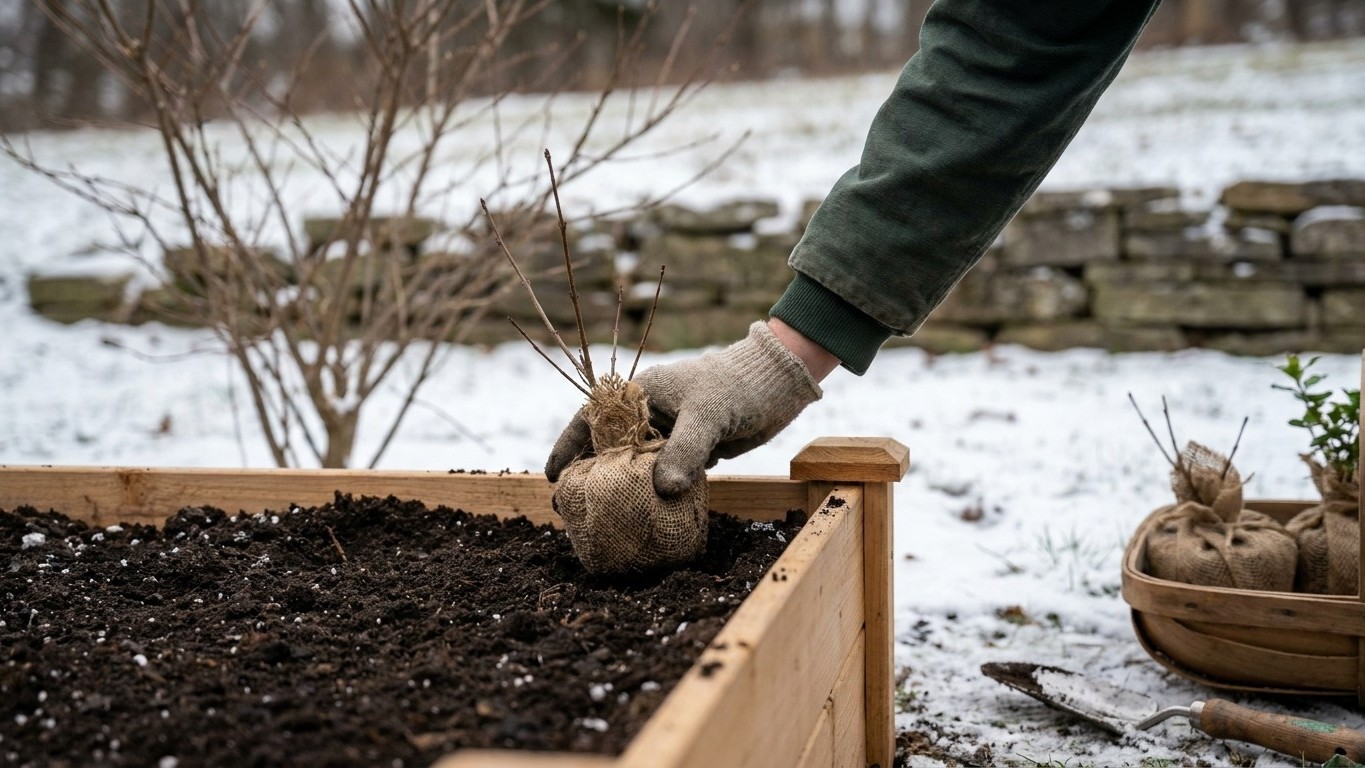

December in North Dakota means frozen, often snow-covered ground across the state, so the direct answer is that nothing goes into the open garden this month. The work that matters now happens under cover, in storage, and on paper: dormant pruning, seed ordering, and planning the rotation for when the soil finally opens back up.
What goes in the ground in December

The soil itself makes the decision here, not the calendar. Once ground temperatures drop below freezing and stay there, roots cannot establish, water cannot move, and even the toughest garlic clove sits inert rather than growing. North Dakota’s USDA Plant Hardiness Zone runs from 3a to 4b, which is built on the average annual extreme minimum temperature, and in much of the state that minimum lands well below zero. That single fact explains why December planting outdoors is not a matter of dressing warmly and getting out there. The ground is closed for business.
If garlic or shallots did not get planted in the fall window while soil was still workable, forcing them into frozen or waterlogged ground now typically ends in rot rather than a spring shoot. That ship has sailed for the season in most counties.
What still makes sense this month is work that does not depend on open soil. Bare-root fruit trees and dormant shrubs can occasionally be heeled into a protected trench if the ground is not fully frozen, though in most of North Dakota that window has already closed by December. Cold frames and low tunnels set up earlier in the fall can still be tended and occasionally sown with a pinch of hardy spinach or mâche seed for a very slow late-winter harvest, since the glazing traps enough solar heat on sunny days to keep the soil beneath from freezing solid. Indoors, forcing rhubarb crowns or chicory roots in a dark, cool basement gives a genuine harvest of fresh stalks or chicons within weeks, using dormancy rather than fighting it. Root cellars and cold storage areas also deserve a check now: this is the month stored crops start to reveal which ones will not make it to spring.
What to start under cover
Counting backward from North Dakota’s last spring frost window of May 4 to May 15 shows why December is too early for almost every seed tray. Onions and leeks, the earliest starts most gardeners attempt, typically need roughly 10 to 12 weeks indoors before transplanting, which points to late February or early March, not December. Peppers and slow-growing perennial flowers land later still. Starting now would mean plants sitting under lights for four or five extra months, turning leggy, rootbound, and stressed long before the ground is ready for them.
That does not mean the grow lights sit idle. Microgreens and sprouts are on their own clock, ready in one to three weeks regardless of the outdoor season, and they give a fresh, green harvest for the kitchen table through the coldest stretch of winter. Many native prairie perennials and some hardy vegetable seeds also need a period of cold, moist stratification before they will germinate at all, and December is exactly the right time to start that clock. Winter sowing in clear plastic jugs, left outdoors where freeze-thaw cycles and melting snow do the stratifying work naturally, is a technique well suited to a Zone 3a to 4b climate: seeds sown now in perforated, covered containers sprout on their own schedule once temperatures allow, often weeks ahead of an indoor-started equivalent.
The two failure modes to watch for are the same ones that trip up gardeners every winter: starting tender vegetables far too early and ending up with weak, overgrown seedlings, or waiting so long that transplants go into the ground too small to make use of the short growing season between the May frost and the September frost.
What is ready to pick
Outdoors, the honest answer for most of North Dakota in December is nothing. Snow cover and hard-frozen ground put an end to any open-air harvest weeks earlier, and the household kitchen shifts entirely to what was put by earlier in the year.
Cold frames or low tunnels that were planted in late summer or fall can still be quietly productive. Hardy greens like spinach, kale, and mâche often hold under insulated cover, growing slowly if at all but staying edible, and a well-timed lift of the cover on a calm, sunny day can yield a handful of leaves even in deep winter. Anything left unprotected under open sky, by contrast, has usually turned to mush by now.
Indoors, sprouts and microgreens fill the gap nicely, ready within days of sowing and requiring nothing more than a sunny windowsill or a shelf under lights. The bigger job this month is managing what is already in storage. Squash, potatoes, and onions all need a look-over: squash with a soft spot or a sweet smell is starting to break down and should be used first, potatoes that have begun to sprout or shrivel are past their prime for long storage, and any onion that has gone soft at the neck will spread rot to its neighbors if left in the bin. Catching these early, rather than after a full crate turns, is the difference between losing one squash and losing the whole shelf.
The jobs that matter this month
Dormant pruning is one of the biggest tasks this season carries, and December offers a real window for it on fruit trees, grapevines, and berry canes, since the plants are fully leafless and their structure is easy to see. The caveat in a climate this cold is timing within the month: pruning cuts made during an extreme cold snap, especially anything well below zero, can lead to dieback around the cut, so it pays to wait for a milder stretch, even if that means finishing the job in a later winter month rather than rushing it now.
Seed catalogs arrive early for a reason. In a Zone 3a to 4b growing season, the list of varieties bred for a short, intense summer is narrower than in warmer states, and the reliable short-season tomatoes, quick corn varieties, and cold-hardy greens tend to sell out from popular suppliers well before spring planting begins. Ordering now, while the full list is still available, avoids settling for a second-choice variety in April.
Planning next season’s rotation is easiest done now, with last year’s garden map still fresh and no planting pressure clouding the decision. Soil testing is harder to do directly on frozen ground, but this is a good month to request test kits from a lab or the local extension office so sampling can happen the moment the soil thaws enough to dig a scoop. Compost piles benefit from an occasional turn even in winter, and insulating the pile with straw or leaves keeps the microbial activity from stalling completely in the cold. Rounding out the list: cleaning and sharpening pruners, hoes, and shovels before they sit unused for months, and repairing raised beds, trellises, and fencing while the garden itself is dormant and nothing is in the way.
What not to do in December
A stretch of unusually mild days in December can be misleading. Air temperature in the 40s does not mean the soil has warmed, and any warm-season seed or transplant put into ground that is still frozen a few inches down will simply sit and rot rather than grow. The fix is to trust soil conditions, not the thermometer reading on the porch.
That same mild spell tempts some gardeners to pull back mulch from perennial beds or garlic rows, thinking the worst of winter has passed. In North Dakota it almost never has. Removing insulation early exposes roots and dormant buds to the next hard freeze, which can do more damage than if the mulch had never been touched. Better to leave protective mulch, straw, or snow cover in place until there is a sustained warming trend closer to the actual spring frost window.
Applying nitrogen fertilizer to lawns, shrubs, or perennial beds this month is another common misstep. Dormant plants are not taking up nutrients the way they would in active growth, and a warm spell following a nitrogen application can push a flush of tender new growth that then gets killed by the next freeze, wasting both the fertilizer and the plant’s stored energy. Saving that feeding for when growth actually resumes in spring gets far more value out of it.
Checking this against your own county
A statewide month like this one is a starting point, not a set of instructions for one particular yard. North Dakota’s frost dates and hardiness zone shift meaningfully across the state: elevation, the moderating effect of the Missouri River corridor, and the plain difference between the northern and southern halves of the state can move real-world frost windows by a week or two in either direction from the reference figures cited here. A garden in a low-lying frost pocket will freeze earlier and stay colder longer than the general range suggests.
For a planting calendar tuned to a specific county, the North Dakota State University Extension Service is the right next stop, with local offices able to speak to conditions well beyond what any statewide average can capture.
Common questions
Can garlic still be planted in North Dakota in December?
Once the ground has frozen solid, no. Garlic needs several weeks of root growth before hard freeze to establish well, and cloves pushed into already-frozen or waterlogged soil in December generally rot rather than root. That planting window falls in the fall months, ahead of the ground freezing.
Is it too cold to prune fruit trees in December in North Dakota?
Not necessarily, but timing within the month matters. Pruning cuts made during an extreme cold snap can lead to dieback around the wound, so it is worth choosing a milder day within the dormant season rather than cutting during the coldest stretch.
What vegetables can survive under a cold frame through a North Dakota winter?
Hardy greens such as spinach, kale, and mâche are the most likely to hold under insulated cover, growing slowly or staying dormant but remaining edible, provided the cover is opened on sunny days to prevent excess moisture buildup.
When should seeds actually be started indoors for a North Dakota garden?
Counting back from the last spring frost window of May 4 to May 15, most seed starting for tender vegetables lands in late winter, roughly 6 to 12 weeks before that window depending on the crop, which puts the bulk of indoor sowing in February and March rather than December.