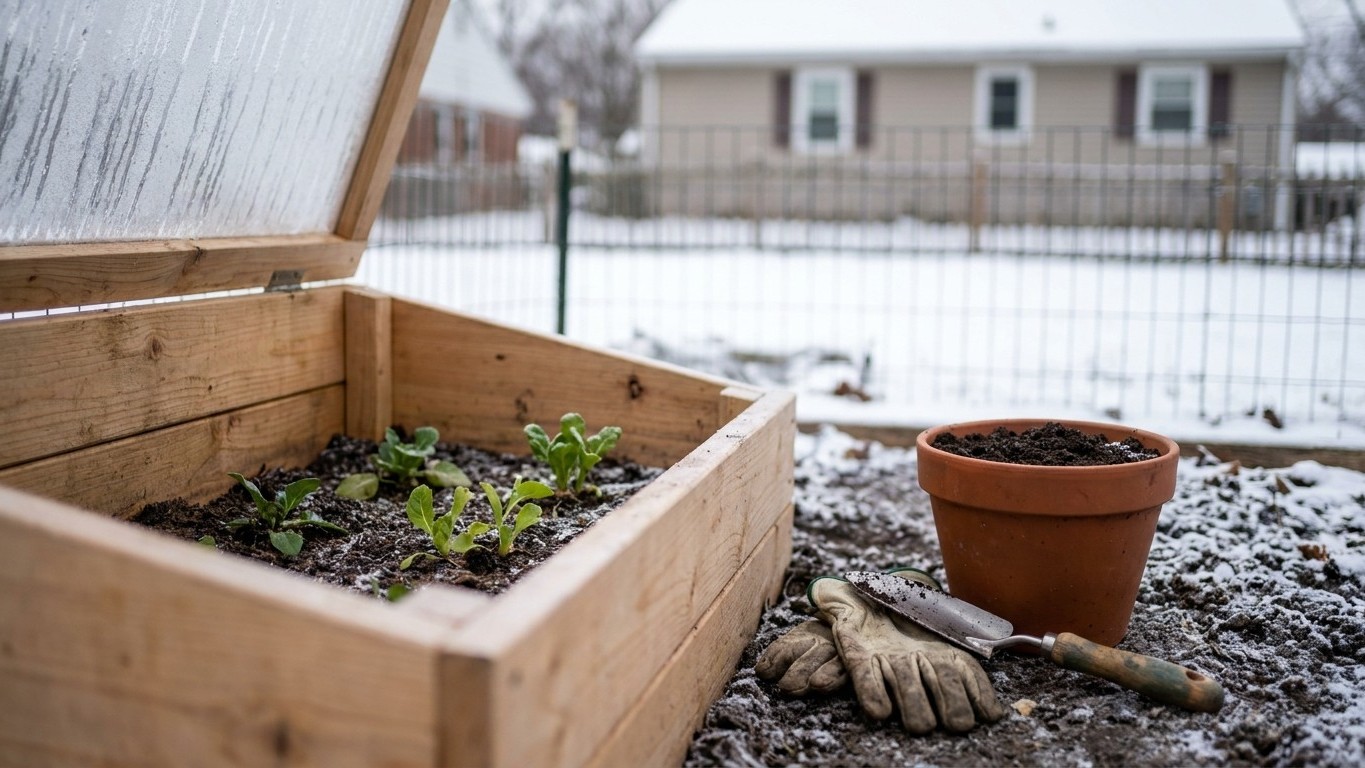

In North Dakota’s January, the ground is frozen solid and air temperatures routinely sit well below freezing across the state’s USDA zone 3a-4b range. Nothing goes into open soil this month. But the month still has real work: forcing dormant crops indoors, starting the slowest transplants under lights, and getting ahead on pruning, seed orders and soil testing before the frozen months break.
What goes in the ground in January

The decision to plant outdoors never comes from a date on the calendar. It comes from soil temperature and the frost window. In North Dakota, the last spring frost typically falls between May 4 and May 15, based on airport-station data from NOAA’s 1991-2020 Climate Normals. That window sits four months away from January, and the soil underneath the snow is frozen to a depth that makes digging, let alone seeding, physically impossible in most of the state.
So the honest answer for this month is that nothing goes into outdoor garden soil. Say that plainly, because pretending otherwise wastes seed and effort. What’s left is narrower than in other months, but it isn’t nothing.
What’s actually possible right now
Rhubarb crowns lifted from cold storage or a garage can be forced in a dark, cool basement (around 50-60°F) for pale, tender stalks in three to five weeks. Witloof chicory roots, if you grew and stored them, can be forced the same way for blanched chicons. Cold frames and low tunnels won’t get you new germination this month (light and heat are both too scarce), but they can keep already-established fall plantings of spinach or mache alive under an insulating layer of snow, ready to harvest on a mild day.
Bare-root fruit trees, shrubs and canes that arrive early from mail-order nurseries should not be planted now. Heel them into damp sand or sawdust in an unheated, frost-free space (a garage works) and keep the roots from drying out until the ground actually thaws, months from now.
What to start under cover
Seed-starting math runs backward from the frost window, not forward from January 1. Take the early edge of North Dakota’s last-frost range, May 4, and count back the number of weeks a seed packet lists for that crop’s indoor head start. Most peppers, tomatoes and warm-season flowers need 6 to 8 weeks before transplant, which lands in March, not now. But the slowest growers, onions and leeks started from seed (often 10 to 14 weeks), plus a handful of long-germinating perennial herbs and flowers, land their start date in mid-to-late January when counted back from that May 4 mark.
That arithmetic matters because both directions fail. Start too early and you end up babying rootbound, leggy onion seedlings under lights for four extra weeks they didn’t need, competing for space and light with everything else you’ll start in February and March. Start too late and a crop that needed 12 weeks to bulk up before transplant simply won’t be ready when the soil finally warms, costing you weeks of productive season in a state where the growing window is already short.
Redo the count for your own crop list every year, using the seed packet’s own “weeks before last frost” figure and the local frost range rather than a fixed date. A gardener in the Red River Valley and one near the Killdeer Mountains are both working from the same statewide zone range, but their actual thaw dates can differ by a week or more.
What is ready to pick
Outdoors, the honest answer is close to nothing. Snow cover and sustained sub-freezing temperatures mean there’s no active harvest happening in the open garden. What still feeds the household comes from what you put up earlier and what you grow under a roof.
Kale and leeks that were left standing in fall, heavily mulched or buried under snow, can sometimes still be dug on a mild day in the milder pockets of the state, since snow itself acts as insulation. Treat any harvest like this as a bonus, not a plan, since a hard cold snap without snow cover will finish them off. Cold-frame greens planted back in fall, if they survived, are worth checking after a thaw.
Indoors, sprouts (mung bean, alfalfa, radish) and microgreens on a windowsill or under a grow light take one to two weeks from seed to harvest and are the most reliable fresh green this month produces. Beyond that, this is the month to go through the root cellar or basement storage shelf. Check squash for soft spots near the stem, potatoes for green shoulders or sprouting eyes, and onions for softness at the neck. Pull and use anything showing early signs before it takes down its neighbors in storage.
The jobs that matter this month
Winter reads as quiet, but the calendar of a working garden doesn’t stop, and January carries several jobs with real deadlines attached.
Pruning and ordering
Dormant pruning of apple and plum trees, and of raspberry and currant canes, is best done now while the plants are fully dormant and the branch structure is easy to see without leaves in the way. Wait for a day above freezing so wood isn’t brittle, but don’t wait for the whole winter to pass; wounds made too close to spring sap flow heal more slowly. This is also the month to place seed orders. Short-season, cold-tolerant varieties bred for northern zones like 3a-4b sell out of the popular selections early, and a February order often means settling for what’s left.
Planning, soil and equipment
Sketch next season’s bed rotation now, while last year’s failures and successes are still fresh, so you’re not guessing in April when the ground finally opens up. If you haven’t tested your soil in a few years, order a mail-in kit through your local extension office; results take a few weeks and inform what amendments to buy before spring rush pricing kicks in. Turn or check an outdoor compost pile if it isn’t frozen solid, clean and sharpen pruners and shovels before they’re needed, and repair raised beds, trellises or fencing while there’s no crop in the way. Finally, keep circling back to stored crops weekly, since one soft potato left unchecked will spread rot to the whole bin.
What not to do in January
The most common mistake this month is trusting a warm afternoon. A stretch of 40°F days feels like spring, but the soil several inches down is still frozen and the frost window is still months away. Direct-sowing anything, or hardening off transplants outside during a thaw, invites a hard freeze a day or two later that undoes the work.
A close second is uncovering mulched perennials or cold-frame crops too early after that same mild spell. Removing insulation exposes crowns and roots to the next cold snap with no buffer left, which is often worse than if they’d never been mulched at all. Leave winter protection in place until the thaw is sustained, not just a single warm day.
Feeding is the third trap. Houseplants and any forced bulbs or rhubarb crowns are growing slowly under weak winter light, and a full dose of nitrogen fertilizer meant for active summer growth pushes soft, weak growth they can’t support. Hold off on regular feeding until light levels and day length pick back up, and skip fertilizing anything still fully dormant outdoors, since there’s no root activity to take it up anyway.
Checking this against your own county
A statewide frost window is a starting point, not a guarantee. North Dakota’s elevation changes, the moderating effect near larger lakes, and the real difference between the state’s northern and southern counties can shift a garden’s actual frost dates by a week or two from the airport-station figures cited here, and sometimes more. A garden in a low frost pocket may see cold linger later into spring and arrive earlier in fall than these averages suggest.
Before locking in a planting date, check your own county’s numbers against the North Dakota State University Extension Service, which tracks local conditions and publishes planting guidance tailored to the state’s growing regions.
Common questions
Can I plant garlic in North Dakota in January?
No. Garlic needs workable, unfrozen soil to go in, and that window closed back in fall. If you missed fall planting, plan for it next fall rather than trying to force cloves into frozen ground now.
Is it too early to start tomato and pepper seeds indoors?
For most of the state, yes. Tomatoes and peppers typically need 6 to 8 weeks indoors before the last frost (May 4 to May 15), which points to a March start, not January. Starting now usually just means leggy, stressed plants by transplant time.
What USDA hardiness zone is North Dakota in?
The state spans USDA Plant Hardiness Zones 3a through 4b, based on the 2023 map using 1991-2020 averages. That range reflects average annual extreme minimum temperatures only, and it varies across the state, so check your specific county rather than assuming the statewide range applies evenly.
What’s the single most useful task in the garden this month?
Checking stored crops. A few minutes going through squash, potatoes and onions in storage each week catches soft spots before they spread, and it’s the difference between usable food in February and a bin you have to toss.