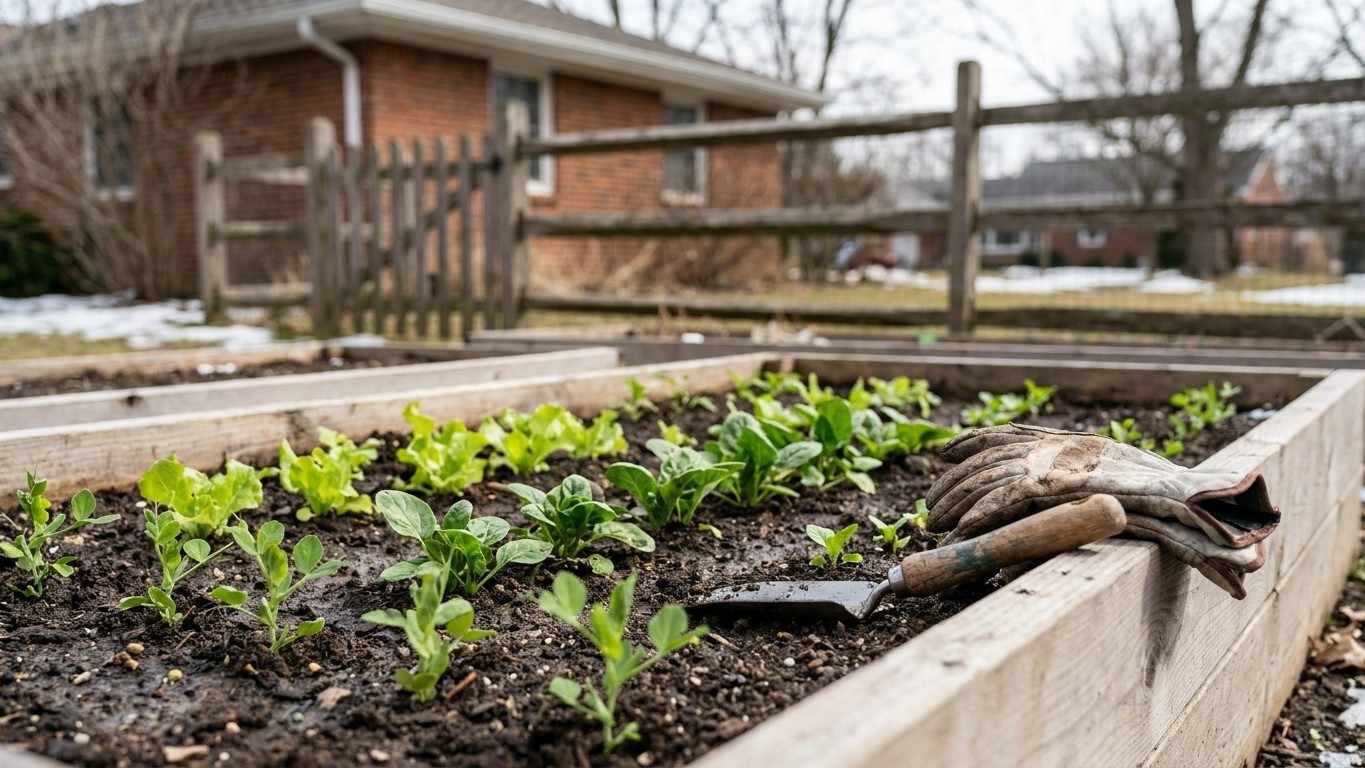

Across most of North Dakota, March is not a month for open-ground planting. With the last spring frost typically landing between May 4 and May 15 in the Fargo area, the ground is still frozen or snow-covered through much of the state during March. The real work this month happens indoors under grow lights and outside with pruning shears, not with a trowel in bare soil.
What goes in the ground in March

Soil temperature, not the date on the calendar, decides what survives. In North Dakota, March soil is typically still frozen at depth or barely thawing at the surface in the southern counties, and snow cover can linger well into the month in the north and at higher elevations. That means direct-sowing anything into open garden beds is a gamble that almost always loses. The honest answer for most of the state: nothing goes into open ground this month.
That said, there are a few narrow exceptions and some real work that fits March even without workable soil. Where a bed happens to be bare and thawed enough to dig, dormant bare-root fruit trees, shrubs and canes can go in as soon as the ground can be worked, since they’re built to handle a cold start. Rhubarb crowns and asparagus roots, both hardy perennials rated for USDA zones as cold as 3a on the Plant Hardiness Zone Map, can be planted the moment soil is workable rather than waiting for warm weather.
Cold frames and low tunnels change the math slightly. A cold frame set over a bed that gets afternoon sun can warm the top few inches of soil enough to direct-sow the toughest hardy greens, spinach and mâche among them, toward the end of March in the southern part of the state. Even then, germination will be slow and uneven, and a hard cold snap can still wipe out young seedlings under thin plastic. Garlic, which most North Dakota gardeners plant in fall, is not a March crop here, but shallots held in storage can sometimes be tucked into a cold frame bed if the ground has thawed.
Indoors, this is also the season for forcing. A dormant rhubarb crown dug up and brought into a dark, cool spot in the basement will push tender stalks in a few weeks, and Belgian endive or chicory roots can be forced the same way for an early harvest that has nothing to do with the frozen garden outside.
What to start under cover
Seed starting in March runs on subtraction: take the local last-frost window and count backward by how many weeks a given crop needs indoors before it’s ready to move out. With a last frost of May 4 to May 15, that gives most North Dakota gardeners a starting point somewhere in early-to-mid May.
Onions and leeks need the longest lead time, typically 10 to 12 weeks before transplanting outdoors. Counted back from a May 4 to May 15 frost window, that head start should have begun in mid-to-late February, so early March is still workable, if a little behind, for gardeners who haven’t started yet. Peppers ask for 8 to 10 weeks under lights, which lands their ideal start window in late February to early March, making the first half of this month the last good chance to get them going without rushing. Tomatoes, needing only 6 to 8 weeks, fit neatly into mid-to-late March for a transplant date in early May.
Slow-growing flowers meant for later transplant, along with celery and celeriac, also belong on the March list, since both need 10 or more weeks indoors and a long, steady grow-out.
The two ways this goes wrong are opposite problems. Start too early and tomatoes or peppers turn leggy and rootbound in their trays weeks before the soil and air are anywhere near ready outside, forcing multiple pot-ups and weaker transplants. Start too late, especially with onions or leeks, and the plants never build enough size indoors to produce a decent bulb or stalk before the growing season runs out. Matching the start date to the crop’s actual lead time, not to how eager the gardener feels on a sunny March afternoon, is what keeps both mistakes off the calendar.
What is ready to pick
Outdoors, March in North Dakota offers little to nothing fresh from the garden. Snow cover and frozen ground rule out any real harvest from open beds, and even a cold frame planted the previous fall is unlikely to have survived a Zone 3a to 4b winter with much left standing.
The household harvest this month comes from storage and from indoor growing, not from the yard. Winter squash, potatoes and onions put up in fall should get a hands-on check now: squash with soft spots or a sweet, fermenting smell need to be used immediately or composted, potatoes that have started sprouting or gone soft should be pulled from the batch before they spread rot to the rest, and onions showing mold at the neck are done. Sorting the stash monthly through late winter is the only way to stop one bad squash from taking out a whole bin.
Indoors, sprouts and microgreens are the fastest payoff in the whole gardening year, ready in as little as one to two weeks from seed on a countertop, and they don’t care what the thermometer outside is doing. A windowsill herb pot, basil or chives started from cuttings or seed earlier in winter, may also be giving small but usable clippings by now. For anyone who forced rhubarb or chicory roots indoors, this is roughly when that harvest starts coming in too, tender and pale, nothing like the garden-grown version but real food from a dead-of-winter garden.
The jobs that matter this month
March carries real deadlines even where the ground is frozen solid. Dormant pruning of fruit trees, grapevines and berry canes belongs here, done while the plants are still fully dormant and before buds swell; pruning too late, once sap is moving, invites disease and stresses the plant right when it needs energy for new growth. Apple and pear trees, currants and raspberry canes all take a clean dormant prune well in early-to-mid March across the state.
Seed ordering has its own clock. Popular varieties, especially cold-hardy tomatoes and short-season sweet corn bred for northern growing seasons, sell out at seed companies by late winter most years. Ordering now, rather than waiting for the exact planting date to feel urgent, is the difference between growing the variety planned for and settling for whatever’s left on the shelf.
Soil work fits here too. A soil test, sent to a lab or run with a home kit, tells a gardener what to amend before planting season arrives rather than guessing after a poor harvest. Compost piles built up over fall and winter need turning now to keep the decomposition going and to have finished compost ready by the time beds thaw. Tools are worth the attention as well: a sharpened hoe or pruner cuts cleanly and heals plant wounds faster than a dull blade that tears.
Beyond the bench work, March is the month to walk the property and repair what winter damaged: fence posts heaved by frost, raised bed corners pried loose by ice, trellis wire gone slack. Planning next season’s crop rotation on paper, before the rush of planting season arrives, is cheap insurance against replanting the same family of crops in the same bed two years running.
What not to do in March
The single biggest mistake in North Dakota is trusting a warm afternoon over the soil thermometer. A 55-degree day in March can feel like spring, but the ground underneath is often still frozen or near-freezing several inches down, and any warm-season seed dropped into it will simply rot rather than germinate. Air temperature and soil temperature are not the same measurement, and only one of them decides whether a seed sprouts.
Uncovering perennials or removing winter mulch too early after a mild stretch is the second classic error. A few warm days can trick a gardener into pulling back protective mulch from strawberries, roses or newly planted trees, only for a hard freeze days later to hit exposed crowns and canes with no buffer left. Mulch should stay in place until there’s a real, sustained warming trend, not just one sunny weekend.
Fertilizing too early is the third trap. Applying nitrogen to lawns or dormant perennial beds in March, before real growth has resumed, mostly feeds weeds that wake up faster than desired plants and can leach away before roots are active enough to use it. Waiting until there’s visible green growth to fertilize wastes less product and does less harm to nearby waterways from runoff.
Finally, starting tender transplants too far ahead of the frost window backfires. Tomato and pepper seedlings started in January or early February, well outside the 6-to-10-week window that fits North Dakota’s May frost dates, end up overgrown, leggy and stressed long before it’s safe to plant them outside.
Checking this against your own county
Everything above is a state-wide starting point, not an instruction for any single yard. North Dakota’s elevation changes, the moderating effect of the Great Lakes on the eastern edge of the region, and the real gap between the Red River Valley and the higher, colder western counties can shift these windows by two weeks or more in either direction. A garden in a low frost pocket or at higher elevation should expect a later last frost and an earlier first fall frost than the reference figures used here.
For local frost data, soil temperature guidance and variety recommendations tuned to specific counties, the NDSU Extension Service is the reliable next stop.
Common questions
Can I direct-sow peas outdoors in North Dakota in March?
Not typically. Peas tolerate light frost better than most crops, but with soil still frozen or snow-covered through much of March across the state, there’s usually nothing to sow into. Late March can work in the warmest southern pockets once soil is workable; most gardeners wait until April.
Is it too early to start tomato seeds indoors in March?
Mid-to-late March fits the 6-to-8-week lead time tomatoes need before a last frost of May 4 to May 15. Starting in early March, especially in the first half of the month, risks leggy, rootbound seedlings by transplant time.
What USDA hardiness zone does North Dakota fall into?
The state spans USDA Plant Hardiness Zones 3a to 4b, based on average annual extreme minimum temperatures from the 2023 USDA map using 1991-2020 normals. That’s a wide range built on one variable, so a plant rated hardy in zone 4b may still struggle in a colder 3a pocket.
What should I do with garlic in March if I missed fall planting?
Garlic planted in spring rather than fall generally produces smaller bulbs, since it misses the cold conditioning that triggers proper bulb formation. If the ground is workable, spring-planted garlic can still go in, but expectations should be modest, and fall planting remains the better bet for a full-size harvest.