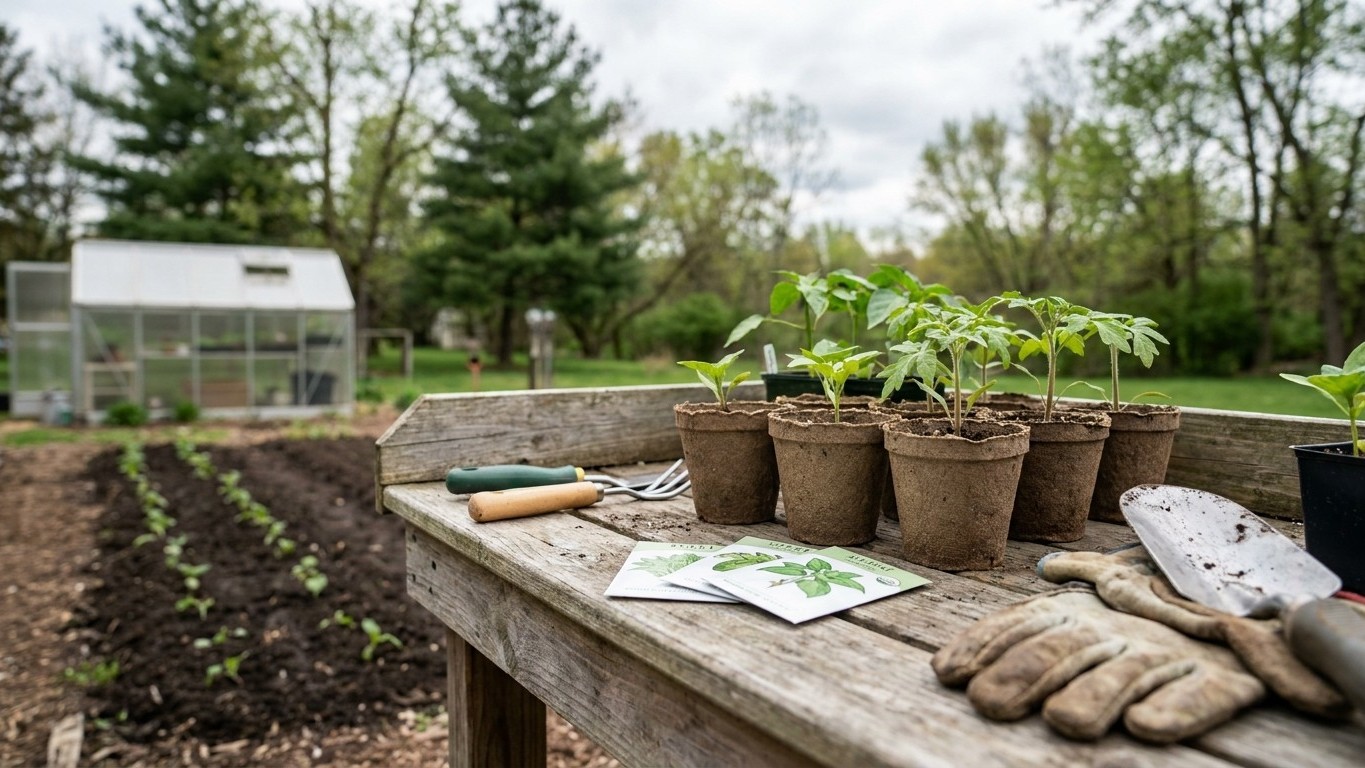

Nothing goes into open ground in the Northwest Territories in April. Average last frost at Yellowknife lands near May 25, and the ground itself is still frozen or buried under snow through most of the month. The real work now happens indoors and under cover: seed starting, dormant-season chores, and getting equipment ready for a planting window that is still weeks away.
What goes in the ground in April

The decision here is not the calendar, it is soil temperature and frost risk, and in the Northwest Territories both are working against outdoor planting in April. The average last spring frost at Yellowknife falls near May 25, and that figure is a midpoint, not a guarantee: in roughly half the years on record, frost arrives later than that date. April sits a full month or more ahead of that average, which means soil in most districts is still frozen at depth even where the surface has started to thaw.
That rules out direct-sowing anything this month. Peas, spinach, and other cold-tolerant crops that gardeners farther south might risk in early spring still need workable, unfrozen soil to germinate, and that condition simply is not met yet across most of the territory.
What is actually possible outdoors
Where a sheltered garden bed has thawed enough to work, dormant plantings of hardy perennials or bare-root stock can go in, but this is the exception, not the rule, and it depends entirely on local microclimate rather than the date on the calendar. Cold frames and low tunnels can extend what little sun and warmth is available, buying a head start for the earliest hardy greens once the frame soil itself has thawed. Garlic and shallots planted the previous fall are already in the ground and need no attention beyond checking that frost heave has not pushed cloves to the surface.
Indoors, forcing rhubarb crowns or chicory roots in a dark, cool space gives a fresh harvest of stalks or blanched leaves while the outdoor garden is still locked under snow. That is the honest scope of “planting” this month: mostly preparation, with a narrow, weather-dependent exception for cold frames and forced crops.
What to start under cover
Seed starting indoors is where April earns its keep, and the timing works backward from that average last-frost date near May 25, not forward from the first of the month. Count the weeks a crop needs before it can safely go outside, then subtract that from a transplant date set safely after frost risk drops, since the May 25 figure is a mean and real transplanting should wait past it in most years.
Onions and leeks need the longest runway, typically 10 to 12 weeks before transplanting, which puts their ideal start earlier in the season; if that window was missed, starting them now still beats skipping them, though expect smaller bulbs. Tomatoes and peppers generally want 6 to 8 weeks indoors before they go outside, and with a safe transplant target in early to mid June, an April start lines up well. Brassicas such as cabbage and broccoli need only 5 to 6 weeks, so they can start a little later in the month without falling behind.
The two ways this goes wrong are opposite problems. Start too early and seedlings sit too long indoors, becoming rootbound and leggy under indoor light that never quite matches the sun. Start too late and there is not enough season left once transplant time arrives, especially with a first fall frost averaging September 18, a window that is shorter than it looks once the spring end is pushed back by a late thaw.
What is ready to pick
Outdoors, there is little to nothing to harvest in the Northwest Territories in April. Snow cover and frozen ground rule out fresh field crops, and even hardy overwintered greens under mulch or snow are not accessible until the thaw progresses further.
The household kitchen garden still has something to offer, though. Sprouts and microgreens grown on a windowsill or under simple grow lights are ready in days rather than weeks and give a fresh, crunchy addition to meals when nothing else is green. Any cold frame greens that survived winter, such as hardy kale or mâche, may be starting to show new growth worth picking in small amounts as the frame warms during sunny days.
Stored crops from the previous harvest need a hands-on check this month rather than a hopeful glance. Squash should feel firm with no soft spots or sweet, fermented smell. Potatoes that have started sprouting or shriveling should move to the front of the use pile. Onions with any give at the neck, or a whiff of rot, need to be pulled from storage before they spread that rot to their neighbors. This is also a good point to force rhubarb or chicory indoors if that was not already started, since both give a harvest measured in weeks, not months.
The jobs that matter this month
With planting still weeks off, April in the Northwest Territories is a working month, not a waiting month, and the jobs done now decide how the rest of the season goes.
Dormant pruning of fruit trees and berry canes should happen before buds swell, while the plant’s structure is easy to see and cuts heal without inviting disease into active growth. Waiting until leaves emerge means pruning into a plant that is already spending energy on growth, a wasted cost.
Seed ordering has a real deadline attached to it. Popular varieties, especially of quick-maturing vegetables suited to a short northern season, sell out earlier every year, and a gardener who orders now has a far better shot at the specific varieties that matter for a climate this compressed.
Soil testing and amending pays off precisely because the ground has not been worked yet. Adding compost or amendments to beds as soon as they are workable, rather than after seeds go in, gives nutrients time to integrate before roots need them. Turning the compost pile, even a half-frozen one, restarts the breakdown process that stalled over winter.
Tool maintenance rounds out the list: cleaning and sharpening pruners, shovels, and hoes now means no delay once soil finally opens up for work. Checking stored crops for rot, mentioned above for the kitchen, is really a garden-wide task this month, extending to any root cellar or cold storage holding seed potatoes or onion sets meant for the next planting.
What not to do in April
The most common mistake this month is trusting the air temperature over the soil. A stretch of sunny days can push the air into the 50s while soil just a few inches down is still near freezing, and warm-season seedlings set out on that gamble simply stall or die once the initial warmth passes. Wait for soil, not sky.
Uncovering cold frames or removing winter mulch too early after a mild spell is the second trap. A few warm days do not mean frost risk has passed, not with an average last frost sitting near May 25 and a real chance of frost well beyond that date in a given year. Plants exposed too soon can be set back hard, or killed outright, by a cold snap that follows a warm week.
Feeding nitrogen at the wrong point in the season is the third pitfall, though less obvious than the first two. Heavy nitrogen applied to dormant beds or newly forced plants pushes soft, leafy growth that has no real use yet and can leach away before roots are active enough to take it up. Save nitrogen feeding for when plants are actually growing, not when the calendar says spring should be starting.
Checking this against your own county
Every figure here comes from one reference station, and a territory this size holds far more variation than one station can capture. Elevation, latitude, and distance from large lakes all shift frost dates by weeks, and the difference between a sheltered river valley and an exposed northern site can be significant even within the same region.
Treat this page as a starting point, then check it against the Government of the Northwest Territories agriculture services for guidance specific to local conditions before committing seed or budget to a planting date.
Common questions
Can anything survive being planted outdoors in the Northwest Territories in April?
Only dormant bare-root stock or fall-planted garlic and shallots already in the ground. Active seeding or transplanting of tender crops outdoors is not viable this month given frozen soil and an average last frost near May 25.
Is hardiness zone 1b too cold for a home vegetable garden?
Zone 1b, the Canadian hardiness rating for the Yellowknife area, reflects a short, intense growing season rather than an impossible one. Gardeners in this zone lean on cold frames, indoor starts, and fast-maturing varieties to work within a compressed window between spring and fall frost.
When should tomato and pepper seeds be started for this climate?
Roughly 6 to 8 weeks before a safe transplant date, which should sit comfortably after the average last frost near May 25 rather than right on it, since that date is a mean and frost can arrive later in any given year.
What is the single most valuable job in April if nothing can be planted?
Seed ordering and dormant pruning carry the most weight. Ordering secures the short-season varieties that sell out, and pruning fruit trees and canes before bud break sets up healthier growth once the season finally opens.