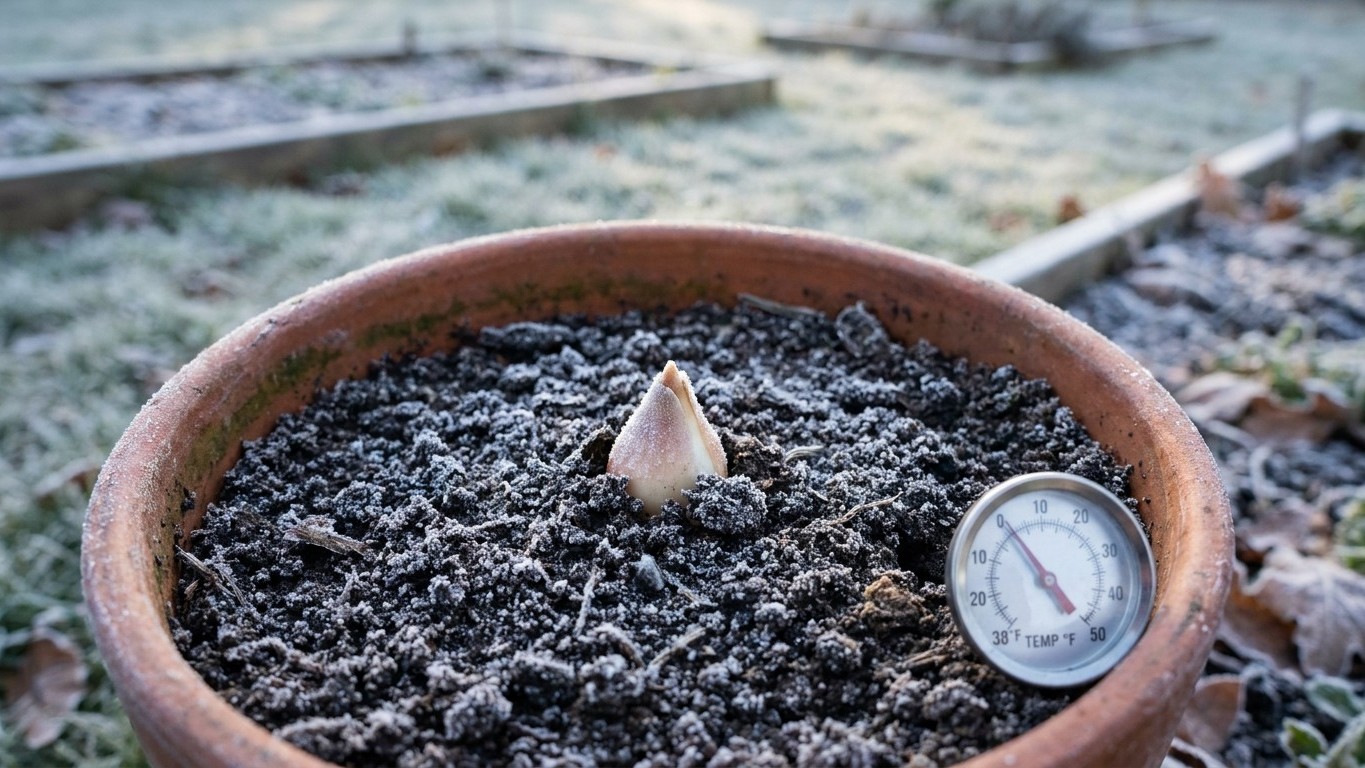

Thirteen weeks. That’s the span of cold, below 45 F, that a spring-flowering bulb needs to complete before it will send up a bloom instead of just leaves. The number isn’t a guideline or a rough average, it’s closer to a switch: fall short of it, and the plant grows green foliage with nothing at the top. The flower is already sitting inside the bulb when you buy it. Cold is what unlocks it.
The short answer
Thirteen weeks below 45 F is the figure that governs whether a spring bulb flowers on schedule. That’s the short version, but it’s worth sitting with why the number is stated the way it is: not “about three months,” not “over winter,” but a specific threshold of cold that has to be sustained. A bulb sitting at 50 F for four months hasn’t met the requirement in the same way a bulb sitting at 40 F for thirteen weeks has. The Temperature ceiling matters as much as the duration.
What changes the answer isn’t the bulb’s size, its price, or how healthy it looks in the bag. It’s the climate the bulb is planted into, and specifically whether that climate reliably delivers thirteen weeks under 45 F before spring warmth arrives. In much of the country, an outdoor planting bed does this on its own, no extra effort required. The soil cools through fall, stays cold through winter, and the clock runs itself. The complication shows up in warmer regions, or in bulbs grown indoors for forcing, where that cold period has to be supplied artificially, often in a refrigerator, because the ground never gets cold enough on its own.
Why the figure is a threshold, not an average
The 45 F ceiling behaves like a cutoff rather than a sliding scale. Warmer winters don’t produce weaker flowers, they produce no flowers, just leaves. That’s a different kind of failure than under-feeding or poor drainage, and it means the fix isn’t more fertilizer or better soil, it’s more cold. Once you understand the requirement as a threshold, a lot of confusing bulb-growing advice starts to make sense. Gardeners in mild climates who complain about “bulbs that never bloom” are almost always describing a cold deficit, not a disease or a pest.
This also explains why timing matters as much as temperature. A bulb planted too late in fall might still experience thirteen weeks of cold, technically, but if the ground freezes solid before roots have developed, the bulb spends winter unanchored and undernourished, which shows up as weak or absent bloom the following spring even though the cold requirement was met on paper.
What actually decides it
Here’s the mechanism, and it’s simpler than most gardening explanations make it sound. When a spring bulb is dug up and sold, the flower for the following spring is already formed inside it, in miniature, tucked into the bulb’s core. This isn’t a metaphor. If you were to slice a bulb open before planting, you’d find the embryonic flower parts already there, waiting. The bulb isn’t growing a flower from scratch after you plant it. It’s activating one that already exists.
That changes what the gardener’s job actually is. You aren’t feeding the plant to build a flower. You’re supplying two things: cold, and time to root before the ground freezes. The cold triggers internal chemical changes that allow the flower stalk to elongate and emerge in spring. Skip the cold, or cut it short, and the bulb has no signal to release the flower, so it does the only other thing it knows how to do, which is push out leaves. Leaves don’t require the same trigger. Flowering does.
The rooting piece matters just as much, and it’s easy to overlook because it happens underground, out of sight. A bulb planted right before the ground freezes hasn’t had time to establish the root system it needs to take up water and support the flower stalk in spring. That’s why planting is timed to happen about six weeks before the ground freezes, so the roots are down first, ahead of the cold period doing its separate work above them. Two different countdowns, running at the same time, both have to finish before the ground locks up.
If you’re holding a species and want to know whether it will bloom reliably in your yard, the two questions to ask are the same ones that apply everywhere: does my winter reliably deliver enough sustained cold below the plant’s threshold, and will the bulb have enough weeks in the ground, unfrozen, to root before winter locks in? A bulb catalog or tag that states a specific cold-week requirement is telling you the same kind of number. Treat any winter that runs consistently warm, or any planting done too close to the ground freezing, as a red flag regardless of what species you’re dealing with.
How to do it
- Check your planting window against the ground-freeze date. Count back roughly six weeks from when the ground typically freezes in your area, that’s your target planting time, early enough for roots to establish, late enough that the bulb isn’t sitting through unseasonable warmth that delays dormancy.
- Get bulbs into the ground rather than storing them longer. Every week a bulb sits in a bag on a shelf is a week it isn’t rooting. The six-week rooting window only works if it starts on schedule.
- Let the site do the cold work. In climates where winter reliably drops and stays below 45 F for an extended stretch, no extra intervention is needed, the ground itself delivers the thirteen weeks required.
- In marginal or mild climates, track whether your winter actually reaches the threshold. This matters most in regions where winters are inconsistent from year to year, some cold enough, some not. A bulb that bloomed fine two winters ago and skipped a year in between is usually telling you the cold didn’t arrive on schedule that year, not that anything else changed.
- Leave the bulb undisturbed through the full cold period. Digging up bulbs mid-winter to check on them, or moving them to a different spot, interrupts the sustained cold exposure the thirteen-week requirement depends on.
- Wait out spring rather than forcing growth. Once the cold period has been satisfied, the bulb will send up its flower stalk on its own internal timeline as soil warms. Nothing about that step can be sped up with feeding or watering.
What goes wrong
- Leaves come up, but no flower. This is the failure that matters most, and it means the cold requirement wasn’t met, full stop. No amount of fertilizer, watering, or extra sunlight fixes it, because the bulb never received the signal to release the flower it already formed. The only remedy is making sure the bulb gets its full stretch of cold below 45 F the following winter.
- Bulbs planted too close to the ground freezing. Without the roughly six weeks needed to root first, the bulb enters winter unanchored, which weakens or delays the following spring’s bloom even if the cold period itself was adequate. The fix is simply earlier planting the next time around, timed against your local ground-freeze date rather than the calendar.
- Bulbs stored too long before planting. A bag of bulbs left in a garage or on a porch through much of fall loses rooting time it can’t get back once finally planted. Plant as soon as the timing window opens rather than waiting for a more convenient weekend.
- Mild or inconsistent winters in warmer regions. Some winters simply don’t deliver thirteen sustained weeks below 45 F, and there’s no way to compensate for that in open ground. In these cases the bulb is functioning correctly, the climate isn’t supplying what it needs, which is a site and climate mismatch rather than a plant problem.
- Disturbing bulbs during the cold period. Digging, transplanting, or otherwise interrupting bulbs mid-winter resets or breaks up the sustained cold exposure they’re accumulating. Once planted, the best intervention is none at all until spring growth appears on its own.
Common questions
Does the cold have to be constant, or can it come and go?
The published figure is about 13 weeks below 45 F, describing a sustained period rather than scattered cold snaps. A winter that dips below the threshold occasionally but spends much of its time above it is not delivering the same requirement as a consistently cold season.
Can a bulb make up for a missed cold season the following year?
Each winter’s bloom depends on that winter’s cold exposure. A season that didn’t reach the threshold results in leaves without flowers for that spring, but the bulb can still flower normally the next year if that following winter supplies the full cold period.
Why does the plant grow leaves instead of just doing nothing?
Leaf growth doesn’t depend on the same cold trigger that flowering does. The bulb still has stored energy and will use it to grow foliage regardless of whether the flower has been unlocked, which is why a bulb short on cold still looks alive and green, just flowerless.
Is planting depth or spacing part of what determines flowering?
Not according to the cold-and-rooting mechanism described here. Those figures aren’t part of the data behind this explanation, so this page doesn’t state a number for either. The two factors that decide flowering are the sustained cold period below 45 F and having roughly six weeks to root before the ground freezes.