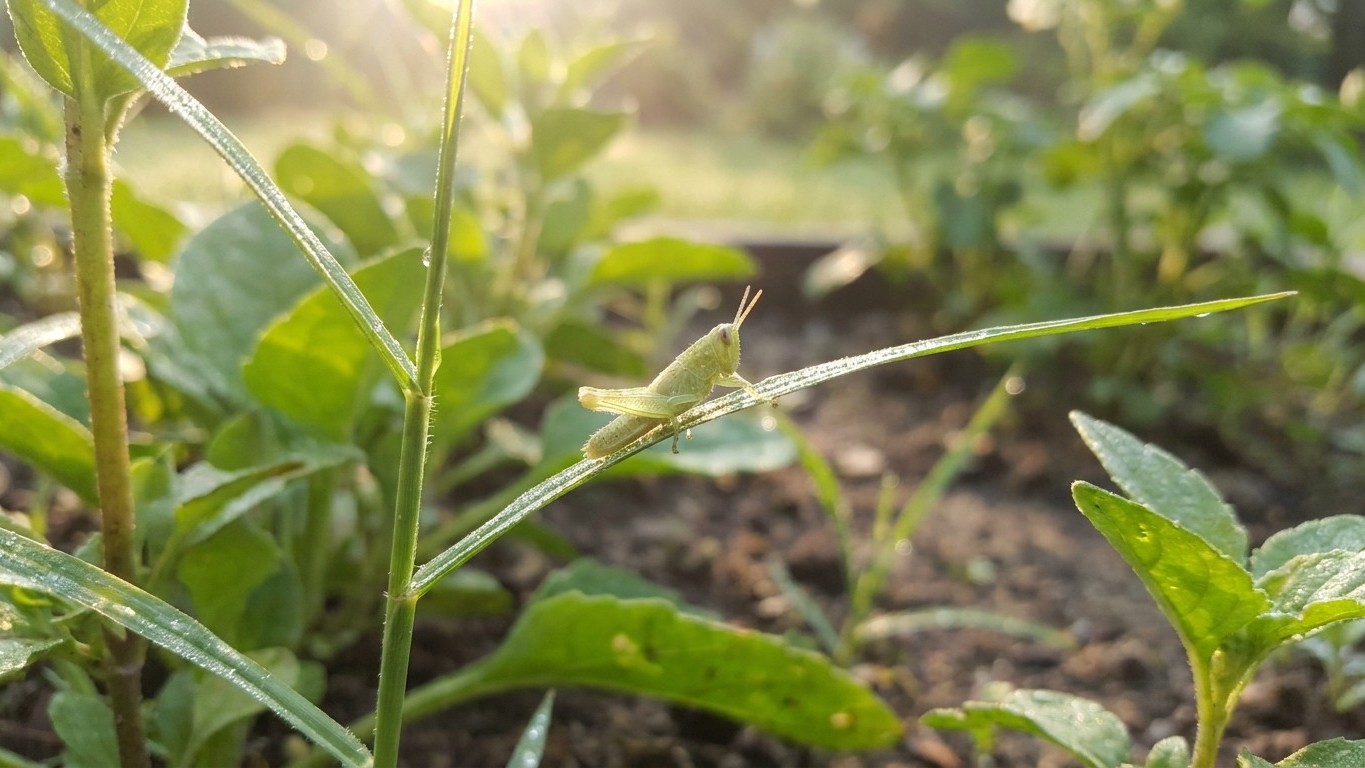

Grasshopper control works when it targets young nymphs, not winged adults, and when it matches what your local extension service is seeing that season. Barriers, timing, and a healthy population of natural enemies solve most home and garden problems without a product. A treatment only earns its place when numbers are already high and the window for nymphs is closing fast.
Timing beats product
Here’s what most advice skips: grasshopper outbreaks are driven by weather, not by what’s growing in your yard. A warm, dry spring lets more egg pods survive the winter and hatch together, which means a mild March can predict a rough July across an entire county, not just one garden. That’s why a neighbor spraying everything in sight in June often gets the same result as someone who did nothing at all.
The insects responsible belong to the grasshopper family, Acrididae, with pest outbreaks in North America dominated by species in the genus Melanoplus. What makes timing so unforgiving is the life cycle itself: grasshoppers hatch as small, wingless nymphs that molt through several stages before growing wings and becoming strong fliers. Early nymphs stay close to where they hatched and are far more vulnerable, physically smaller, less mobile, and more exposed. Once they’re winged adults, they can move across a field in a single afternoon, which means any intervention aimed at that stage is chasing a target that’s already gone.
This is also why a single calendar date is useless advice. Hatch timing depends on soil temperature and moisture, and it shifts by weeks between a cool, wet region and a hot, dry one, and even between seasons in the same county. Before doing anything else, check the instar stages and hatch windows on our grasshopper life-cycle page. Knowing whether you’re looking at first-instar nymphs or fully winged adults changes every decision that follows, including whether a treatment is even worth considering.
What works without a product
Several methods reduce grasshopper damage without any spray, and each one only works if it’s timed to the right stage.
- Row covers and barriers: effective when installed before nymphs hatch nearby, since covers keep flightless young grasshoppers out of vegetable beds; useless once winged adults are already moving through.
- Hand removal: works on small properties with light pressure, best done early morning when nymphs are sluggish from cool temperatures and easier to catch; genuinely laborious once numbers climb into the hundreds.
- Trap crops: planting a strip of tall grass or a preferred forage crop along the field edge can pull hatching nymphs away from vegetables, but it only helps if it’s in place before the hatch, not after damage appears.
- Planting timing: shifting vulnerable seedlings to avoid the peak nymph window (checked against local hatch data, not a fixed date) reduces exposure during the weeks young plants are most at risk.
- Fall and early spring cleanup: clearing weedy, undisturbed margins where egg pods overwinter cuts down next year’s hatch, though it also removes habitat some beneficial insects use, so it’s a tradeoff worth weighing on a small property rather than a whole field edge.
None of these stop a landscape-level outbreak driven by weather. What they do is protect a specific garden or field edge, and they cost time rather than money, which is the honest trade every one of them makes.
The allies you already have
Grasshopper populations already have predators working against them before anyone applies anything. Losing those allies to a broad-spectrum spray is how a manageable problem turns into a worse one within weeks.
| Natural enemy | Role against grasshoppers | What preserves it |
|---|---|---|
| Blister beetle larvae (family Meloidae) | Feed on grasshopper egg pods in the soil | Undisturbed soil margins, no broad-spectrum insecticide near egg-laying sites |
| Robber flies (family Asilidae) | Ambush and prey on adult and nymph grasshoppers | Unmown field edges and standing perches; sensitive to residual insecticides |
| Parasitic wasps (family Scelionidae) | Lay eggs inside grasshopper egg pods, killing the developing embryos | Reduced tillage in some areas, avoidance of insecticide drift onto egg-laying zones |
| Ground-foraging birds (meadowlarks, killdeer) | Eat nymphs and adults directly, especially in open grassland | Grassy field margins left unmowed and free of contact insecticides |
The problem with a broad-spectrum spray is that it doesn’t distinguish. It kills the grasshoppers you can see and the blister beetle larvae, robber flies, and parasitic wasps working underground and along the field edge at the same time. Those allies take a full season or longer to rebuild their numbers, while grasshoppers, given a warm dry spring, can rebound in weeks. That’s the mechanism behind the familiar complaint that spraying “made it worse next year”: it did, because it removed the one thing keeping the population in check without any human effort at all.
When a product is the answer
There’s an honest case for treatment, and it applies to a specific situation: nymph populations already confirmed high, still concentrated and mostly wingless, with visible crop or garden damage that barriers and hand removal can’t keep up with. Waiting past that window, once the population has largely fledged into strong-flying adults, turns a treatment into money spent on insects that will simply move on before the product takes effect.
What can legally be used, and at what rate, is not a national answer. Permitted products for grasshopper control differ by state, sometimes by county, and the list changes from one growing season to the next as registrations are updated. A homeowner in a dry western rangeland state is looking at a different set of options, and different guidance on timing, than someone dealing with a garden-edge outbreak in a humid eastern state. This is exactly the kind of decision where guessing, or copying an old label from a different region, causes more harm than the grasshoppers themselves.
The right move is to check with your state’s university extension service before buying anything. They track local hatch timing, current population pressure, and which products are currently permitted for grasshopper control in your specific territory. Our state-by-state grasshopper control page names the extension service and links directly to it for your territory, so you’re working from current, local guidance rather than a generic recommendation that may not apply where you live.
Common questions
Do grasshoppers actually cause lasting damage to a home garden?
Yes, in outbreak years. A dense hatch can strip leafy vegetables and ornamentals within days, though most home gardens see moderate pressure that barriers and timing handle without any product.
Can I tell an outbreak year is coming before I see damage?
Extension services track the conditions that predict it, mainly a warm, dry spring following good egg survival. Checking your state extension’s current forecast is more reliable than watching your own yard.
Will tilling my garden in fall get rid of grasshopper eggs?
It can reduce local egg survival by disturbing pods in the soil, but it also removes habitat that some natural enemies use, so it’s most useful on small, defined areas rather than entire field margins.
Are grasshoppers the same as locusts?
Locusts are grasshopper species capable of forming dense migratory swarms under specific conditions; most grasshoppers causing home and garden damage in the United States do not swarm in that sense, though large local outbreaks can look similar in scale.