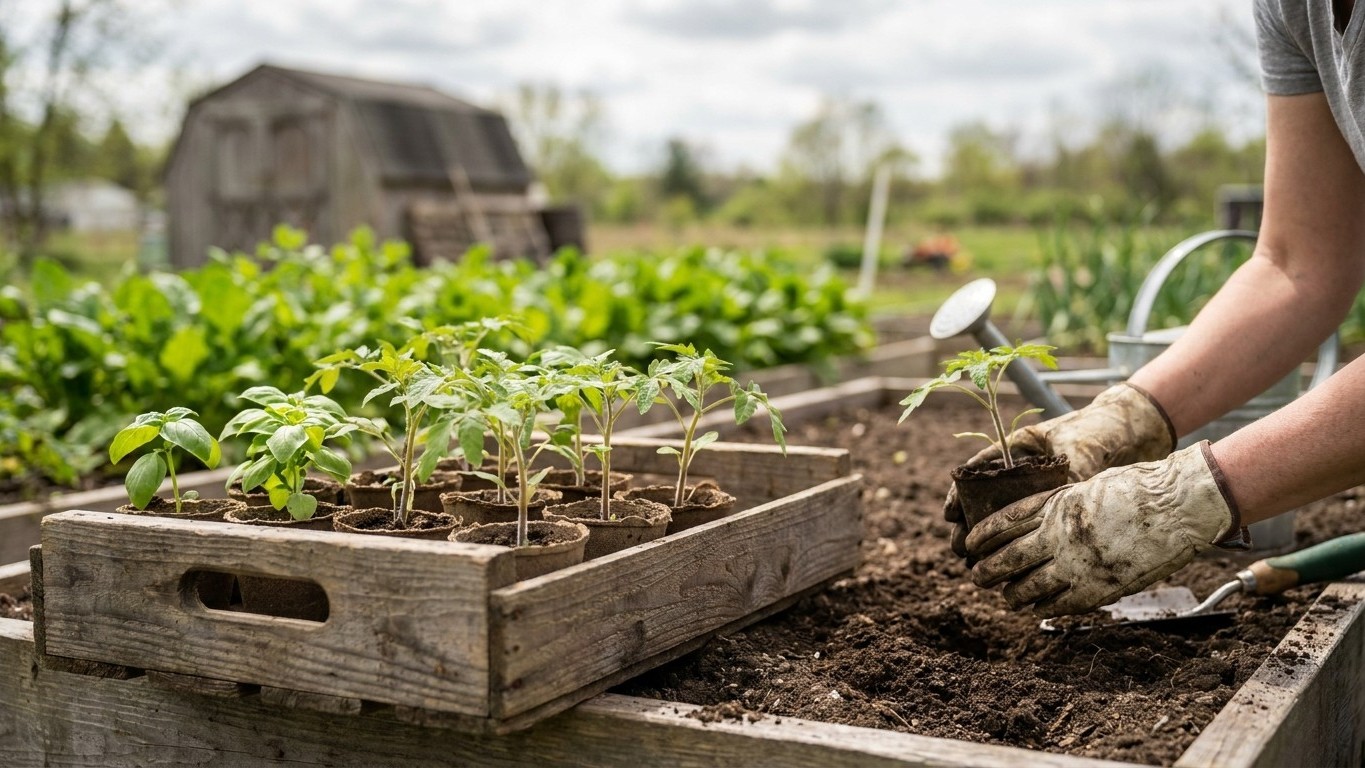

By May, Oklahoma’s spring frost risk has cleared at most reporting stations, so the state moves fully into warm-season planting: tomato and pepper transplants going into warmed beds, beans, corn, squash, cucumbers, melons, okra and sweet potato slips going in by seed or slip. Cool-season holdovers like spinach and lettuce are on borrowed time before the heat pushes them to bolt. The real work this month is timing succession sowings and protecting new transplants from Oklahoma’s still-unpredictable spring swings.
What goes in the ground in May
The calendar says spring, but soil temperature is what actually decides what survives. At the reference weather station, the last spring frost typically falls somewhere between March 28 and April 10, according to NOAA’s 1991-2020 climate normals. By May, that window has closed for most of the state, which is why this is the month warm-season crops finally get their green light. That said, the same NOAA data notes that suburban and rural gardens often run one to two weeks behind an airport station, and more at elevation, so a late frost scare in the Panhandle or a high-ground county in early May is not out of the question.
Tomato and pepper transplants can go into the ground once the soil has lost its early-spring chill and stopped feeling cold to the touch, not just once the air feels warm on a sunny afternoon. Direct-sown beans, sweet corn, squash, cucumbers, melons and okra all do well seeded straight into May soil, since these crops germinate poorly in cold ground regardless of air temperature. Sweet potato slips also go in this month, ideally into soil that has had a few warm weeks to shed its winter dampness.
What’s still finishing, not starting
Lettuce, spinach, radishes and snap peas planted earlier in spring are winding down, not beginning, in May. Pushing a fresh sowing of these into the ground now usually means a short, bitter, bolt-prone crop, since rising daytime heat triggers flowering in cool-season greens faster than the plant can size up.
| Crop group | Method | Status by May |
|---|---|---|
| Tomatoes, peppers, eggplant | Transplant | Safe once soil has lost its spring chill |
| Beans, corn, squash, cucumbers | Direct sow | Safe; germination improves as soil warms |
| Melons, okra | Direct sow | Safe but slower in cooler northern counties |
| Sweet potato slips | Transplant/slip | Safe once soil has warmed and dried out |
| Lettuce, spinach, peas | Harvest/finish | Bolting as heat builds; not a new-planting crop |
What to start under cover
Most of the indoor seed-starting for a May garden already happened back in late winter, when tomatoes and peppers needed their six-to-eight week head start. What’s left to start under cover in May falls into two categories, and both are counted backward from the first fall frost rather than forward from today’s date.
Long-season crops like winter squash and pumpkins need roughly 90 to 100 days from seed to harvest. Counting back from the first fall frost window of October 29 to November 8, a May sowing under cover, followed by transplanting out within a couple of weeks, still leaves enough runway to size up and cure before cold weather arrives. Starting these crops in cell trays rather than direct-sowing them can also dodge early-season cutworm and squash bug pressure on tender seedlings.
The second reason to start things under cover in May is geography, not calendar arithmetic. In cooler northern counties or at higher elevation, soil can still lag behind the reference station’s frost timeline, and starting melons or cucumbers in trays for two to three weeks before setting them out gives the plant a head start while the ground catches up.
The two failure modes are worth naming plainly. Start cucurbits too early under cover and they turn leggy and rootbound fast, since squash, melon and cucumber seedlings resent being held past their prime transplant size, and often stall out once finally set in the ground. Start winter squash or pumpkins too late in May and they run out of season before the fall frost window closes, leaving green, uncured fruit on the vine when cold arrives.
What is ready to pick
May is a genuine harvest month in Oklahoma, not just a planting one. Asparagus beds put in during previous seasons are producing their spring flush, and spears should be cut while still tight and tender, before the tips loosen and start to fern out. Strawberries planted in fall or earlier spring are ripening now, and the tell is color all the way to the stem cap, not just a red shoulder.
Spring greens are on their last good stretch. Lettuce, spinach and arugula sown in March or early spring are still harvestable, but the flavor turns bitter fast once the plant bolts, so cutting outer leaves regularly, rather than waiting for a full head, keeps the eating quality up. Radishes and green onions from earlier sowings are ready to pull, and snap peas planted in early spring are approaching harvest by late May, best picked while pods are still glossy and full rather than starting to bulge and toughen.
Rhubarb, where it’s established, is producing stalks worth harvesting through the month, and fall-planted garlic, if it’s in the ground, is sending up scapes well before the bulbs themselves are ready in early summer. Snapping those scapes off not only gives an early harvest, it redirects the plant’s energy back into bulb size.
The jobs that matter this month
Mulching is the single job that pays back the most in May. A layer down around new transplants now holds soil moisture through the first hot stretches and keeps root zones from swinging temperature wildly between a cool night and a 90-degree afternoon. Skip it this month and the payback shows up in August as stressed, water-starved plants.
Staking and caging need to happen before tomatoes and vining crops sprawl, not after. A tomato cage set over a small transplant takes thirty seconds; the same cage forced over a plant that’s already flopped and tangled can snap branches and set fruiting back by weeks.
Watering rhythm matters more than watering volume. Deep, infrequent watering that soaks several inches down trains roots to grow deep and drought-resistant, while frequent shallow watering trains them to stay near the surface, which becomes a liability the moment a hot dry spell hits.
Succession sowing beans and corn every couple of weeks through May spreads the harvest out instead of dumping the whole crop at once. Pest scouting should start now too, since squash bugs, cucumber beetles and aphids are easiest to control while populations are still small; checking the undersides of leaves once a week catches egg clusters before they hatch into a real problem. Thinning direct-sown carrots and beets, hilling up potatoes as they grow, and hardening off any remaining transplants before they go into full sun round out a busy month.
What not to do in May
The classic Oklahoma May mistake is trusting the air temperature over the soil. A string of warm, sunny days can feel like summer while the ground underneath is still cool from a wet spring, and tomatoes or peppers set into that cold soil often just sit there, stunted, for weeks instead of taking off. Checking that soil has actually lost its spring chill matters more than checking the forecast.
Skipping the hardening-off process is another common shortcut that backfires. Transplants raised indoors or in a greenhouse need several days of gradually increasing outdoor exposure before they go into the ground full-time, or they risk sunscald and transplant shock that can set growth back by two or three weeks.
Heavy nitrogen applications at the wrong moment cause their own problem. Feeding tomatoes and peppers a strong dose of nitrogen before they’ve set their first fruit tends to produce lush, dark green foliage at the expense of flowering, leaving a big leafy plant with little to show for it later.
Uncovering strawberries or removing winter protection from tender perennials too early after a warm spell is a last risk worth naming, since Oklahoma’s spring weather is genuinely unpredictable and a late cold snap can still catch exposed buds and blossoms off guard.
Checking this against your own county
A state-wide month is a starting point, not an instruction. Oklahoma’s Panhandle sits at a different elevation and frost timeline than the southeastern part of the state, and a garden thirty miles from the reference weather station used for these frost figures can run a week or two behind or ahead of it. Elevation, local terrain and even a nearby lake can shift these windows further still.
The most reliable next step is checking conditions locally rather than relying on a single statewide date. Oklahoma State University’s Extension service, at extension.okstate.edu, publishes county-level guidance and planting calendars that account for these regional differences far better than any single frost date can.
Common questions
Is it too late to plant tomatoes in Oklahoma in May?
No. May is actually one of the better months for setting tomato transplants out, since the frost window at the reference station has typically closed by early April, and soil has had time to warm through April into May.
Can I still direct-sow corn or beans in May in Oklahoma?
Yes, and it’s a good month for it. Both germinate better in warm soil than cold, and staggering sowings every couple of weeks through May extends the harvest window into summer.
What vegetables should I avoid starting in Oklahoma in May?
Fresh sowings of lettuce, spinach and other cool-season greens tend to bolt quickly once planted this late in spring, since rising heat pushes them toward flowering before they size up properly.
When should I start hardening off transplants for Oklahoma’s May weather?
Begin gradually exposing indoor-raised transplants to outdoor conditions about a week to ten days before their planned planting date, increasing sun and wind exposure a little each day rather than moving them straight from indoor shelter into full afternoon sun.