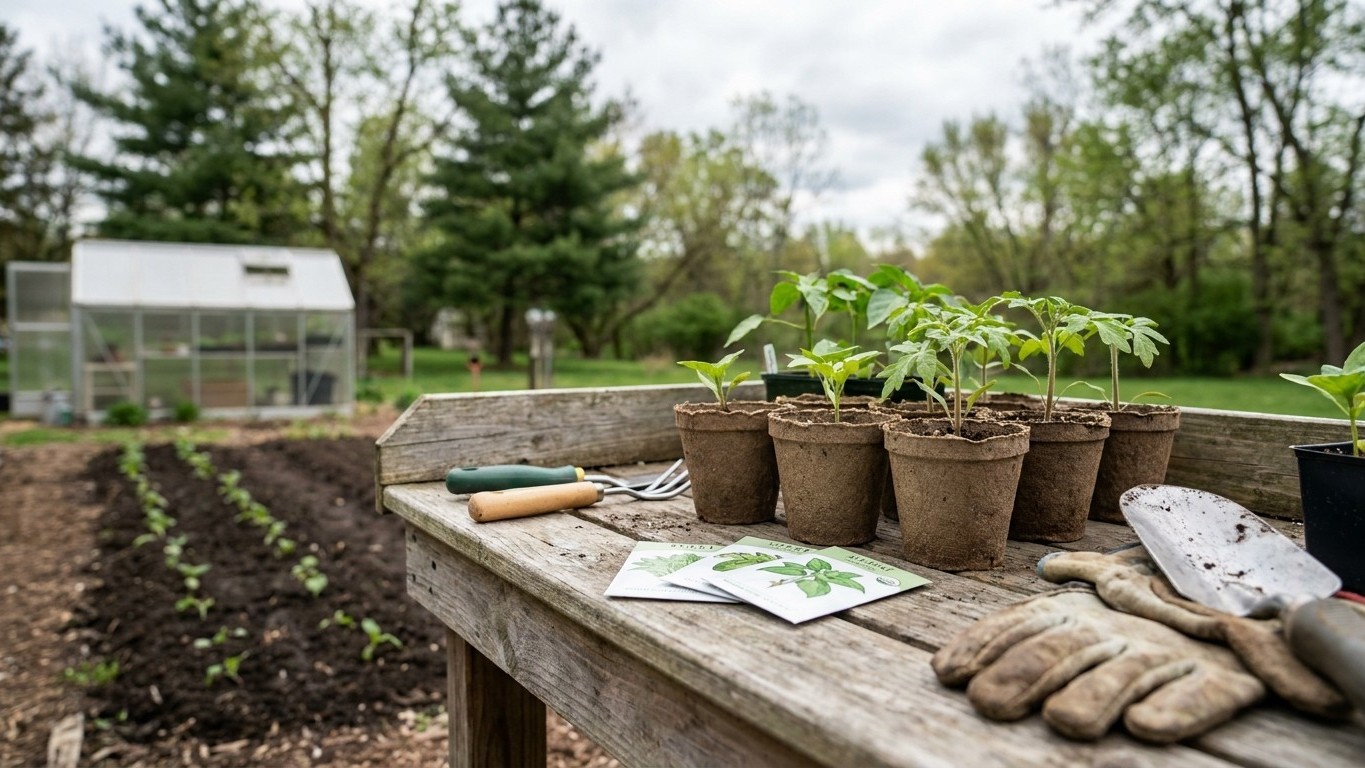

April is the month when Oklahoma gardens shift into high gear. Hardy vegetables can go straight into the ground early on, and once the local frost window closes, tomatoes, peppers, beans, and squash follow. In the reference USDA zone 6a-8a range for the state, the exact week that shift happens depends heavily on whether you’re gardening in the panhandle or down near the Red River.
What goes in the ground in April

The decision this month isn’t the calendar. It’s soil temperature and where you sit relative to the last spring frost. At the reference climate station, that freeze risk runs from March 28 to April 10, based on NOAA’s 1991-2020 Climate Normals for 32°F freeze probability (NOAA NCEI). Gardens outside that station, especially in low spots, rural valleys, or at higher elevation, often see their last frost a week or two later. Early April still sits inside that risk band for a lot of yards.
That doesn’t mean the garden sits empty. Hardy crops shrug off a light freeze and belong in the ground now: spinach, lettuce, kale, and Swiss chard can go from seed or transplant. Peas, both snap and shelling types, want to be in cold soil early rather than late, since they sulk once daytime highs climb into the 80s. Onion sets, seed potatoes, and any garlic that overwintered are already pushing growth and tolerate a stray frost without damage. Radishes, turnips, carrots, and beets can all be direct-sown as soon as the soil is workable and crumbles rather than clumps in your hand.
Warm-season crops are the gamble. Tomatoes, peppers, squash, cucumbers, beans, and sweet corn need soil that has warmed past the danger zone, not just an afternoon that felt warm. Once your local last-frost date has passed, and soil temperature at a four-inch depth is holding above the mid-50s, those crops move outdoors. In the panhandle and northern counties, that point usually lands later in April than it does in the southeast corner near the Red River, where the growing season starts noticeably earlier. Zone 6a areas in the northwest and zone 8a pockets in the southeast are both technically “Oklahoma in April,” but they are not the same garden.
| Crop group | Frost tolerance | April timing | Examples |
|---|---|---|---|
| Hardy | Survives light freeze | Direct-sow early April, even before last frost | Spinach, kale, peas, onion sets, garlic |
| Semi-hardy | Tolerates cool nights, not a hard freeze | Mid-April, watch overnight lows | Lettuce, carrots, beets, potatoes |
| Tender | Damaged by any frost | After local last frost, soil warmed | Tomatoes, peppers, squash, beans, corn |
What to start under cover
If tomato and pepper seedlings weren’t started indoors back in February, April is late for a full-length season but not too late to salvage one. Count backward from your estimated last frost, not forward from today: tomatoes and peppers generally need six to eight weeks under lights before they’re ready to transplant, so seed started now is aimed at a transplant date in late May or June rather than the traditional early slot. That’s workable for a shorter-season variety, less so for a 90-day heirloom.
Cucumbers, melons, and winter squash are better candidates for indoor starts right now, since they resent root disturbance and grow fast once seeded three to four weeks ahead of transplanting. Starting them too early backfires: the vines get rootbound in small cells, stall out, and never fully recover once they hit the garden. Starting too late is the opposite problem, especially for long-season winter squash and melons, which need every warm week they can get before the first fall frost arrives, expected between October 29 and November 8 at the reference station.
A cold frame or low tunnel outdoors does double duty this month. It lets you get a head start on lettuce and greens sown directly in the ground while the covering knocks a few degrees off frost risk, and it hardens off any indoor-started seedlings before they face open air full-time. Seedlings moved straight from a warm windowsill to an April afternoon in the open, especially a windy one, often show scorched or stunted leaves within days.
What is ready to pick
Overwintered greens are usually the first thing coming out of an Oklahoma garden this month. Kale, collards, and spinach that made it through winter under mulch or row cover put on fast new growth as days lengthen, and the outer leaves are ready to harvest well before the plant bolts in the heat. Established asparagus beds start sending up spears, and the rule there is simple: cut or snap while the spear is still tight and firm, before the tip starts to feather out.
Anything sown under cover back in February or March, early lettuce, radishes, green onions, may already be at a pickable size by mid-April. Rhubarb from an established crown is usually ready for a light first harvest, though it’s worth leaving the plant’s first full season or two untouched so the roots build reserves.
Stored crops from last fall deserve a look too. Potatoes, onions, and winter squash held in storage are approaching the end of their shelf life by spring, and a single soft or sprouting potato can spread rot through a whole bin. Sort through storage now, pull anything soft, sprouting, or smelling off, and use up onions that have started to green at the neck before they go to waste.
The jobs that matter this month

Soil preparation done now sets up everything that follows. Working compost into beds before the warm-season transplants go in is far easier than trying to amend around established plants later, and it gives the microbial activity a few weeks to get going before roots need it. Mulching is worth doing early rather than late: a two- to three-inch layer around cool-season crops holds moisture as temperatures climb and keeps weed seeds from getting the jump on your vegetables.
Staking and caging belong on the calendar before plants need them, not after. A tomato cage dropped over a sprawling, already-leaning plant does far less good than one set at transplant time, and the same goes for trellising for peas and cucumbers. Watering rhythm matters more in April than it gets credit for: seedlings and transplants need consistent moisture while their root systems are shallow, and a boom-and-bust watering pattern (drought, then a soaking) stresses plants right when they can least afford it.
Succession sowing keeps the harvest coming instead of arriving all at once. Sowing a short row of lettuce or radishes every couple of weeks through April means you’re not stuck with a single glut followed by a gap. Pest scouting starts now too: aphids and flea beetles show up early on brassicas and young greens, and catching a small colony under a leaf is a lot easier than dealing with an infestation two weeks later. Dormant pruning of fruit trees should be finished before buds break, and any bare-root stock still waiting to go in the ground needs to get planted before it breaks dormancy in the bag.
What not to do in April
The classic mistake is planting tomatoes, peppers, or squash into cold soil because the air finally feels like spring. Air temperature swings fast; soil temperature lags behind by days or weeks. A warm 75-degree afternoon can sit over soil that’s still in the 50s at root depth, and tender transplants set into that soil often just stall, turning purplish and stunted, even if they don’t die outright.
Uncovering beds too early after a mild stretch is the second trap. A few warm days in early April don’t retire the frost risk that runs through April 10 at the reference station, and pulling row cover or mulch off hardy greens too soon leaves them exposed right when a cold snap circles back. Keep protection in place until you’re past your own county’s typical last frost, not just past a warm weekend.
Nitrogen timing trips people up too. A heavy dose of nitrogen fertilizer on young tomato or pepper transplants pushes soft, leafy growth at the expense of root development and flowering, leaving plants more vulnerable to the very cold snaps and pest pressure this month brings. Save the nitrogen push for once plants are established and flowering, and lean on phosphorus and potassium early instead. Working wet garden soil after spring rain is another quiet mistake: it compacts the structure for the whole season, and it’s better to wait a day or two until the soil crumbles rather than smears.
Checking this against your own county
A statewide frost window is a starting point, not a guarantee for your yard. Oklahoma’s elevation change from the panhandle down to the southeast, plus local terrain and how close you are to a lake or river, can shift the last frost by more than a week in either direction from the reference station figures above. A garden in a low-lying frost pocket will lag behind a garden on a slope just a few miles away.
For county-level guidance and current planting calendars, Oklahoma State University’s extension service is the reliable next stop: Oklahoma State University Extension. Local extension offices track regional variation that a statewide date range simply can’t capture.
Common questions
Is it safe to plant tomatoes outdoors in April in Oklahoma?
Only after your local last frost has passed and soil temperature has warmed. At the reference station, that frost risk runs through April 10, but gardens outside that station, especially in cooler or low-lying spots, often see frost a week or two later. Wait for warm soil, not just warm air.
What vegetables can handle a light frost in April?
Spinach, kale, lettuce, peas, onions, and garlic all tolerate a light freeze without lasting damage, which makes them the safest direct-sow or transplant options early in the month while frost risk is still present.
When should I start warm-season seeds indoors if I missed the usual window?
Fast-growing crops like cucumbers, melons, and winter squash still work started indoors three to four weeks before your local last frost. Long-season heirloom tomatoes and peppers started this late will produce, but expect a later, shorter harvest window before the first fall frost, expected between October 29 and November 8 at the reference station.
Why does Oklahoma span multiple USDA hardiness zones?
The state’s elevation and geography range widely from the panhandle to the southeast corner, placing different regions in USDA zones 6a through 8a. Since the USDA Plant Hardiness Zone Map is built on average extreme minimum winter temperature alone, it’s a useful reference for what perennials survive winter, not a substitute for checking your own county’s frost dates.