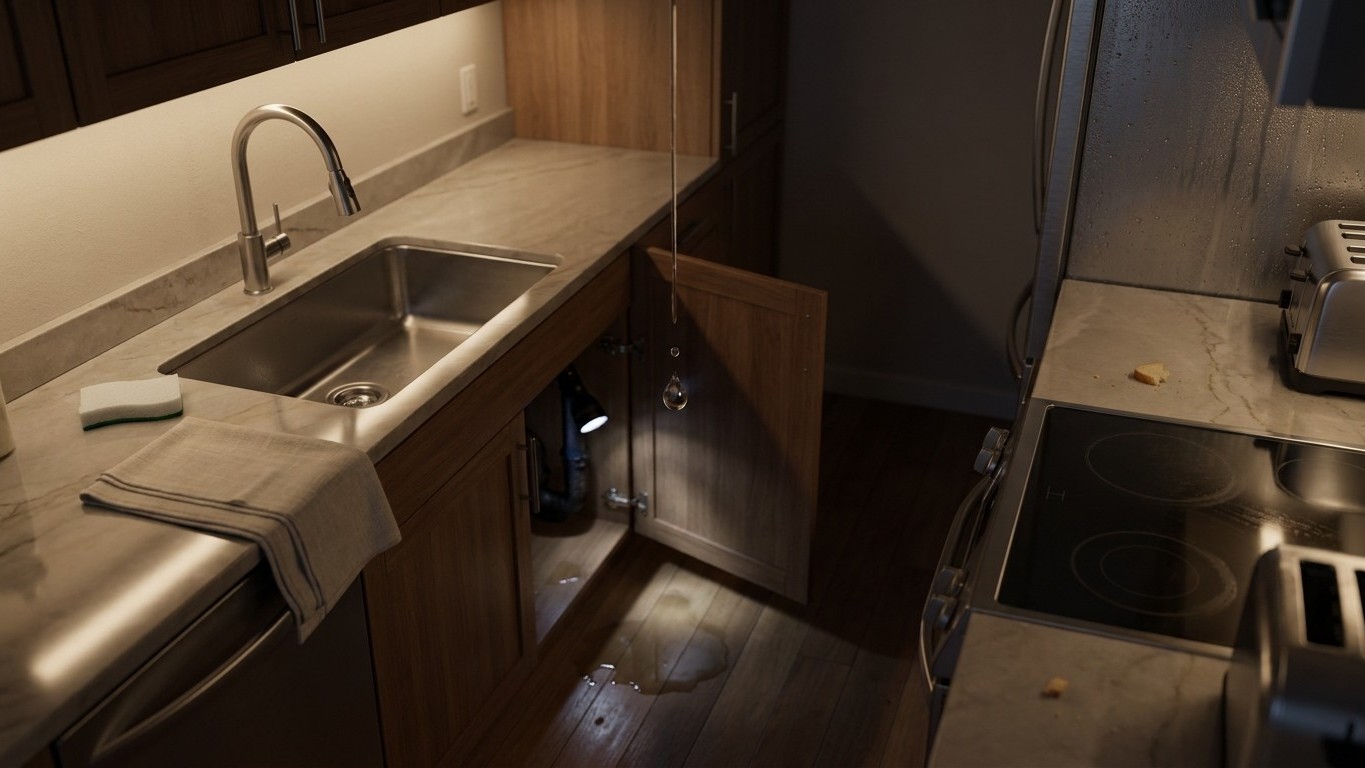

Cockroaches come indoors because a house offers something their environment stopped providing: steady warmth, moisture and food scraps within crawling distance of a hiding spot. It’s rarely one single thing. It’s the combination, and that combination is exactly what makes an infestation possible in a spotless-looking kitchen just as easily as a messy one.
What they are actually looking for

Every pest that ends up inside a home is chasing one of three things: food, water or shelter. For cockroaches, the ranking is lopsided. Water and dark, warm hiding places usually pull harder than food does. A roach can survive for weeks without eating much at all, but it can’t survive long without moisture, which is why they cluster near sinks, dishwashers, water heaters and the damp gap behind a refrigerator long before they bother with a pantry.
That doesn’t mean food is irrelevant. Grease film on a stovetop, a few crumbs under a toaster, pet food left out overnight, all of it adds up to a reliable buffet for a species that can feed on almost anything organic, including cardboard, glue and soap residue. But cleaning up crumbs alone won’t solve a roach problem if the real draw is a leaking pipe under the sink or condensation pooling around a water heater. This is the detail that trips up a lot of well-meaning cleaning routines: a species drawn primarily by water isn’t deterred by a wiped counter.
Why this changes how you approach prevention
This is exactly why the U.S. EPA frames pest management the way it does. Its Integrated Pest Management approach treats the living space itself, not a can of spray, as the starting point: “As a first line of pest control, IPM programs work to manage the crop, lawn, or indoor space to prevent pests from becoming a threat.” For roaches, managing the indoor space means fixing what draws them, moisture especially, before anything else gets attempted. Wipe the counters, sure. But also check under the sink, dry out the tray under the water heater, and look at whether the dishwasher seal is dripping. Those are the fixes that actually change whether roaches have a reason to stay.
How they get in
Roaches don’t need a door left open. Their bodies are flat and flexible enough to squeeze through gaps most homeowners would assume are too small to matter, which is the surprising part for this particular pest: a gap the width of a credit card edge is often plenty. Walking the perimeter of a house with that in mind turns up entry points in a fairly predictable order.
- Gaps around pipes and cables where they pass through exterior walls or under sinks, especially where the original caulk or foam has shrunk or crumbled.
- Worn door sweeps and thresholds, particularly on garage doors, basement doors and any exterior door that doesn’t sit flush anymore.
- Damaged or missing window screens, along with warped frames that leave a sliver of gap even when the window looks closed.
- Vents and utility penetrations, including dryer vents, attic vents and the small gaps around HVAC lines that are rarely sealed as tightly as they should be.
- Cardboard boxes, grocery bags and secondhand appliances carried in from outside, garages or storage units, since roaches and their egg cases travel well hidden inside cardboard folds and appliance housings.
That last point catches people off guard. A house can have every gap sealed and still end up with roaches because an infested box of holiday decorations came up from the garage, or a used dresser picked up secondhand had egg cases tucked into a drawer joint. Checking what comes into the house matters as much as checking the walls of the house itself.
When they come, and why
Cockroach activity indoors tracks conditions outside more than it tracks the calendar. Extreme heat, cold, drought and heavy rain all push roaches toward buildings, because a structure holds a steadier temperature and a more reliable water source than the outdoors does at those extremes. A stretch of hot, dry weather can drive roaches inside looking for water. A cold snap can drive them inside looking for warmth. Heavy, sustained rain can flood outdoor harborage, sending roaches toward the nearest dry, elevated space, which is often a basement or crawl space.
There’s also a life-cycle angle. Roach populations build through a season, and as an outdoor colony’s numbers peak or its habitat becomes less hospitable, the pressure to disperse into nearby structures increases. This is less about a specific week on a calendar and more about a threshold being crossed outside, whether that’s a dry spell, a hard freeze, or simply a colony that’s outgrown its outdoor territory.
Why timing varies so much by region
None of this maps to a fixed date or a specific temperature nationwide. A dry spell that pushes roaches indoors in one region might not register as unusual in another. A cold snap that matters in a milder climate zone might be an ordinary winter week somewhere colder. Because the driver is regional weather and regional roach species, the practical answer to “when should I worry” depends on where the house actually is. That’s the kind of detail worth checking against a page built for your specific state or region rather than a generic seasonal calendar.
Fixing the reason rather than the symptom
A house that offers no water, no food access and no hiding gaps gets fewer roaches, and it keeps getting fewer roaches after treatment too. That’s the piece that’s easy to skip when the goal is just making roaches disappear right now. Spraying a kitchen that still has a dripping pipe under the sink and a gap around the dishwasher line doesn’t remove the reason roaches showed up. It just clears the visible symptom for a while, until the same conditions pull in the next generation.
The EPA’s own description of Integrated Pest Management makes the order explicit. Before any product gets involved, “IPM first sets an action threshold, a point at which pest populations or environmental conditions indicate that pest control action must be taken.” Then comes identification: “IPM programs work to monitor for pests and identify them accurately, so that appropriate control decisions can be made.” Only after prevention and identification does the approach move toward intervention, and even then the least aggressive option comes first: “Effective, less risky pest controls are chosen first, including highly targeted chemicals, such as pheromones to disrupt pest mating, or mechanical control, such as trapping or weeding.” Broad spraying sits at the very end of that list, described plainly: “Broadcast spraying of non-specific pesticides is a last resort.”
That order matters for a household, not just for pest management agencies. Pesticides are built to be toxic to pests, and they can be toxic to people when used improperly, with children, older adults and people with compromised immune systems named as especially vulnerable. Anyone with a question about a specific product on their shelf can call the National Pesticide Information Center at 1-800-858-7378 rather than guessing, since the label on that exact product, not a general rule of thumb, is what applies. If a site’s control page covers what to do about roaches that are already inside right now, this page is the one that keeps them from coming back, by removing the water, the food access and the gaps that brought them in the first place.
Common questions
Do cockroaches come indoors only when a house is dirty?
No. A clean kitchen can still draw roaches if there’s a hidden moisture source, like a slow leak under a sink or condensation around a water heater. Grease and crumbs matter, but water and shelter usually matter more.
Can sealing a house completely stop roaches from getting in?
Sealing gaps around pipes, doors, windows and vents removes most entry points, but it won’t help against roaches carried in inside boxes, bags or secondhand furniture. Both matter.
Does seeing one roach mean there’s an infestation?
Not necessarily, but it’s worth checking further rather than assuming it’s an isolated visitor, since roaches that found a way in once have usually found a water or food source too.
Is it safe to use a store-bought spray without professional help?
Read the label on the exact product, since it’s the legal guide for that product and application varies by state and formulation. For questions about a specific product, the National Pesticide Information Center (1-800-858-7378) is a direct, reliable resource rather than guesswork.