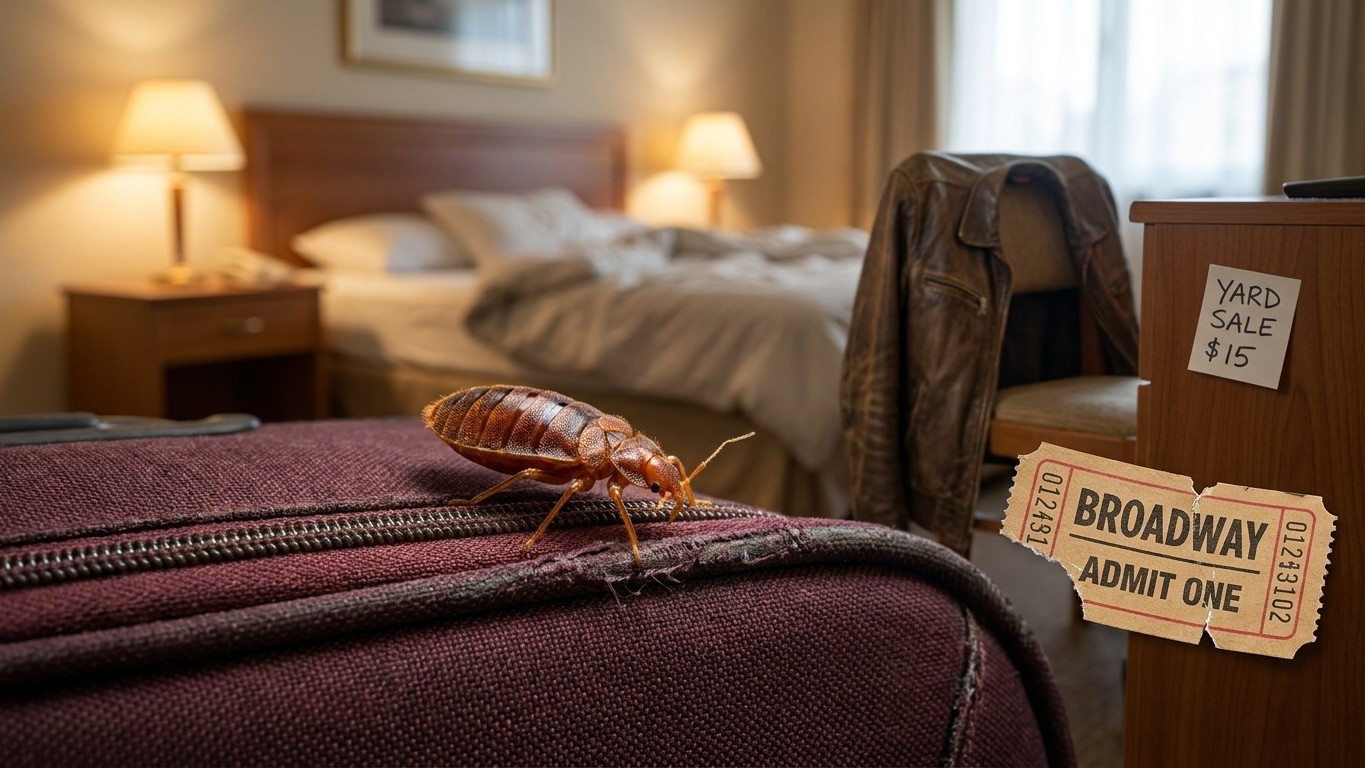

Bed bugs don’t come indoors hunting for food left on a counter or water pooled under a sink. They arrive attached to something a person carried in: a suitcase pulled off a hotel luggage rack, a secondhand recliner picked up at a yard sale, a coat draped over a theater seat. Once inside, they don’t need a source of food or water at all. A sleeping body supplies both. That’s the short answer, and it’s also why the usual advice about crumbs and leaky pipes does almost nothing for this particular pest.
What they are actually looking for

Every indoor pest that shows up in a house is chasing one of three things: food, water, or shelter. Ants trail toward a spill. Cockroaches gather where a faucet drips. Bed bugs break that pattern almost completely.
They don’t need standing water, crumbs, or pet food left in a bowl. Their food source is a person or a pet sleeping nearby, and they only need to reach it every several days to survive. What they’re actually “looking for” when they enter a home isn’t a resource sitting in the kitchen. It’s a ride. They travel on luggage, on used furniture, on clothing, on the seams of a backpack set down for twenty minutes in the wrong place. A bed bug doesn’t scout a house and decide to move in. Something carries it across the doorway without either party noticing.
This distinction changes what “prevention” even means for this species. A spotless house offers a bed bug nothing less than a house with dishes piled in the sink. Sanitation, the tool that stops ants, roaches, and most rodents, has almost no effect here. The EPA’s Integrated Pest Management framework still applies, but the target shifts. As the agency puts it, “As a first line of pest control, IPM programs work to manage the crop, lawn, or indoor space to prevent pests from becoming a threat.” For bed bugs, managing the indoor space means reducing hiding spots and controlling what comes through the door: inspecting secondhand furniture before it’s carried inside, checking luggage after travel, and keeping clutter down in the rooms where people sleep, rather than wiping counters.
None of that guarantees a house stays bug-free. A single infested item can start a problem in a home that’s otherwise immaculate. But knowing this pest isn’t drawn by anything left out, and is drawn only by what’s carried in, is the fact that makes every other prevention step make sense.
How they get in
Because bed bugs don’t wander in on their own the way ants or spiders do, “how they get in” is less about gaps in a foundation and more about what crosses the threshold, and what’s already inside a home when someone moves. Still, once they’re in a building, there are specific paths worth checking, especially in apartments, duplexes, and other shared-wall housing.
- What arrives with a person: suitcases, backpacks, and used clothing are the most common way bed bugs enter a home that wasn’t already infested. A trip that included a hotel stay, a bus, or a night at someone else’s place is the biggest single risk factor.
- Secondhand and used furniture: mattresses, box springs, couches, and upholstered chairs picked up from a curb, a yard sale, or even a reputable-looking resale shop can carry bed bugs and their eggs in seams that look completely clean to the eye.
- Shared walls and outlets in multi-unit buildings: bed bugs move between apartments through wall voids, electrical conduits, and gaps around shared plumbing. An infestation in one unit can spread to a neighbor’s without either resident bringing anything in from outside.
- Cracks around baseboards, outlets, and headboards: once inside a room, bed bugs don’t need much space to disappear. Their flattened bodies slip into mattress seams, gaps behind a wall-mounted headboard, and the narrow space around an outlet cover.
- Door sweeps and window screens: these matter far more for ants, spiders, and rodents, since bed bugs rarely travel outdoors between buildings on their own. Worth maintaining for other pests, but not the entry point to focus on for this one.
The gap that surprises most people is how little space a bed bug needs once it’s already inside. A crack behind a picture frame, the seam where a nightstand drawer meets its frame, the underside of an outlet cover: all wide enough. That’s a different problem than sealing a foundation. The checklist that stops rodents or ants barely touches this pest. What matters is what gets inspected before an item comes inside, and what gets checked immediately after travel.
When they come, and why
Most household pests follow the calendar. Ants surge with a spring rain that floods their nests. Rodents push indoors when the first hard frost cuts off their outdoor food supply. Bed bugs don’t follow that pattern, because their presence indoors isn’t tied to weather at all. A heated home in winter and an air-conditioned home in summer offer the same steady temperature a bed bug needs to keep feeding and reproducing. There’s no season that drives them out of hiding and no season that makes them dormant.
What does shift, seasonally, is the rate of introduction, not the rate of activity. Travel volume rises around vacations and holidays, and every trip involving shared lodging, public transportation, or secondhand shopping raises the odds of picking one up. Moving season, when leases turn over and used furniture changes hands most often, is another spike point, tied less to temperature than to how many mattresses, couches, and boxes are changing addresses at once.
Regional differences show up here too, but not as a temperature threshold worth naming. Housing density matters more than climate: a region with a lot of shared-wall apartment buildings sees more spread between units than a region of single-family homes, regardless of how cold the winters run. Travel hubs, whether a tourist city or a college town with constant turnover, see more introductions than a rural county with little transient population. Rather than pin a date or a degree mark to this pest, the more useful move is to look at what drives infestations in a specific area, since travel patterns and housing turnover predict risk far better than the season on a calendar.
The practical result is that vigilance can’t be scheduled the way it can for a seasonal pest. There’s no month to relax and no month to brace. The moments that matter are tied to specific events: a trip home, a piece of furniture coming through the door, a new tenant moving into the building next door.
Fixing the reason rather than the symptom
A house that offers a pest nothing gets fewer pests, and a house that still offers everything a pest wants will need every treatment repeated. Since bed bugs aren’t drawn by food or clutter in the usual sense, fixing the reason means controlling what comes through the door rather than what’s left on the counter.
The EPA frames the whole approach this way: “Integrated Pest Management (IPM) is an effective and environmentally sensitive approach to pest management that relies on a combination of common-sense practices.” That combination starts before any product enters the picture. “Before taking any pest control action, IPM first sets an action threshold, a point at which pest populations or environmental conditions indicate that pest control action must be taken.” For most households, that threshold is a confirmed sighting, not a suspicion. The next step is confirming what’s actually there: “IPM programs work to monitor for pests and identify them accurately, so that appropriate control decisions can be made,” since bites alone don’t confirm bed bugs and several other insects leave similar marks.
Only after prevention and identification does control enter the sequence, and the order still matters. “Effective, less risky pest controls are chosen first, including highly targeted chemicals, such as pheromones to disrupt pest mating, or mechanical control, such as trapping or weeding.” The broadest, least targeted option comes last. “Broadcast spraying of non-specific pesticides is a last resort.” Reaching for a spray before confirming the pest and addressing how it got in runs that sequence backward.
Bed bugs are also one of the species where a home remedy or a single store-bought product usually isn’t enough. An infestation spread beyond one mattress or piece of furniture is a job for a licensed pest control professional, not a weekend project. Pesticides are designed to be toxic to pests and can be toxic to people when used improperly, with children, older adults, and people with compromised immune systems named as especially at risk, which is one more reason a professional applicator, working from a label written for that specific product, matters more here than for a lot of other pests. Questions about a specific registered product go to the National Pesticide Information Center at 1-800-858-7378, rather than to a guess. For the process of confirming and treating an active infestation, the control page in this series covers it start to finish. This page is the one that keeps bed bugs from coming back once that work is done, by closing off what let them in the first time.
Common questions
Do bed bugs mean a house is dirty?
No. Since bed bugs aren’t drawn by food or clutter, a spotless home can have them and a cluttered one can be free of them entirely. They arrive because something carrying them, luggage, used furniture, clothing, crossed the threshold. Cleanliness affects how easy they are to find and treat, not whether they show up in the first place.
Can bed bugs live outside a home?
They can survive short stints outdoors, but they don’t establish outdoor colonies the way ants or ticks do. Their life cycle depends on a nearby host to feed on, which is why they’re almost always found close to where people sleep rather than in yards or gardens.
Is a store-bought spray enough to get rid of bed bugs?
Rarely, once an infestation has spread beyond a single item. Bed bugs hide deep in seams, wall voids, and furniture joints that a surface spray doesn’t reach, and the EPA’s own guidance places broadcast spraying last in the sequence of pest control methods, not first. A licensed pest control professional working from a product label is the more reliable route. Questions about a specific registered product can go to the National Pesticide Information Center at 1-800-858-7378.
Do bed bugs spread disease?
Bed bugs are not documented as carriers of disease in the way mosquitoes or ticks are. Their bites can cause itching, skin irritation, and in some people an allergic reaction, but transmission of illness isn’t part of the documented picture for this species. For specific health concerns, the Centers for Disease Control and Prevention and a local health department are the right resource.