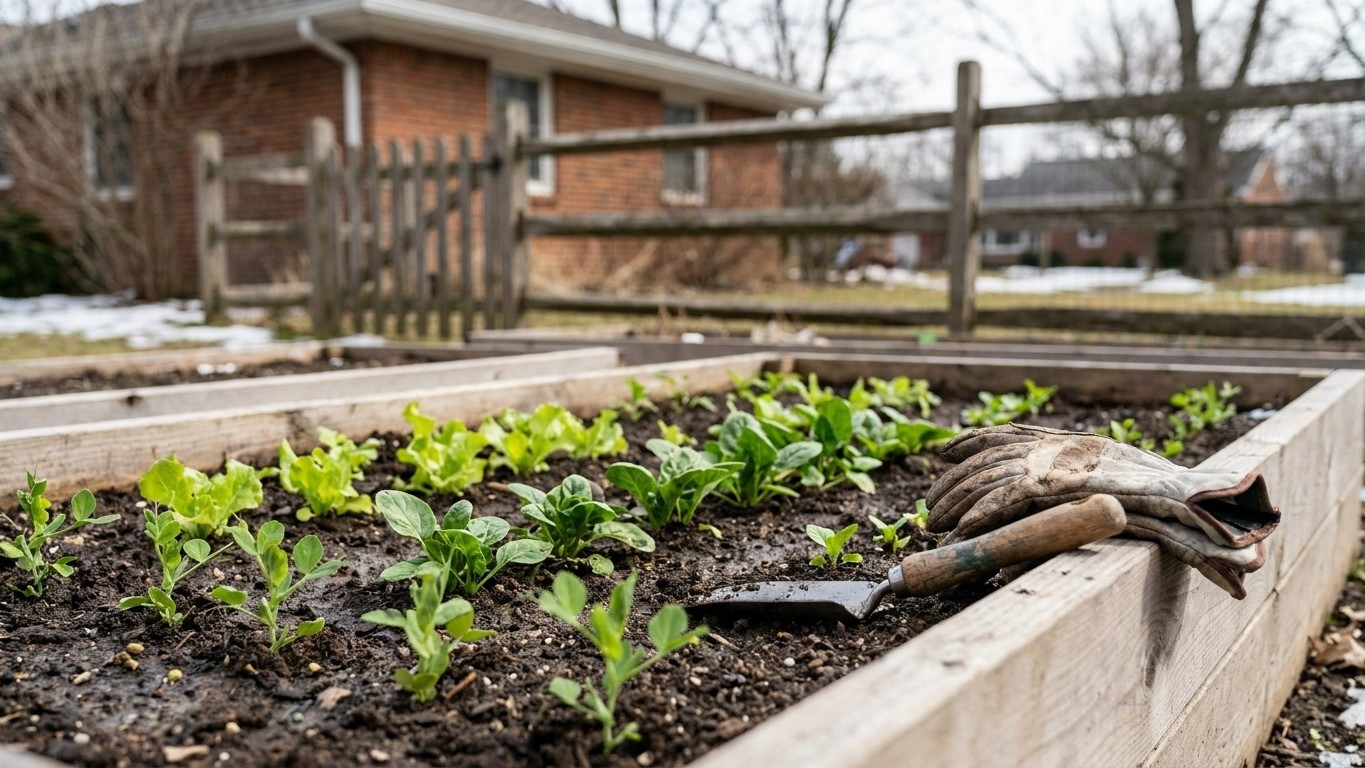

Early March in Pennsylvania sits weeks before the last frost across most of the state, so the honest answer is a short list: hardy greens, alliums, and peas for southern counties late in the month, cold frames and dormant plantings everywhere else, and a full slate of indoor seed-starting to get ahead of the real planting season.
What goes in the ground in March

The calendar says spring, but the soil doesn’t care what the calendar says. What decides whether a seed or transplant survives is soil temperature and where the date falls relative to the last frost window, not the month printed on a seed packet. In Philadelphia, the mildest corner of the state, the last spring frost typically falls somewhere between March 29 and April 6. That means even in the state’s warmest region, most of March sits before that window closes. In the northern tier and up in the Alleghenies, add two to four more weeks, which pushes safe planting into April or later.
That’s not a reason to leave the garden empty. It’s a reason to be selective. Peas tolerate cold soil and light frost, and they’re one of the few crops that reward an early sowing once the ground is workable, meaning it crumbles rather than sticks to a shovel. Onion sets and onion or shallot transplants go in the same way, since alliums shrug off a freeze that would kill a tomato outright. Garlic that missed its fall planting window can still go in during early spring, though yields usually run smaller than a properly fall-planted crop. Spinach, arugula, and mustard greens germinate in soil as cool as the mid-40s and hold up fine under a light frost.
What doesn’t belong in the ground yet: anything in the squash, bean, or nightshade family. A warm afternoon doesn’t mean warm soil, and cold, wet ground rots seed before it ever germinates. If the plan is to push the season, do it under cover instead of in open soil. Cold frames and low tunnels buy several degrees of protection and let hardy greens and alliums go in earlier than the open bed would allow. Bare-root fruit trees, cane fruits, and dormant perennials also belong on this month’s list, since they’re planted while still dormant and before active growth starts, regardless of air temperature. Forcing rhubarb or chicory indoors is another way to get fresh food out of a garden that technically has nothing growing in it yet.
What to start under cover
Seed-starting math works backward from the frost window, not forward from today’s date. Tomatoes, peppers, and eggplant need roughly six to eight weeks indoors before they’re ready to move outside, and they shouldn’t go outdoors until well after the last frost, often two to three weeks past it, once nights stay reliably above 50°F. Counting back from a Philadelphia transplant date near mid-May puts the indoor start right around late March. Gardeners farther north, where frost lingers into late April or May, should hold that same six-to-eight-week count but start later rather than earlier, since an indoor tomato started too soon just sits and gets leggy waiting for outdoor conditions to catch up.
Broccoli, cabbage, and other brassicas run on a shorter clock, about four to six weeks indoors, and they tolerate a light frost once hardened off, so they can move outside earlier than tomatoes even with an identical start date. Onions grown from seed rather than sets need the longest lead time of any common vegetable, often eight to ten weeks, which makes early March the right window almost statewide.
The two ways this goes wrong are both about timing, not skill. Start too early, using a fixed date instead of counting back from frost, and the result is a rootbound, leggy plant that struggles after transplant no matter how carefully it’s hardened off. Start too late, and the plant never reaches transplant size before the outdoor window opens, which shortens the harvest before it begins. A seedling that looks small in early March is doing exactly what it should if the transplant date is still six weeks out.
What is ready to pick
Outdoors, March harvests are thin almost everywhere in the state, and pretending otherwise does the reader no favors. What’s actually available skews toward what survived winter rather than what grew this month. Kale, leeks, and parsnips left in the ground over winter often taste sweeter after repeated freezes convert starches to sugar, and they’re diggable as soon as the ground thaws enough to work a fork into it. Mâche, sometimes called corn salad, is one of the few greens that stays edible under snow cover and can be harvested the moment it’s exposed.
Cold frames extend this further. Spinach, arugula, and mustard planted the previous fall or even earlier in the season often hold through winter under frame protection and start putting out new growth as daylight lengthens, giving a real harvest weeks before the open garden produces anything.
Indoors, sprouts and microgreens fill the gap with almost no lead time, ready in one to two weeks from sowing and requiring nothing more than a sunny windowsill or a grow light. This is also the month to walk the root cellar or pantry shelf and check stored squash, potatoes, and onions. A soft spot on a squash, a sprouting potato, or an onion going papery at the neck signals it needs to be used or composted before it takes neighboring produce with it. Catching one bad squash early can save an entire bin of stored winter produce.
The jobs that matter this month

March carries more weight in the yearly work calendar than the thin harvest list suggests, and skipping these jobs costs the gardener a season, not a week. Dormant pruning of fruit trees, grapevines, and cane fruits belongs here, done before buds swell and while the plant’s structure is still visible without leaves in the way. Prune too late, after growth starts, and the plant wastes energy healing cuts instead of pushing new growth where it’s wanted.
Seed ordering is a quieter deadline but a real one. Popular varieties, especially disease-resistant tomato and pepper lines, sell out from seed catalogs well before planting season, and a gardener who waits until April is choosing from what’s left rather than what was wanted.
Soil testing pays off now because results take a few weeks to come back, and any lime or amendment recommended by the test needs time to work into the soil before spring planting starts in earnest. Pennsylvania State University’s Agricultural Analytical Services Lab, reached through the extension service, processes these tests for home gardeners at a modest cost.
Turning compost, cleaning and sharpening tools, and repairing raised beds or fencing all belong to the same logic: they’re easy to postpone when there’s nothing visibly growing, and expensive to skip once the season turns busy. A dull pruning saw or a fence with a gap from winter frost heave is a small annoyance in March and a real problem in June. Rotation planning, deciding which bed grows tomatoes versus beans versus brassicas, also happens now, on paper, while there’s still time to change the plan before seed goes in the ground.
What not to do in March
The classic mistake is trusting the air instead of the soil. A run of 60-degree afternoons feels like spring, but soil several inches down often still sits in the 40s, cold enough to rot bean and squash seed before it germinates and to stunt a tomato transplant even if it doesn’t outright kill it. Wait for the soil, not the forecast.
A second mistake follows the first: uncovering cold frames, pulling mulch, or hardening off tender transplants after a mild stretch, only to lose the new growth when a hard freeze follows a few days later, as it regularly does across the state through early April and later at higher elevations. Keep protective covers in place until the freeze risk has genuinely passed for the specific location, not just until one warm week arrives.
Feeding lawns and beds with nitrogen too early is another recurring error. Applied before roots are actively growing, nitrogen either washes away with spring rain or pushes weak, soft top growth that a late freeze then damages. Wait until the ground has warmed and growth has visibly resumed.
Working wet soil causes damage that lasts the whole season. Digging or tilling a bed that’s still soggy from snowmelt compacts the structure, squeezing out the air pockets roots need, and that compaction doesn’t undo itself, it has to be worked back out over months. And spring-flowering shrubs like forsythia and lilac should not be pruned now. They set their flower buds the previous year, so a March pruning cuts off the very blooms the plant is about to produce. Prune those specific shrubs right after they finish flowering instead.
Checking this against your own county
A statewide answer is a starting point, not an instruction for a specific yard. Pennsylvania’s elevation swings, from the river valleys near Philadelphia to the ridges of the Alleghenies, move frost dates by two to four weeks in either direction, and a shaded, low-lying yard can run colder than an open, south-facing one just a few miles away even at the same elevation. Local hardiness also spans a wide range across the state, from USDA zone 5a in the coldest northern counties to 7b near the southeastern corner, and that spread changes which perennials and fruit plantings survive winter at all.
For a planting date tied to an actual address, the Penn State Extension offers county-level guidance and a planting calendar built for local conditions rather than a statewide average.
Common questions
Can I plant tomatoes outside in March in Pennsylvania?
No. Even in Philadelphia, the mildest part of the state, the last spring frost falls between March 29 and April 6, and tomatoes need soil and night temperatures well above freezing. Start them indoors instead and transplant after the local frost window closes.
What vegetables can survive frost in March?
Peas, onions, garlic, shallots, spinach, arugula, kale, and mustard greens all tolerate a light frost and can go into workable soil ahead of the last frost date in southern counties.
When should I start seeds indoors for a Pennsylvania garden?
Count backward from the local last frost date rather than a fixed calendar date. Tomatoes and peppers need six to eight weeks indoors before transplant, brassicas need four to six weeks, and seed-grown onions need eight to ten weeks.
Is it too early to prune fruit trees in March?
No, this is the right window. Dormant pruning should happen before buds swell, and March, before active growth resumes, is typically the last practical chance to prune without stressing the tree.