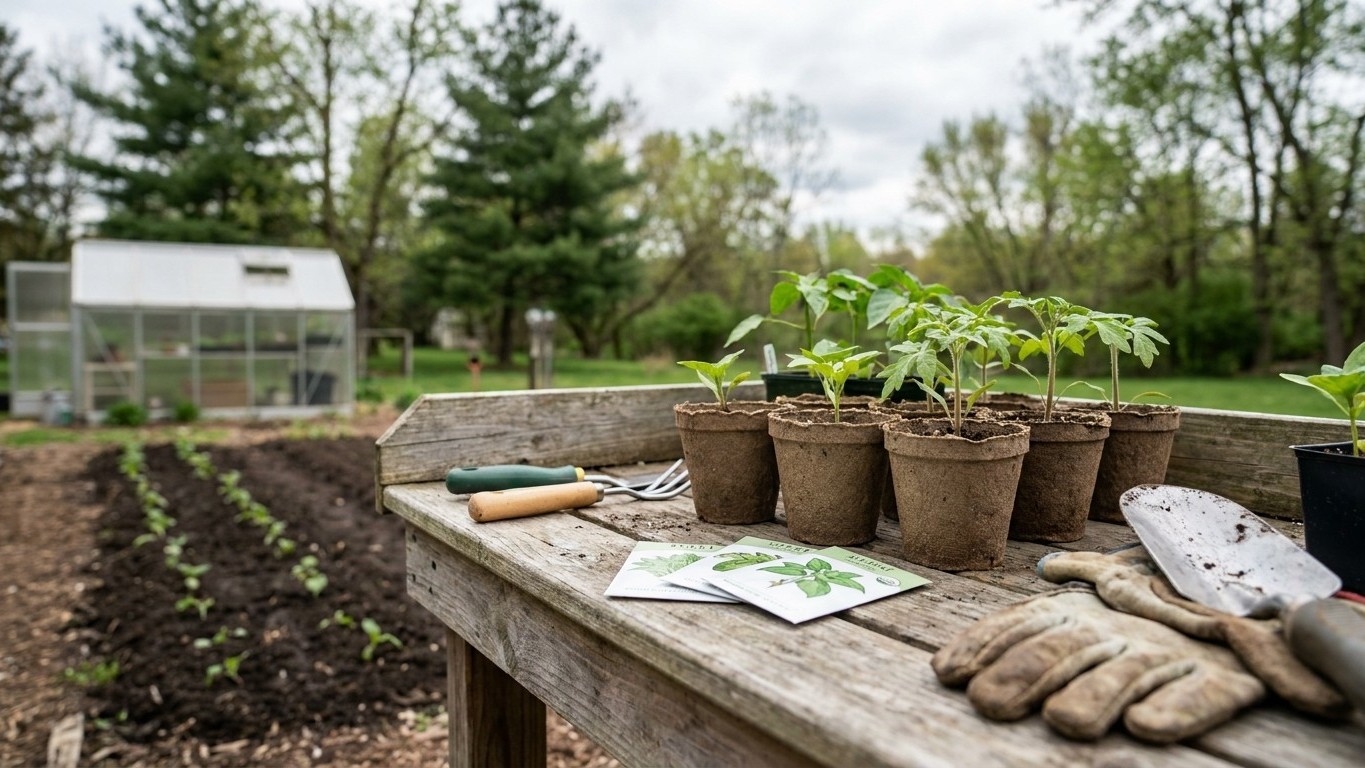

April in Pennsylvania splits the state into two different gardens. Around Philadelphia, the average last spring frost falls between March 29 and April 6, so cold-hardy crops can go into open ground almost as soon as the ground thaws. Farther north and at higher elevation, that window slides two to four weeks later, and the soil itself is often still too cold to work. The safe list this month is short but real: peas, onion sets, spinach, kale, seed potatoes, and bare-root fruit stock. Tomatoes, peppers, and squash stay indoors.
What goes in the ground in April

The calendar tells you the month. The soil tells you whether it’s ready. A thermometer pushed a few inches into the bed is worth more than any date on a seed packet, because cold, wet soil rots seeds before they germinate no matter how mild the air feels on a sunny afternoon. That’s the real decision point this month, and it plays out differently depending on where in the state you’re standing.
In and around Philadelphia, where the average last freeze lands between March 29 and April 6 according to NOAA’s 1991-2020 climate normals, the frost risk is mostly behind you by mid-April. That opens the door to direct-sowing peas, spinach, lettuce, radishes, carrots, and beets, plus setting out onion sets and seed potatoes. Garlic planted the previous fall is already pushing green shoots and needs nothing more than a side-dressing. Bare-root fruit trees, brambles, and asparagus crowns go in now too, while the plants are still dormant and before buds swell.
The northern tier and the Alleghenies play by a different clock. Two to four weeks behind the Philadelphia corridor means early April there can still carry real frost risk, and the ground may be too wet or too cold to work at all. The move in those counties is to hold the tender direct-sown crops a few weeks and lean instead on cold frames, low tunnels, and hardened-off brassica transplants for late in the month.
| Region | Frost pattern | Safe this month |
|---|---|---|
| Philadelphia corridor | Last freeze typically clears by early April | Peas, spinach, onion sets, seed potatoes, bare-root fruit stock |
| Northern tier / Alleghenies | Last freeze runs 2-4 weeks later | Cold-frame greens, hardened transplants late in the month, garlic maintenance |
What never belongs in open ground this month, anywhere in the state, is anything warm-season: tomatoes, peppers, cucumbers, beans, squash. Cold soil stalls them or kills them outright, and a warm afternoon doesn’t change that math.
What to start under cover
Indoor sowing works backward from the frost window, not forward from today’s date. Tomatoes and peppers typically need somewhere around six to eight weeks indoors before they’re sturdy enough to move outside, and outside only happens once the local last-frost risk has genuinely passed. For a Philadelphia-area gardener, with that window closing in early April, seed started now is really aimed at a mid-to-late May transplant date, once nights have settled further. For a grower in the northern tier or the Alleghenies, where frost risk lingers two to four weeks longer, that same six-to-eight-week count pushes the transplant date later still, and starting indoors now is well timed rather than late.
The two failure modes sit on either side of that math. Start too early and you’re fighting leggy, rootbound seedlings by the time it’s finally warm enough to plant them out, stretched toward a window and starved for room. Start too late and the plant never catches up, especially in the shorter growing season of the higher elevations, where an early fall frost can end things before a slow-started pepper plant has produced much of anything.
April indoors is also the month for succession-starting brassicas, longer-season herbs, and anything meant to follow the first round of spring greens once they bolt in early summer heat. Keep the trays under real light, not a windowsill, and start hardening seedlings off outdoors in a sheltered spot as soon as daytime temperatures allow, a step that’s easy to skip and expensive to skip.
What is ready to pick
The garden itself is thin in April, but it isn’t empty. Asparagus that’s established for a few seasons starts sending up spears late in the month, especially in the milder southeastern counties, and the first cutting is often the sweetest of the year. Rhubarb stalks thicken enough to pull. Kale, collards, and spinach that overwintered under mulch or row cover come back to life fast once days lengthen, and their new growth is tender compared to what struggled through winter.
Cold frames and low tunnels, where anyone kept them running through the tail end of winter, are usually holding lettuce, mesclun mixes, and scallions ready to cut. Indoors, sprouts and microgreens on a windowsill fill the gap for households that want fresh greens before the outdoor beds catch up, and they’re ready in days rather than weeks.
This is also the month to go through the root cellar or basement shelf with a critical eye. Stored squash softens at the stem end before it visibly rots; potatoes that have started sprouting eyes are still edible once the sprouts are removed, but they won’t keep much longer; onions that have gone soft or started growing green shoots should be used first, not saved for later. April is typically the last stretch before those stores run out or turn, so working through them now avoids waste.
The jobs that matter this month

Dormant pruning of fruit trees, brambles, and grapevines has a real deadline in April: once buds swell and break, the window for clean dormant cuts closes, and pruning too late costs blossoms and, later, fruit. If it hasn’t happened yet, this month is the last practical chance.
Soil preparation earns its place here too. Turning in compost, breaking up compaction, and raking beds level all matter more now than any other month, because everything planted in the weeks ahead depends on that groundwork being right before the seed goes in, not after. Mulch that was pulled back to let soil warm in early spring goes back down once seedlings are up, holding moisture and slowing weeds before they get a foothold.
Peas and early climbing crops need staking or trellising set up before they sprawl, not after, since untangling vines from the ground is far harder than guiding them up a support from the start. Watering rhythm matters even in cool weather: April’s mix of rain and wind dries beds unevenly, and new transplants in particular need checking rather than assuming rainfall covered it.
Succession sowing keeps the lettuce and radish supply from arriving all at once and then vanishing; a small planting every couple of weeks, rather than one large one, spreads the harvest out. Pest scouting starts in earnest too, since asparagus beetles and early cutworms show up right as new growth becomes tender enough to be worth eating. Seed catalogs are also worth a last check this month: popular varieties sell out earlier every season, and April is late to still be waiting on an order.
What not to do in April
The classic mistake is trusting the air instead of the soil. A run of 70-degree afternoons doesn’t mean the ground has warmed to match, and tomatoes or peppers set out on that promise usually sulk for weeks even if they don’t die outright, since cold soil around the roots undoes whatever the warm air is doing above ground.
Uncovering cold frames, row covers, or newly planted beds too early after a mild stretch is the second trap. The frost window in the Philadelphia corridor runs to early April, and in the northern tier and Alleghenies it extends two to four weeks beyond that; a few warm days in between don’t retire that risk, and a cover pulled off too soon can lose a whole planting to a single cold night.
Nitrogen timing trips people up too. Heavy nitrogen feeding early in the season pushes soft, leafy growth at the expense of root development and makes that growth more vulnerable to a late cold snap. It’s better to feed lightly and let root systems establish first, adding nitrogen once plants are actively growing and the frost risk for the area has genuinely passed rather than just felt like it has.
Checking this against your own county
A statewide month is a starting point, not an instruction. Elevation, valley cold pockets, and the simple distance between the southeast corner and the northern tier or Alleghenies move these windows by weeks, not days. A planting date that works near Philadelphia can be genuinely premature two hours north or a few hundred feet higher up.
The most reliable next step is checking conditions against a local source rather than a statewide average. Pennsylvania State University’s extension service, at extension.psu.edu, publishes county-level guidance and a planting calendar built for the state’s actual range of climates, and it’s worth a look before committing seed to ground.
Common questions
Is it too late to plant peas in April in Pennsylvania?
No. Peas tolerate cold soil and light frost well, and April is one of the better months to get them in, particularly in the Philadelphia corridor where the last freeze has typically cleared by early April.
Can tomatoes go outside in Pennsylvania in April?
Not safely in most of the state. Even where the average last frost falls in late March or early April, that’s an average, not a guarantee, and tomatoes are especially sensitive to cold soil regardless of air temperature.
What USDA hardiness zone is Pennsylvania in?
The state spans USDA zones 5a to 7b under the 2023 Plant Hardiness Zone Map, with the milder end of that range concentrated around Philadelphia and colder zones through the northern tier and higher elevations.
When should seedlings started indoors move outside?
Once the local last-frost risk has passed and seedlings have been hardened off gradually over a week or two. That date varies by two to four weeks between the Philadelphia corridor and the state’s northern and higher-elevation counties.
Gardeners who plant by the Moon can check the April 2027 moon planting calendar, a tradition rather than a proven method.