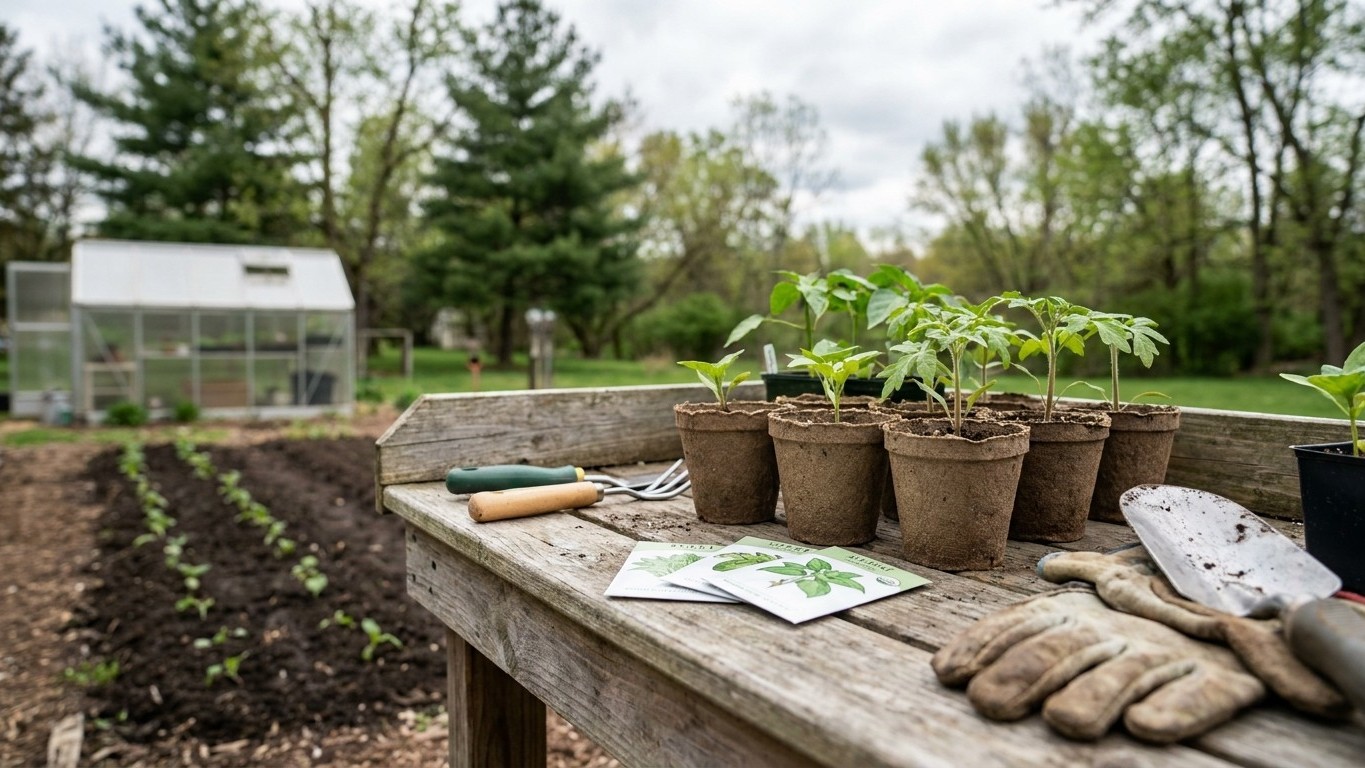

Early April in Rhode Island still sits inside the frost window, so the safe planting list is short but real: peas, spinach, lettuce, radishes, and onion sets go in the ground now, while tomatoes, peppers, and squash wait for warmer soil. The deciding factor is soil temperature, not the date on the calendar.
What goes in the ground in April

The reference frost data for Rhode Island, drawn from NOAA’s 1991-2020 Climate Normals at a Providence-area airport station, puts the last spring frost between April 7 and April 17. That means the first half of the month still carries real freeze risk, and even after that window closes, soil warms slower than air. A 65-degree afternoon does not mean the top three inches of dirt have caught up.
What tolerates the cold
Peas germinate in soil as cool as 40 degrees, and they actually sulk in warm ground, so early-to-mid April is their moment. Spinach, lettuce, radishes, turnips, and carrots all handle a light frost on the leaves once they’re up, and their seeds don’t rot in cool soil the way squash or bean seeds do. Onion sets and seed potatoes go in as soon as the ground can be worked without turning to mud. If garlic or shallots weren’t planted in fall, a spring planting of sets can still produce, though the bulbs will run smaller.
What’s a gamble
Direct-sowing beans, corn, cucumbers, or squash before the frost window closes is a bet against a cold snap that, historically, wins less than a third of the time in this range but still wins often enough to matter. Tomato and pepper transplants set out now risk a hard stop from a single cold night, since these are the crops with zero frost tolerance. The fix isn’t a fixed date. It’s watching the local forecast against that April 7-17 window and giving warm-season crops another few weeks.
| Crop | April status | Why |
|---|---|---|
| Peas, spinach, lettuce | Direct sow now | Germinate below 45°F, tolerate frost on foliage |
| Onion sets, seed potatoes | Plant now | Underground growth unaffected by light frost |
| Carrots, radishes, turnips | Direct sow once soil is workable | Cold-hardy roots, slow but steady germination |
| Beans, corn, squash | Wait | Seeds rot in cold, wet soil |
| Tomatoes, peppers | Hold indoors or under cover | Zero frost tolerance |
What to start under cover
The arithmetic for starting seeds runs backward from that same April 7-17 window, not forward from a date on a seed packet. Cucumbers, summer squash, zucchini, and melons typically want three to four weeks under cover before they go outside, and they don’t go outside until the soil has had real time to warm, generally weeks after the last frost date itself. Starting these indoors through April, aimed at a late May transplant, lines up well.
Two ways this goes wrong
Start cucurbits too early, say six or seven weeks out, and they turn into leggy, rootbound plants sulking in a too-small pot long before the ground is ready for them. Cucumbers and squash resent root disturbance more than most vegetables, so a plant that’s outgrown its cell often stalls for a week or two after transplant instead of taking off. Start too late, on the other hand, and there’s not enough season left to reach the first fall frost, which lands between October 24 and November 3 at that same reference station. That’s roughly six months of growing season on paper, but the usable window is shorter once early and late weeks of unreliable weather are subtracted.
Tomatoes and peppers, if they weren’t started back in February or early March for a six-to-eight-week head start, can still go in now for a later main crop, just not the earliest one. Broccoli and cabbage transplants for an early crop also do well started under cover this month, since these brassicas actually prefer to go into the garden while there’s still a chill in the air.
What is ready to pick
April harvests in Rhode Island are modest, and honestly should be treated that way rather than oversold. Anything that overwintered under mulch or a low tunnel, kale, spinach that made it through the cold months, or hardy leeks left in the ground, comes back to life first and can be cut as soon as new growth shows. Cold-frame greens planted the previous fall are often the most reliable early pick, since the frame buffers them from the worst of the frost swings still happening through mid-month.
Forced and stored crops fill the gap
Rhubarb forced indoors or under a bucket in the garden produces pale, tender stalks weeks ahead of the outdoor crop, and it’s one of the few genuinely fresh treats available this early. Sprouts and microgreens grown on a windowsill add fresh bite to meals with almost no outdoor dependency at all.
Meanwhile, the root cellar or basement stash needs a check. Potatoes that have started sprouting eyes, onions gone soft at the neck, and winter squash with a give at the stem end are all signs the stored crop is on its way out and should be used first, not saved for later.
The jobs that matter this month

April rewards work done before growth catches up with the gardener, and punishes work put off.
Pruning and cleanup deadlines
Dormant pruning on fruit trees and cane berries needs to finish before buds break open, since cuts made after leaf-out cost the plant stored energy it needed for the season. Any mulch piled over strawberry crowns for winter protection should come off as soon as new leaves start pushing, so the crowns don’t rot under damp cover.
Soil, tools, and planning
Soil that’s dry enough to crumble in a fist, rather than clump into mud, is ready for turning and amending. Working wet soil compacts it for the whole season, undoing months of good structure in an afternoon. A soil test now, checking pH and basic nutrients, still leaves time to adjust before the main planting push. Compost piles benefit from a turn as temperatures rise and the pile wakes back up. Tools that spent winter idle deserve a sharpening and an oil wipe before they see daily use. And seed racks thin out fast this time of year, so any variety still on the list is worth ordering now rather than settling for whatever’s left.
- Finish dormant pruning before bud break
- Pull winter mulch off perennial beds as growth resumes
- Test soil pH and work in amendments while beds are still open
- Set stakes and trellis supports before plants need them, not after
- Scout early for slugs and cutworms around emerging seedlings
What not to do in April
The most common mistake this month is trusting the air temperature over the soil. A stretch of 70-degree afternoons doesn’t mean the ground has caught up, and tender transplants set out on the strength of one nice week are the ones most often lost to a cold night later. Wait for the frost window, April 7 to April 17 at the reference station, to genuinely close in the local area before committing warm-season plants outdoors.
Uncovering and feeding at the wrong time
A mild stretch also tempts gardeners to strip row covers and cold frames early. That cover isn’t just about frost on the leaves. It buffers cold snaps that can still arrive well into the month, so pulling it too soon undoes weeks of protection for the sake of a few warm days. On the feeding side, dumping a high-nitrogen fertilizer on young transplants pushes soft, leafy growth at the expense of root establishment, and that soft growth is exactly what a late cold snap damages first. Working wet soil rounds out the list of classic errors, since it compacts the ground and undoes structure that took a season to build.
Checking this against your own county
A state-wide window is a starting point, not an instruction. Rhode Island is small, but coastal areas near Narragansett Bay warm differently than the higher, colder ground in the northwest corner of the state, and those differences shift real planting dates by a week or two in either direction. The frost figures above come from one airport station, and a rural or inland garden should expect a later spring frost and an earlier fall one than that station shows. The University of Rhode Island Cooperative Extension is the best local check before locking in a planting date.
Common questions
Is it safe to plant tomatoes outside in April in Rhode Island?
No. The reference frost window runs April 7 to April 17, and tomatoes have zero frost tolerance. Even after that window closes, soil is typically still too cold for strong tomato growth; late May is the more reliable target.
What vegetables can I direct sow in April in Rhode Island?
Peas, spinach, lettuce, radishes, carrots, turnips, and onion sets all tolerate cool soil and light frost, making them the safest direct-sow choices this month.
Can I still start seeds indoors in April?
Yes. Cucumbers, squash, and melons started under cover now, three to four weeks ahead of transplant, line up well for a late May move outdoors once soil has warmed.
What is the last frost date in Rhode Island?
NOAA’s 1991-2020 Climate Normals put it between April 7 and April 17 at the reference airport station. Inland and rural gardens often see frost linger a week or two later than that.