
In Rhode Island’s zone 6a-7b, January sits deep inside the frost window that runs from the previous fall through early-to-mid April, so open ground planting is off the table almost everywhere in the state. What you can do is plant garlic if it somehow got skipped in the fall, work under cold frames and low tunnels, start slow-growing seedlings indoors, and knock out the dormant-season jobs that determine how the whole growing year goes.
What goes in the ground in January

The honest answer is that nothing new goes into open ground in Rhode Island in January. Soil across the state is frozen solid or saturated with meltwater for most of the month, and the last spring frost at the reference weather station used for these figures runs April 7 to April 17, with inland and higher-elevation gardens typically running later still. No seed germinates in that kind of ground, and no transplant survives it. Trying anyway wastes seed and time better spent elsewhere.
That said, a few narrow windows still exist. Garlic and shallots are the one crop where late planting sometimes still works: if fall planting got missed entirely and a stretch of unfrozen, workable soil shows up during a thaw, cloves can still go in, though the bulbs will likely be smaller than a properly fall-planted crop. Bare-root fruit trees, brambles, and dormant shrubs can also go into the ground on the rare day when soil is workable rather than frozen or waterlogged, since they aren’t actively growing and don’t need warmth to establish roots.
What’s already growing outside
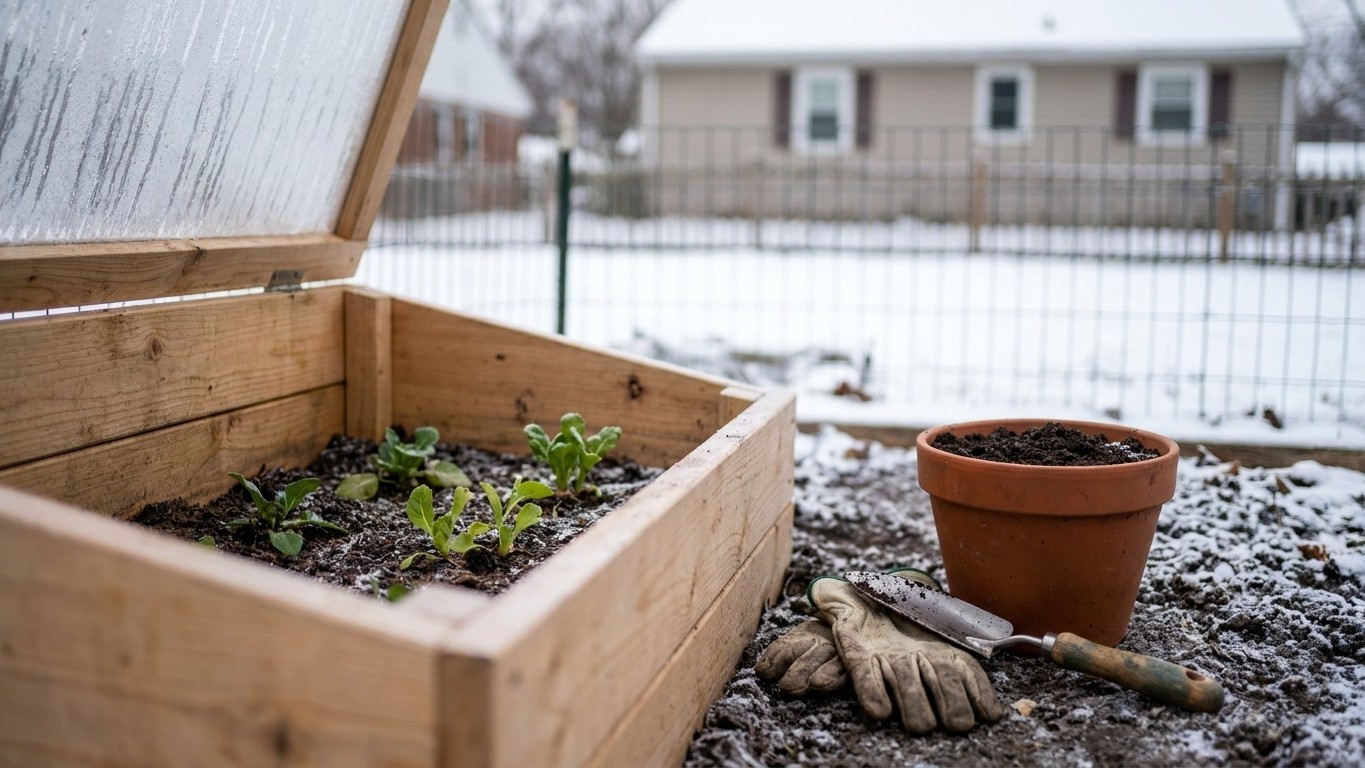
Cold frames and low tunnels set up the previous fall are the real action this month. Hardy greens like spinach, mâche, and claytonia sown in September or October keep slowly growing under cover, protected from the worst of the cold even as outside temperatures drop well below freezing. Overwintering onions and hardy garlic already in the ground continue their slow root development beneath mulch. Indoors, forcing rhubarb crowns or Belgian endive roots in a dark, cool space gives a genuine harvest from stored plant material, without any outdoor planting at all.
What to start under cover
Seed-starting math runs backward from the frost window, not forward from the calendar page. With the last spring frost landing April 7 to April 17, a gardener counts back the number of weeks a given crop needs before it’s ready to go outside, and that number decides the start date, not the fact that it happens to be January.
Onions and leeks grown from seed need roughly 10 to 12 weeks of indoor growth before transplanting, which puts a January start right in range for gardeners aiming at the earlier end of that April frost window. Slow, cold-tolerant crops like this tolerate an early start better than most, since a little extra time indoors under lights rarely hurts them the way it hurts fruiting crops.
Peppers, which need 8 to 10 weeks and also want warm soil to germinate well, sit closer to the edge. Starting them too early in January risks leggy, rootbound plants sitting in small pots for two extra months before the ground and air are warm enough to take them outside, since peppers don’t just need frost to have passed, they need sustained warmth. Starting too late, on the other hand, means running out of the long, warm stretch these crops need to actually fruit before fall frost arrives October 24 to November 3. The safer read for most home gardeners is to hold off on peppers and tomatoes until deeper into late winter, and use January for the truly slow, cold-hardy seedlings that can handle sitting under lights a little longer without suffering for it.
What is ready to pick
Little to nothing comes out of open Rhode Island garden beds in January, and any list claiming otherwise is stretching the truth. What’s actually on the table comes from crops planted months earlier and protected through the cold.
Overwintered kale and Brussels sprouts, left standing through fall, often taste noticeably sweeter after repeated hard freezes convert starches to sugars, a genuine reward for leaving them in the ground rather than a gardening myth. Leeks mulched heavily in fall can still be dug from thawed patches of soil on milder days. Cold frames sown in fall keep producing small, steady harvests of spinach, mâche, and other hardy salad greens right through the month, cut a few leaves at a time rather than all at once.
Indoors, sprouts and microgreens fill the gap for households wanting something fresh and fast, ready in one to two weeks from a sunny windowsill or under basic grow lights, no garden bed required. This is also the month to walk the root cellar or basement storage shelves and check winter squash, potatoes, and onions one by one. Squash with a soft spot or a sweet, fermenting smell needs to be used immediately or composted before it spreads rot to its neighbors; potatoes sending out pale sprouts should be used first; onions gone soft at the neck are past saving.
The jobs that matter this month

January carries plenty of real garden work, even with nothing new going into the ground. These are jobs with actual deadlines, and skipping them costs the whole season ahead, not just this month.
Pruning, ordering, and soil work
Dormant pruning of apple and pear trees, blueberry bushes, and bramble canes is best done now, while the plants are fully leafless and their branch structure is easy to see. Cuts made while the wood is dormant heal cleanly and don’t waste energy the plant would otherwise put into new spring growth. Seed ordering also has a real clock attached: popular varieties, especially heirloom tomatoes and specific pepper cultivars, routinely sell out by late winter, so placing an order now beats finding a favorite variety already gone.
Soil testing through Rhode Island’s cooperative extension service gives results back with enough lead time to actually amend beds before spring planting, rather than guessing at lime or fertilizer needs after the season has already started. Compost piles started in fall benefit from an occasional turn even in cold weather, since turning keeps oxygen moving through the pile and prevents it from going anaerobic and sour.
- Sharpen and oil pruners, loppers, and shovels before spring demand hits
- Repair raised bed frames, trellises, and fencing while beds are empty and easy to access
- Sketch next season’s crop rotation so nightshades and brassicas don’t repeat the same bed
- Check stored bulbs and tubers weekly for early rot
None of this is filler work squeezed in because there’s nothing else to do. Skip the pruning window and trees carry damaged wood into spring; skip the seed order and a favorite variety simply isn’t available; skip the soil test and spring fertilizing becomes a guessing game.
What not to do in January
The most common mistake this month is starting warm-season seeds, especially tomatoes and peppers, too early because a stretch of unusually mild weather makes spring feel closer than it is. Seedlings started in early January for an April 7 to April 17 frost window end up sitting in small pots for ten or more extra weeks, growing leggy and rootbound long before it’s safe to plant them outside. The fix is simple: count backward from the frost window for each specific crop, and resist starting anything with a short indoor timeline just because the calendar flipped to a new year.
A second mistake is pulling mulch or row cover off beds during a warm spell, assuming winter has loosened its grip. Rhode Island’s winter weather swings hard, and a mild stretch in January is routinely followed by a hard refreeze within days. Plants and dormant crowns exposed too early lose the protection that got them through the coldest part of winter, right when a cold snap can do the most damage.
Feeding nitrogen to dormant plants is a third error worth naming directly. Fertilizer applied to fruit trees, perennials, or overwintering crops while they’re dormant either washes away unused or, worse, pushes a flush of tender new growth right before a hard freeze arrives and kills it outright. Nitrogen has its place once active spring growth actually begins, not before. Walking on frozen or saturated garden beds and lawns is worth avoiding too, since compacted soil structure from foot traffic on wet ground can take a full season to recover.
Checking this against your own county
Every figure above comes from one reference weather station, and Rhode Island’s small size hides real variation. Coastal towns near Narragansett Bay stay noticeably milder through winter than inland and higher-elevation areas in the northwest corner of the state, around Foster and Glocester, where frost lingers later into spring and arrives earlier in fall. These differences can shift planting windows by one to two weeks or more in either direction.
Treat the state-wide figures here as a starting point, not an instruction specific to any one yard. For local frost data, soil testing, and a Rhode Island-specific planting calendar, the University of Rhode Island’s cooperative extension service is the reliable next stop.
Common questions
Can garlic still be planted in Rhode Island in January?
Only in a narrow window, if fall planting was missed and the soil happens to be workable during a thaw. Cloves planted this late usually produce smaller bulbs than a properly fall-planted crop, since they miss months of root establishment before the ground freezes.
Is it too early to start tomato and pepper seeds in January?
For most Rhode Island gardeners aiming at the April 7 to April 17 frost window, yes. Peppers need 8 to 10 weeks indoors, and tomatoes typically need 6 to 8, so a January start usually leaves seedlings sitting too long in small pots before it’s safe to transplant.
What vegetables can survive a Rhode Island winter outdoors?
Kale, leeks, and Brussels sprouts mulched heavily in fall regularly survive under snow cover, and cold-hardy greens like spinach and mâche continue growing slowly under cold frames or low tunnels through the coldest months.
Why does the frost window matter more than the calendar month for planting decisions?
Soil temperature and frost risk, not the date on a calendar, determine whether a seed germinates or a transplant survives. A mild January day doesn’t change the fact that a hard freeze can still follow within the week, right through the reference window of April 7 to April 17.
Gardeners who plant by the Moon can check the January 2027 moon planting calendar, a tradition rather than a proven method.