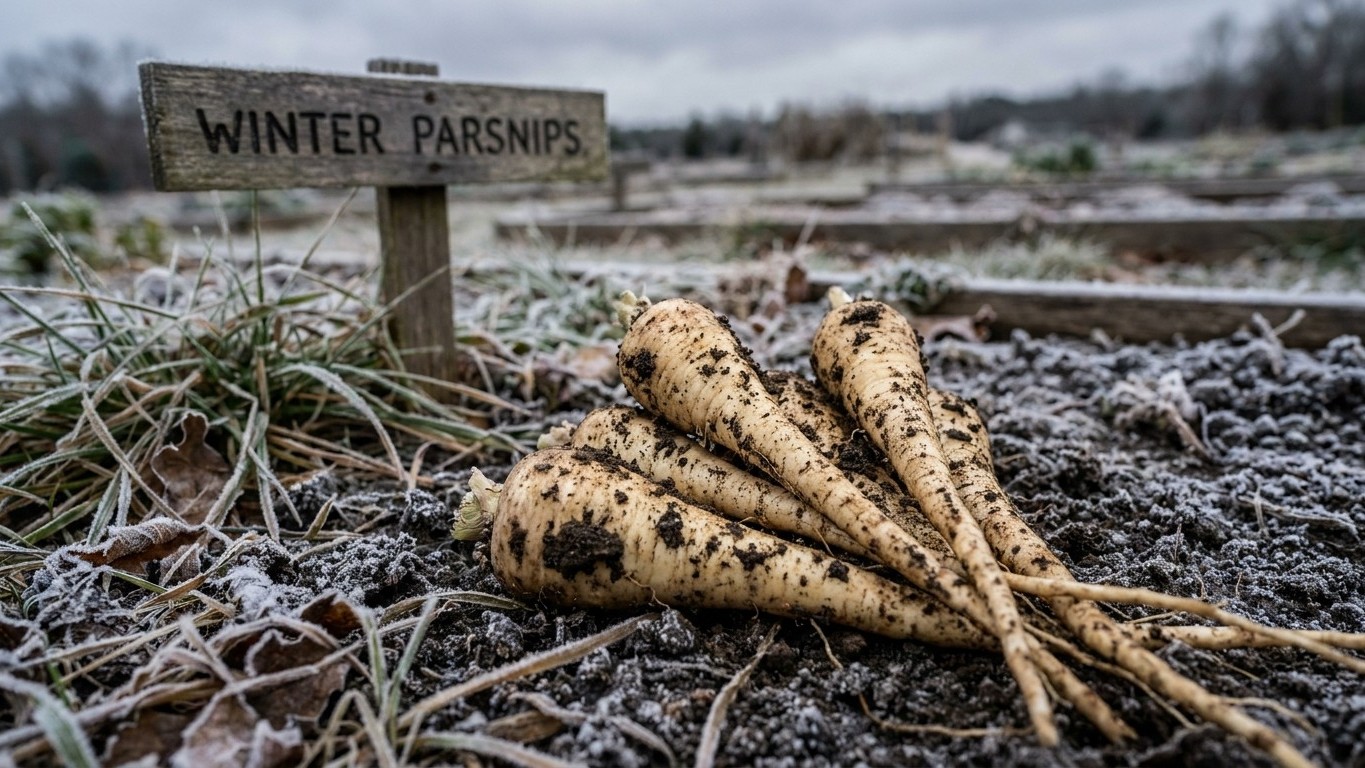

Georgia’s long growing season easily gives a parsnip root the time it needs to size up, but sizing up and sweetening are two separate jobs. The state’s coldest month rarely drops much below freezing on average, and that fact matters more here than any hardiness zone printed on a seed packet. Whether the sweetness ever shows up depends on where in Georgia you’re standing, and how long you’re willing to leave a root in cold ground before you dig it.
The short answer
Everything about whether a Georgia-grown parsnip turns sweet comes down to one question: does the local winter deliver several consecutive weeks of frosty nights, or does it mostly hover above freezing? That’s a frost exposure question, and it’s a different measurement than the hardiness zone printed on a plant tag. A hardiness zone describes the average annual extreme minimum, useful for judging whether a perennial survives the winter. It says nothing about how many frosty nights a root crop actually sits through before harvest.
For the Atlanta area, NOAA’s 1991-2020 Climate Normals put the mean minimum temperature of the coldest month at 35.6°F. That’s the average of daily lows across the coldest stretch of the year, and it sits above freezing. Some nights fall well below that average, and a hard freeze or two shows up most winters. But an average minimum of 35.6°F is not the signature of a winter built on sustained, repeated frost. It’s a borderline reading.
That borderline sits right at the heart of the honest answer here. Parsnips will grow in Georgia. The roots size up, the soil and the calendar both cooperate, and you’ll pull something that looks exactly like a parsnip grown in Vermont. Whether it tastes like one is a separate matter. Sweetening happens because cold temperatures trigger the root to convert stored starch into sugars, a survival response to freezing conditions. That conversion needs repeated exposure to real frost, not a passing chill. With a coldest-month average sitting at 35.6°F, some winters will deliver enough hard frosts to sweeten the crop nicely, and some winters simply won’t.
Location inside the state shifts this considerably. North Georgia and the mountain counties run colder in both directions of the calendar than the Atlanta reference station, and gardeners there can count on a more reliable run of frosty weather. The coastal plain and far south Georgia run milder still, and a parsnip left in that ground through winter is even less likely to hit the sugar-converting cold it’s waiting on. There’s no published threshold that tells you exactly how many frosty weeks tip a county over the line. The general rule holds everywhere: more frost, more sweetness, and Georgia’s statewide average sits close enough to the line that outcome varies by county and by year.
Does the season fit?
Parsnips are sown directly into the garden bed and never transplanted, so the arithmetic that decides whether Georgia’s season fits starts at the seed packet, not a nursery flat.
- Utah State University Extension recommends sowing 2 to 3 weeks before the last expected spring frost. Georgia’s last spring frost, per NOAA’s 1991-2020 Climate Normals for the Atlanta reference station, falls between March 11 and March 29, which places a typical sowing window in late February through mid-March.
- Parsnip seed germinates slowly. Expect 14 to 21 days before any green shows above the soil, and mark the row so bare-looking ground doesn’t get dug up and re-sown by mistake. Seed sown in late February may not show a seedling until mid to late March.
- From the seeding date, Utah State puts full root maturity at 100 to 120 days. Counting forward from a sowing in the first week of March lands root maturity somewhere between mid-June and early July.
- Georgia’s first fall frost, again per the Atlanta-area normals, arrives between November 13 and December 1. That leaves roughly four to five months of open ground between a midsummer root maturity date and the season’s first real cold, far more time than the crop needs simply to size up.
- The real constraint isn’t day count, it’s harvest timing. Because parsnips taste best after weeks of frosty weather rather than the moment they hit the 100-to-120-day mark, most Georgia gardeners leave mature roots in the ground through fall and into early winter, digging only after a string of cold nights rather than the day the root reaches full size.
On pure day count, Georgia’s frost-free window comfortably covers what a parsnip needs from seed to mature root. The tighter fit isn’t season length at all. It’s finding enough cold weeks afterward to make the wait worthwhile, which loops straight back to that coldest-month number above.
What goes wrong here
- Forked roots in heavy or stony ground: Georgia’s Piedmont clay resists the deep, loose structure a parsnip taproot needs to grow straight down. Rocks, clay clumps, and compacted subsoil split the root into two or three forks. Utah State University Extension calls for deep sandy soil, and where the native ground runs heavy, double digging the bed to at least a foot deep before sowing is the fix, not an amendment scattered on top afterward.
- Forked roots from overwatering: this is a separate cause from soil texture and shows up even in loose, well-prepared beds. Uneven watering that swings between soaked and dry pushes the root to branch instead of driving straight down. Consistent, moderate moisture beats a heavy watering schedule.
- A season that runs out before roots size up: sowing too late in spring pushes germination and early growth into Georgia’s hot, humid summer stretch, which stresses the plant and slows root development. Sticking to the recommended window, 2 to 3 weeks before the last spring frost, keeps growth happening during the cooler stretch parsnips actually prefer.
- A winter too mild to sweeten: roots left in ground through a winter that never delivers sustained frost, more likely across south Georgia and the coastal plain, mature without developing the sugar content gardeners expect. There’s no fix for this beyond geography and timing. Harvest for use as a starchy root vegetable rather than waiting on sweetness that may not arrive, or plan the crop for a colder pocket of the state where frost is more dependable.
Before pulling a single parsnip, know what you’re handling. North Carolina Extension’s Gardener Plant Toolbox states it plainly: “All parts of this plant contain furocoumarins which can make skin sensitive to light causing burns so be sure to wear gloves, long sleeves and long pants when dealing with it.” That covers the whole plant, not just the foliage. Roots, leaves, and stems all carry the compound.
What makes this worth taking seriously is the mechanism behind it. Furocoumarins don’t burn skin on contact alone. The reaction needs sap on the skin and sunlight hitting that same patch of skin, together, before it activates. That combination happens to describe a typical Georgia harvest day almost exactly: pulling tops and roots outdoors, sap on bare forearms and hands, under the same bright sun that made it a good day to be out in the garden in the first place. The burn doesn’t appear right away either. It develops hours after exposure, which is part of why the connection between a sunny afternoon of digging and a burn that shows up that evening isn’t always obvious.
Because the reaction depends on sunlight as much as contact, washing exposed skin after the fact doesn’t undo what’s already happened the way it would with a simple irritant. The protection has to come before contact, gloves, long sleeves, and long pants, whenever handling any part of the plant, harvest day included.
Checking this against your own county
The numbers on this page come from the Atlanta reference station, and Atlanta sits in an urban heat island that runs warmer than the surrounding countryside. North Georgia counties and the mountain region freeze earlier in fall and thaw later in spring than these figures suggest, sometimes by several weeks. The coastal plain and far south Georgia run milder in both directions. That’s a meaningful spread for a crop whose entire value depends on catching enough frosty weeks.
The University of Georgia Cooperative Extension staffs county-level offices with agents who track local frost data and soil conditions specific to your area rather than a statewide average. Before committing garden space to a fall-and-winter parsnip crop, a call to your county’s UGA Extension office is worth more than any state-level normal, including the ones cited here. Find your local office through UGA Extension, and ask specifically about typical first and last frost dates for your county, since those two numbers decide almost everything else covered above.
Common questions
Can parsnips actually be grown in Georgia?
Yes. The state’s frost-free season runs far longer than the 100 to 120 days parsnips need from seeding to mature root, so growing them isn’t the challenge. Getting them to sweeten reliably is the part that varies by county and by winter.
Does Georgia’s clay soil ruin parsnips?
Not automatically, but unmodified heavy clay causes forked roots. Utah State University Extension recommends deep sandy soil for this crop, and double digging a bed to loosen heavy Georgia clay to at least a foot deep before sowing addresses the same problem without amending the whole garden.
When is the right time to harvest parsnips in Georgia?
Roots reach maturity 100 to 120 days after seeding, but flavor develops afterward. Most Georgia gardeners leave mature roots in the ground through fall and dig them after a string of cold nights rather than the moment they hit full size.
Is it dangerous to handle parsnip tops while harvesting?
All parts of the plant contain furocoumarins that make skin sensitive to sunlight, according to NC State Extension. The reaction needs both sap on the skin and sunlight exposure, which makes a bright harvest day the exact condition to guard against with gloves, long sleeves, and long pants.