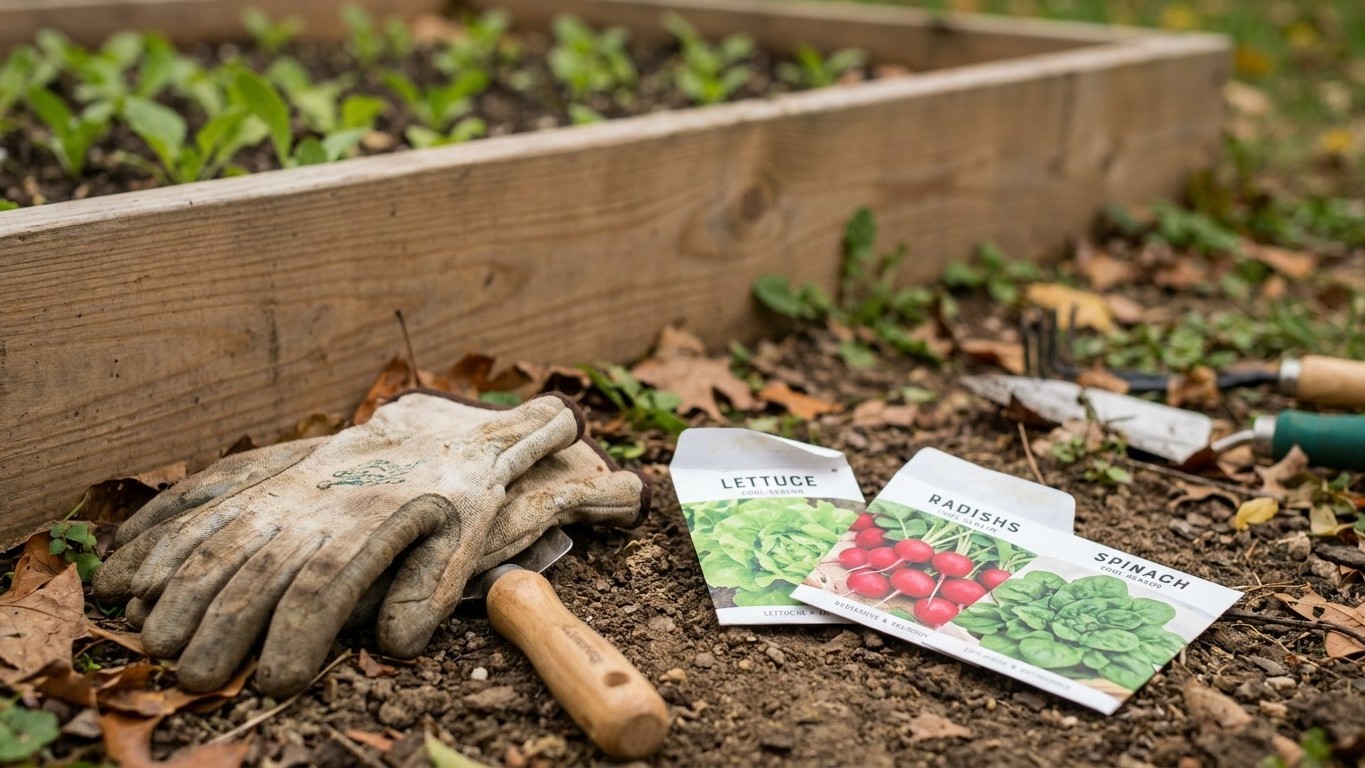

September in South Dakota splits into two gardens: the one you still have, and the one you’re closing down. Early in the month there’s enough runway left for quick greens, garlic and cover crops. But the state’s first fall frost typically lands between September 24 and October 4, so anything planted after the first week or so is racing a clock that’s already ticking. The safest new plantings are garlic, shallots, spinach and radishes. The main job this month is harvest and protection, not new starts.
What goes in the ground in September

The calendar says September, but soil temperature and the freeze window are what actually decide what survives, not the date on the wall. NOAA’s 1991-2020 Climate Normals put the first fall freeze (32°F) at the reference weather station used for these figures in a window running from September 24 to October 4, a ten-day band built on freeze probability, not a single guaranteed date. Suburban and rural gardens away from that station tend to see frost arrive earlier, sometimes by a week or two, and elevation pushes that window back further still.
That band changes the math for everything planted this month. In the first ten days or so, there’s usually enough time for a fast crop to mature before frost stops growth outright. After that, you’re planting things that either shrug off a light freeze or that you intend to overwinter anyway. South Dakota’s USDA Plant Hardiness Zones range from 3b to 5b, a range built on one variable, the average annual extreme minimum temperature, and it matters here because a planting date that’s routine in the milder pockets of the state can be a genuine gamble in the colder ones.
Crops that make sense this month
| Crop | Typical days to maturity | Handles frost | Plant by |
|---|---|---|---|
| Spinach | 30-40 | Yes | mid-September |
| Radish | 25-30 | Yes | mid-September |
| Leaf lettuce | 30-45 | Some varieties | early September |
| Garlic | overwinters | Yes | late September into October |
| Shallots | overwinters | Yes | late September into October |
Garlic and shallots are the real headline here. Planted now, while the soil is still workable, the cloves root before the ground locks up and reward you with a stronger start once things thaw. A cold frame or a simple low tunnel buys another few weeks for the greens on that list, which matters most in the counties where frost tends to arrive on the early side of the window.
What to start under cover
Working backward from a frost window that opens September 24 is the only honest way to plan indoor or covered starts this month, because counting forward from a fixed date ignores how much that window can shift from one county to the next. If a crop needs 60 days to reach a usable size and the frost window opens in three weeks, the arithmetic already tells you it won’t finish outdoors, full stop. That’s the calculation worth doing before seed goes into a tray.
Where the season still has room
Under cover, in a cold frame, a greenhouse, or a sunny windowsill, the math loosens considerably. Cool-season greens like spinach, mache and arugula started now under protection can keep producing well past the point where an open bed has shut down, because the frame or tunnel buys back a good chunk of the days the open garden loses to frost. The same goes for microgreens and sprouts, which sidestep the frost question entirely since they never see outdoor soil.
The two ways this goes wrong are predictable. Start too early, aiming for an outdoor transplant date that’s still weeks off, and the seedlings get rootbound and leggy sitting in trays waiting for conditions that won’t arrive until spring. Start too late, treating the frost window as a hard stop rather than a probability band, and there’s no season left to use what germinates. The fix in both cases is the same: count the days a crop actually needs, then check that against the frost window for your specific ground, not the state average.
What is ready to pick
September is harvest month more than planting month in most of South Dakota, and the list of what’s coming out of the garden is longer than what’s going in. Tomatoes and peppers are finishing their run before frost cuts them off, and both are worth picking at first sign of a hard freeze warning rather than risking the whole crop overnight. Winter squash and pumpkins should come off the vine once the rind resists a fingernail press and the stem has started to dry and toughen, since immature squash won’t cure properly in storage.
Reading the signs correctly
Sweet corn is done when the kernels run milky rather than watery under a thumbnail test. Potatoes can stay in the ground a little longer once the foliage has died back, but they should be dug before the soil turns consistently cold and wet, since that’s when rot sets in fast. Onions are ready once the tops have flopped over and started to dry at the neck; pulling them too early leaves soft necks that won’t store.
For anything already in storage from earlier harvests, September is a good moment to check squash, potatoes and onions for the first ones starting to soften or spot, since one turning piece in a bin can take down its neighbors if it’s left in place.
The jobs that matter this month

September rewards gardeners who treat frost as a deadline rather than a surprise. Harvesting tender crops ahead of the freeze window is the single job with the least room for slippage; a tomato left on the vine through the first hard freeze is a tomato you’ve lost, full stop. Watching the forecast in the back half of the month, rather than the front, is what actually protects a crop, since the frost window itself runs late September into early October.
Prep work that pays off later
Garlic and shallot beds need loosened, amended soil now, before planting, not after; working compost in ahead of time gives the cloves something to root into immediately. Mulching perennial beds and any overwintering alliums holds soil temperature steadier through the freeze-thaw cycles that do more damage than a single hard cold snap. Cutting back spent annuals and clearing diseased foliage denies pests and fungal spores a place to overwinter in the bed, which is cheaper pest control than anything sprayed on next spring.
This is also the window to pull a soil test if beds underperformed, since amendments like lime or compost need months to work into the soil before spring planting, not weeks. Cleaning and sharpening tools before they sit idle through winter, and doing a basic check of stored crops for early rot, both take an afternoon now and save a headache later. None of this is filler; each task has a real deadline that September either meets or misses.
What not to do in September
The most common mistake this month is trusting a warm afternoon over the calendar and the forecast both. A stretch of 70-degree days in mid-September doesn’t mean the frost window has moved; it usually means the freeze is going to feel more sudden when it arrives, because nothing was hardened off or covered in advance. Tender crops left fully exposed on the night a frost warning goes out are the crops you lose first.
Feeding nitrogen-heavy fertilizer late in the month is another classic misstep. Nitrogen pushes soft new growth right when the plant should be slowing down and toughening tissue for cold, and that new growth is exactly what a light frost damages first. If a bed needs feeding this late in the season, a low-nitrogen or phosphorus-and-potassium-leaning amendment supports root and stem strength without inviting tender new leaves that won’t survive the first cold night.
Leaving winter squash, pumpkins or the last tomatoes on the vine “for a few more days” once a frost warning is posted is a bet that rarely pays off, since a single hard freeze can turn a full harvest into compost overnight. And uncovering cold frames or row covers too early after a mild stretch, on the assumption the worst has passed, ignores that the reference frost window here runs into early October, later than a lot of gardeners expect from a state this far north.
Checking this against your own county
Everything above is a state-wide starting point, not a set of instructions for your specific yard. South Dakota’s elevation changes, the moderating effect near larger lakes, and the real gap between the northern and southern halves of the state can shift a frost window by weeks in either direction from the reference figures cited here. A garden in a low-lying frost pocket will see freezing temperatures well before a garden a few miles away on higher ground.
For a planting calendar built around local conditions rather than a single reference station, South Dakota State University Extension is the place to check. Cross-checking your own county’s typical frost dates against the state figures here is worth the five minutes it takes.
Common questions
Can I still plant tomatoes in South Dakota in September?
No. Tomatoes need a long, warm stretch to mature and will not finish before the first fall frost window of September 24 to October 4. September is a harvest month for tomatoes already in the ground, not a planting month for new ones.
Is it too late to plant garlic in September?
It’s actually one of the best windows. Garlic planted in late September through October has time to root before the ground freezes hard, which sets up a stronger start once growth resumes.
Why does my garden freeze earlier than the state’s frost dates?
The published frost window comes from one reference weather station. Low spots, higher elevation and rural sites away from urban heat typically see frost a week or two earlier than that station records.
What’s the single most important job in the garden this month?
Watching the forecast and harvesting tender crops ahead of the first hard freeze. Everything else on the list matters, but a missed frost warning can undo a whole season’s work in one night.
Gardeners who plant by the Moon can check the September 2027 moon planting calendar, a tradition rather than a proven method.