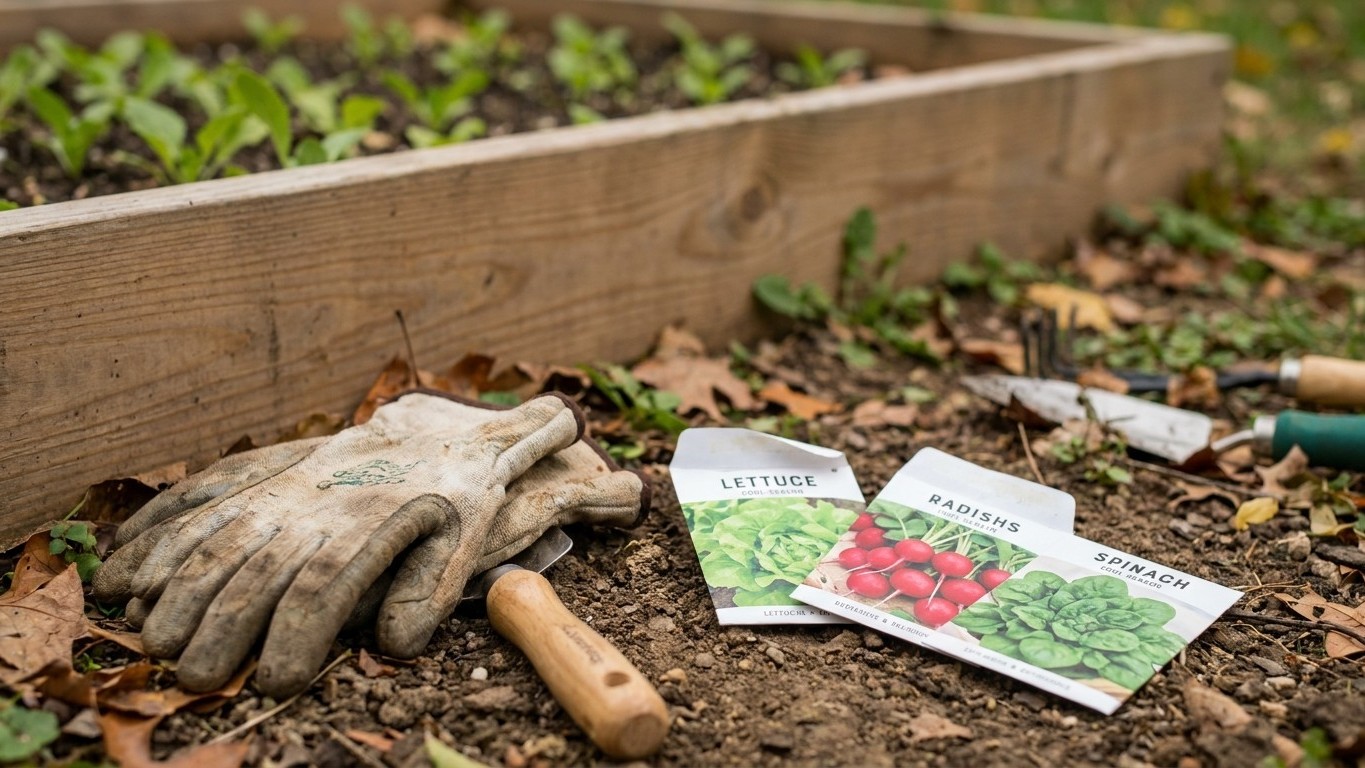

September in Tennessee sits roughly eight to ten weeks before the average first frost, which makes it fall-garden month rather than a dead zone. Direct-sow hardy greens, root crops, and quick brassicas that can size up before cold arrives. Warm-season transplants are off the table for new plantings, but tomatoes, peppers, and squash started back in spring often keep producing right up to frost.
What goes in the ground in September

The number that actually decides this month is the gap between today and the first fall freeze, not the date on the calendar. NOAA’s 1991-2020 Climate Normals for the Nashville-area station (USW00013897) put the first fall frost between October 28 and November 8. Count from there. A seed planted September 1 has roughly eight to nine weeks to mature; one planted September 25 has closer to five. That arithmetic is what separates a crop worth sowing from a gamble.
Fast, cold-tolerant crops fit comfortably. Spinach, lettuce, arugula, mustard greens, radishes, and turnips can all still go in the ground through most of the month, and several of them actually germinate better once soil temperatures drop out of the 80s. Beets and fast bush beans work early in the month but get risky after mid-September. Kale and collards sown now may not fully mature before frost but will keep producing baby leaves well into fall, since both crops tolerate light freezes without damage.
Garlic is the crop gardeners most often rush. In Tennessee it belongs in the ground in October or November, not September. Planted too early, cloves push top growth before winter and lose vigor going into the cold. Hold the garlic and shallot sets until soil temperatures cool further.
| Crop | Approx. days to maturity | Latest safe sowing window |
|---|---|---|
| Radishes | 25-30 | Through late September |
| Spinach | 40-45 | Through mid-September |
| Lettuce (leaf) | 45-55 | Through mid-September |
| Turnips | 30-60 | Through mid-September |
| Kale/collards | 50-60 (baby leaf sooner) | Through late September |
| Garlic | N/A this month | Wait for October-November |
What to start under cover
Count backward from the first frost, not from a fixed date on a seed packet. Take the earliest realistic frost, October 28, subtract the days that crop needs from seed to harvest, then subtract another two to three weeks if it’s a transplant that needs time indoors before it goes outside. A cabbage transplant needing 70 days in the ground plus a four-week head start indoors needs to be started under cover by roughly the second week of September if it’s going to size up before cold weather closes the door.
This is also the window for starting hardy annual flowers and biennials, like snapdragons and pansies, under cover for fall color or for overwintering into spring. Cold frames earn their keep here too: seed lettuce or spinach directly into a frame now and it can carry harvests weeks past what open ground allows, since the frame buffers soil temperature swings.
Two mistakes show up every year with this kind of backward planning. Start too early in the lingering summer heat and seedlings stretch into leggy, rootbound plants sitting in trays waiting for cooler weather. Start too late and the arithmetic simply doesn’t work: the plant runs out of daylight and warmth before it reaches a harvestable size, no matter how well it’s tended. Splitting the difference, by starting brassica and lettuce transplants for cold frames in early-to-mid September, gives the most margin for either error.
What is ready to pick
Summer’s long producers are still earning their space. Tomatoes, peppers, eggplant, okra, and summer squash planted back in spring typically keep yielding through September, and in a mild season some push output right up to the first frost. Melons and sweet corn are usually finishing their run, and the tell for both is straightforward: a melon slips easily from the vine at the stem when ripe, and corn silks turn brown and dry when ears are ready.
Beans planted in mid-summer for a fall crop should be coming in now too, and picking them regularly (rather than letting pods mature on the vine) keeps the plant setting new flowers instead of shutting down. Fall greens sown in August, spinach, lettuce, and quick Asian greens, are often ready for a first cutting this month, and cut-and-come-again harvesting stretches that yield much further than a single clean pull.
Stored crops from earlier harvests need a look too. Onions and garlic curing in a shed should be checked for any bulb going soft at the neck, since one rotting bulb in storage spreads moisture and mold to its neighbors fast. Winter squash cured and stored should be inspected for soft spots near the stem end, the earliest sign a squash is starting to break down before it gets used.
The jobs that matter this month

Soil temperature is still warm enough this month to work in compost or aged manure before fall seeding, and doing it now rather than in the cooler weeks ahead gives amendments time to integrate before the ground stiffens up. Mulch matters for a different reason in September than in July: it’s less about weed suppression and more about keeping germinating fall seeds from drying out between waterings while afternoon heat is still intense.
Watering and succession
A newly seeded bed of lettuce or spinach needs the surface inch of soil kept consistently damp until germination, which in September’s residual heat can mean watering lightly once a day rather than deeply once a week. Once seedlings are up, succession sowing every two weeks, another short row of radishes, another patch of arugula, keeps a steady supply coming rather than one glut followed by a gap.
Scouting and structure
Indeterminate tomatoes still setting fruit need their cages or stakes checked now, since a top-heavy plant loaded with late fruit is exactly what a September thunderstorm knocks flat. Pest pressure shifts this month too: fall armyworms and cabbage worms move into fresh brassica transplants fast, and catching them in the first week saves a bed that would otherwise need replanting. A few minutes scouting the undersides of new kale and collard leaves is worth more right now than at almost any other point in the season.
What not to do in September
The most common misstep is planting new warm-season crops because the weather still feels like summer. A tomato or pepper transplant put in the ground in mid-September simply doesn’t have enough days left before the October-November frost window to produce a worthwhile harvest, no matter how warm the afternoons still feel. Air temperature is not the same measurement as the days-to-frost countdown, and the second one is what actually matters.
Nitrogen timing trips up a lot of gardeners this month too. Feeding a high-nitrogen fertilizer to tomatoes, peppers, or squash now pushes leafy green growth at exactly the point when the plant should be finishing fruit, and that new growth is also the most tender tissue when a frost does arrive. If anything is going into these beds now, a balanced or lower-nitrogen feed suits the season better.
Garlic again deserves a second mention here, because planting it in September instead of waiting for October or November is one of the most repeated errors in Tennessee gardens. Early planting means the cloves sprout too much top growth before real cold sets in, which weakens the bulb rather than giving it a head start. Patience through this month pays off in a stronger bulb next summer.
Checking this against your own county
A statewide frost window is a starting point, not a fixed instruction. Tennessee’s terrain moves that window by weeks in either direction: East Tennessee and the Cumberland Plateau sit at higher elevation and run cooler than the Nashville-area station these dates come from, which typically means an earlier first frost and a tighter fall planting window than the state average suggests. West Tennessee’s lower elevation tends to run the other way.
The USDA Plant Hardiness Zone Map places Tennessee across a wide 5b-8a range, and that spread alone signals how much local conditions vary. Before locking in a September planting plan, check current soil and frost guidance through the University of Tennessee Extension, which tracks county-level conditions this state-wide dataset can’t capture.
Common questions
Can I still plant tomatoes in September in Tennessee?
New tomato transplants set out in September rarely have enough time left before the October 28-November 8 frost window to produce a meaningful harvest. Plants already in the ground from spring can keep producing through the month, but starting new ones now isn’t worth the space.
What vegetables can I direct sow in Tennessee in September?
Radishes, spinach, lettuce, turnips, arugula, mustard greens, and kale or collards for baby leaves all fit comfortably within the days remaining before frost, especially when sown in the first half of the month.
When should I plant garlic in Tennessee?
Wait for October or November. Garlic planted in September pushes too much top growth before winter cold sets in, which weakens rather than strengthens the bulb.
What USDA hardiness zone is Tennessee in?
Tennessee spans zones 5b through 8a on the USDA Plant Hardiness Zone Map, a range built on average annual extreme minimum winter temperature. That spread means a planting date that works in one part of the state can be too early or too late in another, so local extension guidance matters more than the statewide range.
Gardeners who plant by the Moon can check the September 2027 moon planting calendar, a tradition rather than a proven method.