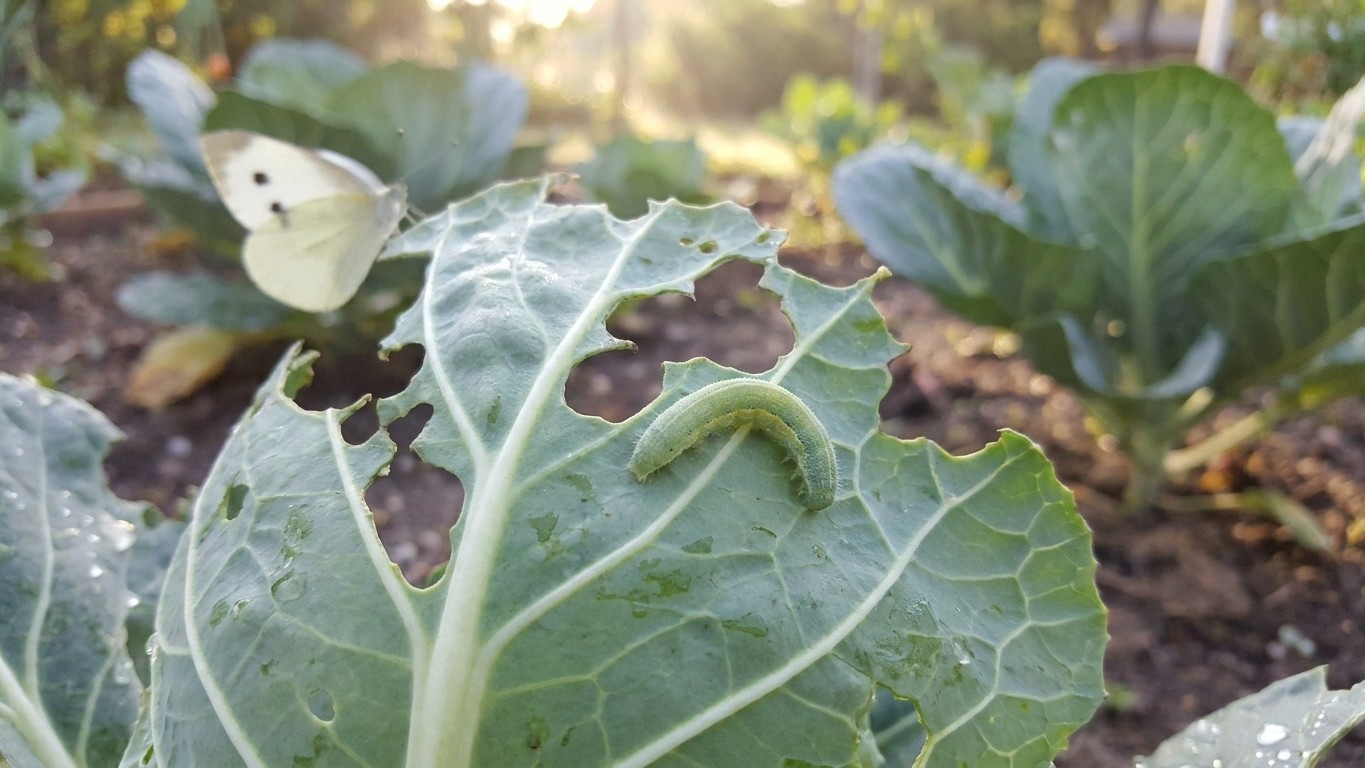

Imported cabbageworm shows up in Tennessee gardens as early as mid-April in the western part of the state and stays active clear through October, with populations peaking in July and August when brassica crops are lush. The tell-tale sign is a velvety green caterpillar chewing ragged holes in cabbage, broccoli, and kale leaves, usually accompanied by small white butterflies fluttering around the same beds. Bacillus thuringiensis (Bt) sprays, floating row covers, and encouraging parasitic wasps remain the most reliable ways to stop them before they strip a crop.
What Imported Cabbageworm Looks Like at Each Stage

The adult is easy to spot: a white butterfly with one or two black spots on each forewing, about 1.5 to 2 inches across, drifting low over garden beds rather than darting like a swallowtail. This is Pieris rapae, sometimes called the cabbage white, and it’s the moth-and-butterfly stage most gardeners actually notice first, often mistaking it for a harmless visitor before realizing it’s laying eggs.
Those eggs are tiny, pale yellow, and shaped like miniature bowling pins, laid singly on the undersides of leaves. Within a week, they hatch into the larvae that do the real damage: velvety, light green caterpillars with a faint yellow stripe down the back, growing to about an inch long over two to three weeks. Unlike cabbage loopers, which arch their backs when moving, imported cabbageworms crawl in a straight line and tend to feed closer to the leaf veins, leaving behind small, round holes and a scattering of dark green frass that looks like pepper flakes.
Pupation happens right on the plant or on nearby structures, wrapped in a thin greenish-brown chrysalis that blends into stems and fence posts. In Tennessee’s climate, this entire cycle from egg to adult takes roughly three to four weeks during warm months, which is exactly why populations can explode from a manageable few dozen caterpillars to a serious infestation within a single growing cycle.
How It Differs From Cabbage Loopers and Diamondback Moths
Tennessee brassica growers often deal with three caterpillar pests at once, and confusing them leads to the wrong treatment. Cabbage loopers are pale green with white stripes and move with a distinctive looping crawl, since they lack the middle set of legs. Diamondback moth larvae are smaller, more slender, and tend to bore into the center of the plant rather than skeletonizing outer leaves. Imported cabbageworm sits in between: uniformly fuzzy-looking, straight-crawling, and the most likely of the three to be found feeding in broad daylight rather than hiding until dusk.
When Imported Cabbageworm Shows Up in Tennessee
Timing varies noticeably across the state’s three grand divisions. In West Tennessee, around Memphis, adults typically emerge from overwintering pupae by early to mid-April as soil temperatures climb into the 60s. Middle Tennessee, including the Nashville basin, usually sees the first flights ten days to two weeks later. East Tennessee’s higher elevations, particularly in the mountain counties, can lag another week or more behind that, with cooler spring nights slowing larval development.
What surprises a lot of home gardeners is how many generations cycle through in a single season. Tennessee’s climate typically supports three to five overlapping generations between spring and fall, unlike the single generation limit seen in far northern states. That overlap means by midsummer, gardeners aren’t dealing with one wave of caterpillars but several life stages present simultaneously, eggs, larvae, and pupae all on the same plant at once.
Fall brassica plantings, common across Tennessee for a second cabbage and collard harvest, face pressure too, sometimes worse than spring crops. Adult populations built up over summer are at their highest numbers just as September-planted greens are putting out tender new growth. The pest doesn’t disappear until nighttime temperatures consistently drop below the mid-40s, which in most of Tennessee doesn’t happen until late October or even into November in warmer river valleys.
Winter survival happens in the pupal stage, tucked into leaf litter, garden debris, or crevices in wood and stone near where host plants grew. This is one reason fall garden cleanup matters more than most people assume, since leaving old collard stalks or cabbage stumps standing through winter gives next year’s first generation a head start right where the damage already happened.
What Actually Stops Imported Cabbageworm
Control works best as layered defense rather than a single fix, since no one method eliminates every life stage.
Bacillus thuringiensis (Bt) Remains the Gold Standard
Bt kurstaki, sold under various organic-approved brand names, is a naturally occurring soil bacterium that produces proteins toxic specifically to caterpillar digestive systems. It has almost no effect on bees, beneficial wasps, or humans, which is why it’s the go-to recommendation from university extension programs across the Southeast. The catch is timing: Bt only works on actively feeding larvae, and it breaks down within a few days of sun exposure, so applications need to happen every 7 to 10 days during active infestations, ideally in the evening when UV degradation slows.
Spraying too early, before eggs hatch, wastes product. Spraying after larvae reach their final growth stage is also less effective, since bigger caterpillars need to eat more treated leaf tissue to get a lethal dose. Catching the window when larvae are small, generally within the first week after hatching, gives the best results.
Physical Barriers Prevent the Problem Before It Starts
Floating row covers made of lightweight spun polyester, installed right after transplanting or seeding, block adult butterflies from laying eggs in the first place. This works exceptionally well for spring plantings since row covers can stay on until flowering crops like broccoli need pollinator access. For crops that don’t require pollination, like cabbage and collards, covers can stay in place the entire season, which sidesteps the spray schedule entirely.
The covers need to be secured tightly at the edges with soil, boards, or pins, since imported cabbageworm butterflies will find any gap. It’s a low-tech solution but consistently outperforms chemical controls in small-scale trials because it removes the egg-laying opportunity rather than reacting to larvae after damage starts.
Natural Enemies Do a Lot of the Work for Free
Parasitic wasps in the genus Trichogramma attack cabbageworm eggs, while another wasp, Pteromalus puparum, parasitizes the pupal stage. Both are already present in most Tennessee landscapes and get a boost from planting flowering herbs like dill, fennel, and yarrow nearby, which provide nectar sources adult wasps need to reproduce. Paper wasps and yellowjackets also prey directly on caterpillars, hauling them back to their nests as food, which is one of the few genuinely useful things those insects do around a vegetable garden.
Birds, particularly chickadees and sparrows, pick larvae off leaves regularly if garden beds aren’t blanketed in netting that excludes them too. Leaving a few uncovered brassica plants as a sacrifice crop near the main planting can actually concentrate pest pressure where natural predators can find it more easily.
Hand-Picking Still Works for Small Gardens
For a handful of raised beds, checking the undersides of leaves twice a week and crushing eggs or dropping larvae into soapy water remains genuinely effective. It takes minutes, requires no purchases, and catches the problem before populations build. This approach loses practicality fast on anything larger than a few hundred square feet of brassicas, which is where Bt and row covers take over.
Crop Rotation and Timing as Long-Term Strategy
Because imported cabbageworm overwinters as pupae in garden debris, rotating brassica plantings to a different section of the yard each year reduces the odds that emerging spring adults find host plants right where last year’s crop grew. Combining this with thorough fall cleanup, pulling and composting (not just cutting) old cabbage, kale, and collard plants, removes a meaningful chunk of the overwintering population before it gets the chance to restart the cycle in spring.
Planting slightly earlier in spring, before the first generation of adults typically emerges in a given part of the state, can also let fast-growing crops like bok choy or Asian greens mature and get harvested before pest pressure peaks. It’s a small scheduling shift, but in a state where the growing season already runs long, it’s often enough to dodge the worst of the damage without spraying anything at all.
Related guides
- Imported cabbageworm in Virginia: When It Shows Up and What Stops It
- Imported cabbageworm in North Carolina: When It Shows Up and What Stops It
- Imported cabbageworm in Utah: When It Shows Up and What Stops It
- Imported cabbageworm in Wisconsin: When It Shows Up and What Stops It
- Imported cabbageworm in Idaho: When It Shows Up and What Stops It