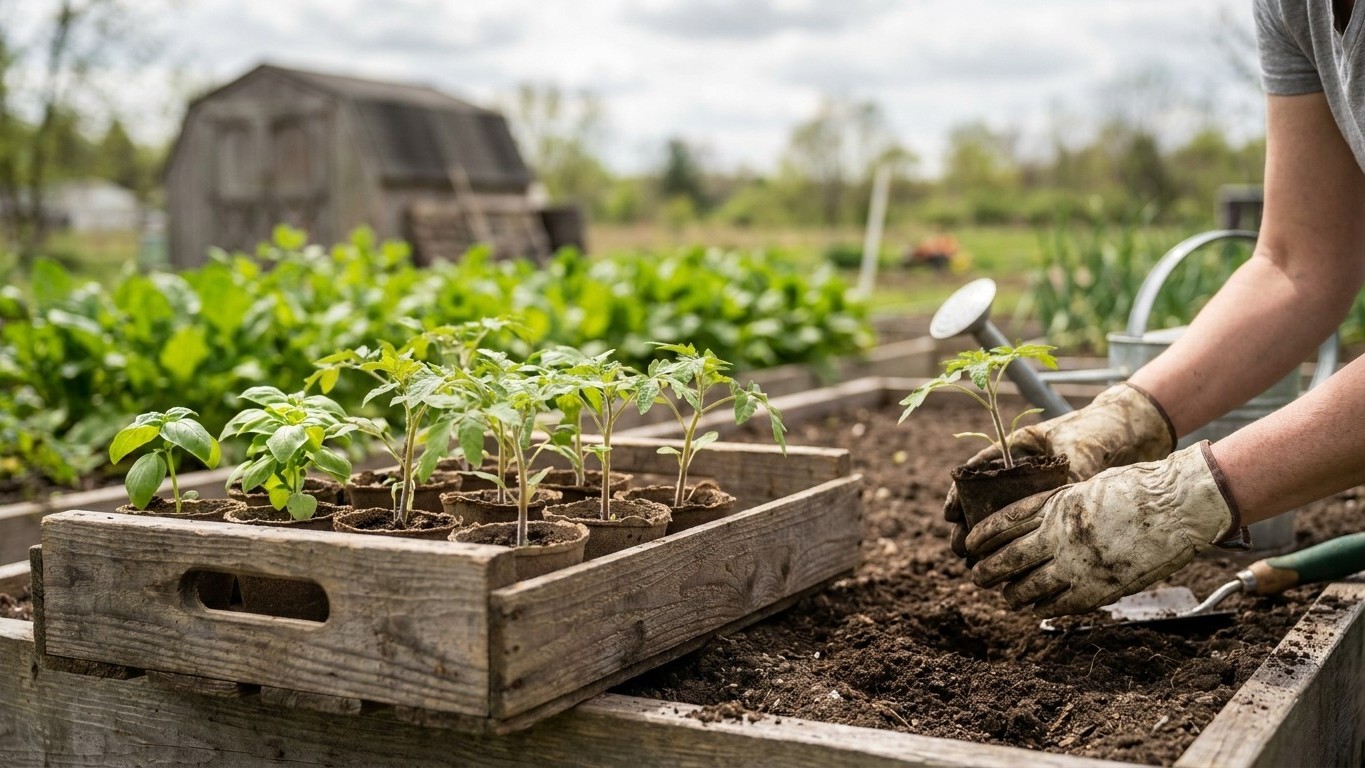

By May, frost is a non-issue almost everywhere in Texas, and the question shifts from “is it safe” to “is it too hot already.” Across most of the state this is prime time for tomatoes, peppers, squash, beans, corn, okra and sweet potatoes going straight into the ground. The catch: on the Gulf Coast, soil is already warming toward tomato-stress territory, while the Panhandle is often just now catching up to spring.
What goes in the ground in May

Texas covers USDA hardiness zones 6a through 10a, and that range is the whole story this month. In Houston, where NOAA’s 1991-2020 Climate Normals put the average last spring freeze between February 4 and March 1 at the IAH station, May sits a full two to three months past any realistic frost risk. Soil temperature, not the calendar, is what limits planting now, and along the coast that soil is already warm enough to stress cool-season crops and push warm-season ones into overdrive.
That means direct-sown okra, southern peas (cowpeas), snap beans, lima beans, sweet corn and cucumbers all do well going straight into warm ground this month across most of the state. Squash, both summer and winter types, germinates fast in May soil. Sweet potato slips go in now too, since they need a long, hot run to bulk up before fall. Transplants of tomatoes, peppers and eggplant that were started indoors weeks earlier can go out, though timing matters by region: in the Panhandle and High Plains, where the growing season starts later and cooler, May is often the best month of the year to set tomato transplants. On the Gulf Coast and in South Texas, where zones run 9a to 10a, gardeners who haven’t already gotten tomatoes in the ground are working against the clock before summer heat shuts down fruit set.
Cool-season holdovers like lettuce, spinach and peas are on their way out almost everywhere by this point, bolting or stalling as day length and heat increase. Garlic and onions planted the previous fall are bulking up toward harvest, not going in fresh. The honest read for May is that it’s a warm-season month statewide, with the only real regional split being how much of that warm season is left before the hottest stretch arrives.
What to start under cover
Starting seed indoors in May usually serves one of two purposes: getting a second round of warm-season crops ready to replace anything that struggles in peak summer heat, or getting a jump on fall crops that need a long lead time before the first fall freeze. In Houston, that first fall freeze typically falls between December 1 and December 19, which sounds distant but isn’t when you count backward for crops like broccoli, cabbage or Brussels sprouts that need 10 to 12 weeks of transplant growth plus maturity time before cold weather.
The arithmetic works like this: take the local first-fall-frost window, subtract the number of weeks the crop needs to mature after transplanting, then subtract another four to six weeks for seedling growth before it goes outside. For heat-tolerant fall broccoli or cabbage, that math often points to starting seed indoors or in a shaded cold frame sometime in late spring, which for much of Texas means May is not too early.
The two ways this goes wrong are familiar to anyone who’s done it more than once. Start too early and seedlings sit too long in small cells, become rootbound, and stall instead of taking off once transplanted. Start too late, especially for fall brassicas or a second tomato crop meant to beat the first freeze, and the plant runs out of season before it finishes producing. In May, the bigger regional risk is heat rather than cold: seedlings started indoors need shade and consistent moisture once they move outside, because May sun and wind can desiccate young transplants in a single afternoon.
What is ready to pick
May harvest in Texas is a mix of the last of spring’s cool-season crops and the first of summer’s warm-season ones, and which dominates depends heavily on where in the state you’re gardening. Garlic and onions planted the previous fall are often close to or at harvest, signaled by yellowing and falling-over tops for onions and by drying, papery outer leaves for garlic. Strawberries, if they went in during fall, are typically finishing their run.
Spring greens like lettuce and spinach are usually done or bolting by now, especially along the coast, and the smart move is to pick what’s left before it turns bitter rather than let it go to seed unused. Snap peas and snow peas planted earlier in spring are winding down as heat sets in. Early squash and cucumbers, if transplants went in during April, may already be producing their first fruit, and squash in particular can go from ready to overripe within a couple of days once it starts, so daily checking pays off.
For anyone with stored crops from a fall or winter harvest, onions and any remaining winter squash should get a check now. Warming temperatures speed up rot in storage, so anything showing soft spots, sprouting, or a sweet fermenting smell needs to be used or composted before it spreads to the rest of the batch.
The jobs that matter this month

May is the month where small maintenance failures turn into big summer problems, mostly because heat and growth both accelerate fast. Mulching is at the top of the list: a two- to three-inch layer around tomatoes, peppers and squash now holds soil moisture before the real heat arrives, and it’s far easier to lay mulch around young plants than to try to wedge it in later once vines sprawl.
Staking and caging tomatoes needs to happen this month too, before plants get tall and heavy enough to make the job a wrestling match. The same goes for pole beans and vining squash on trellises. Watering rhythm matters more in May than earlier in spring, since rising temperatures mean plants that were fine on a twice-weekly schedule may now need water three times a week, delivered deeply at the base rather than lightly overhead, which helps prevent the fungal issues that come with wet foliage in humid Texas heat.
Succession sowing keeps the harvest coming: another round of bush beans, another short row of okra, or a second corn planting staggered two to three weeks behind the first extends the picking window into summer instead of concentrating it all at once. Pest scouting deserves a walk-through every few days, since squash vine borer, aphids and spider mites all ramp up activity as temperatures climb, and catching an infestation in its first week is far easier than fighting it after it’s established. Side-dressing corn and heavy feeders like tomatoes with nitrogen once they’re a foot or so tall supports the growth spurt that’s about to happen, but timing that feeding to the plant’s stage rather than the calendar avoids overfeeding too early.
What not to do in May
The most common mistake this month is judging soil readiness by air temperature alone. A warm afternoon doesn’t mean the soil four inches down has caught up, and seeds like beans or corn planted into soil that’s still cool below the surface can rot before they germinate rather than simply sitting dormant. Checking soil temperature directly, rather than trusting how the air feels, avoids replanting a failed row two weeks later.
Another frequent error is skipping mulch because the garden “looks fine” early in the month. Bare soil in Texas heat can lose moisture fast enough that a single hot, windy week undoes weeks of careful watering, and by the time wilting shows up, root stress has often already happened. Mulching before that stress starts is far more effective than mulching in response to it.
Overwatering is the flip side of the same problem. More water isn’t automatically better, and soil that stays soggy in humid conditions invites root rot and fungal disease, especially in raised beds with poor drainage. Feeding tomatoes heavy nitrogen once they’re flowering is also a common misstep, since it tends to push leafy growth at the expense of fruit set, right when the plant needs to be putting energy into blossoms instead of foliage.
Checking this against your own county
A statewide May guide is a starting point, not a substitute for local conditions. Texas runs from USDA hardiness zone 6a in parts of the Panhandle to 10a along the southern Gulf Coast, and elevation, latitude and distance from the coast all shift planting windows by weeks in either direction. The frost dates cited here come from a single Houston station and describe the mild Gulf end of the state, not the Panhandle or Hill Country.
For a planting calendar tuned to your specific county, Texas A&M AgriLife Extension maintains local guidance and county offices that account for these regional differences directly.
Common questions
Is it too late to plant tomatoes in Texas in May?
It depends on region. In the Panhandle and North Texas, May is often the best tomato-planting window of the year. On the Gulf Coast and in South Texas, where soil is already warm, gardeners who haven’t planted tomatoes yet are working against a closing window before summer heat shuts down fruit set.
What vegetables can be direct-sown outdoors in Texas in May?
Okra, southern peas, snap beans, lima beans, sweet corn, cucumbers and both summer and winter squash all do well sown directly into warm May soil across most of the state.
Why is my spring lettuce bitter or bolting in May?
Rising heat and longer days push lettuce and spinach to bolt, which triggers bitterness as the plant shifts energy toward seed production. Harvesting what’s left promptly, rather than waiting, is the only fix once bolting starts.
Do I need to worry about frost in Texas in May?
No. Even using the mild Houston reference, where NOAA’s Climate Normals put the last spring freeze between February 4 and March 1, May falls well outside any frost risk across the state.
Gardeners who plant by the Moon can check the May 2027 moon planting calendar, a tradition rather than a proven method.