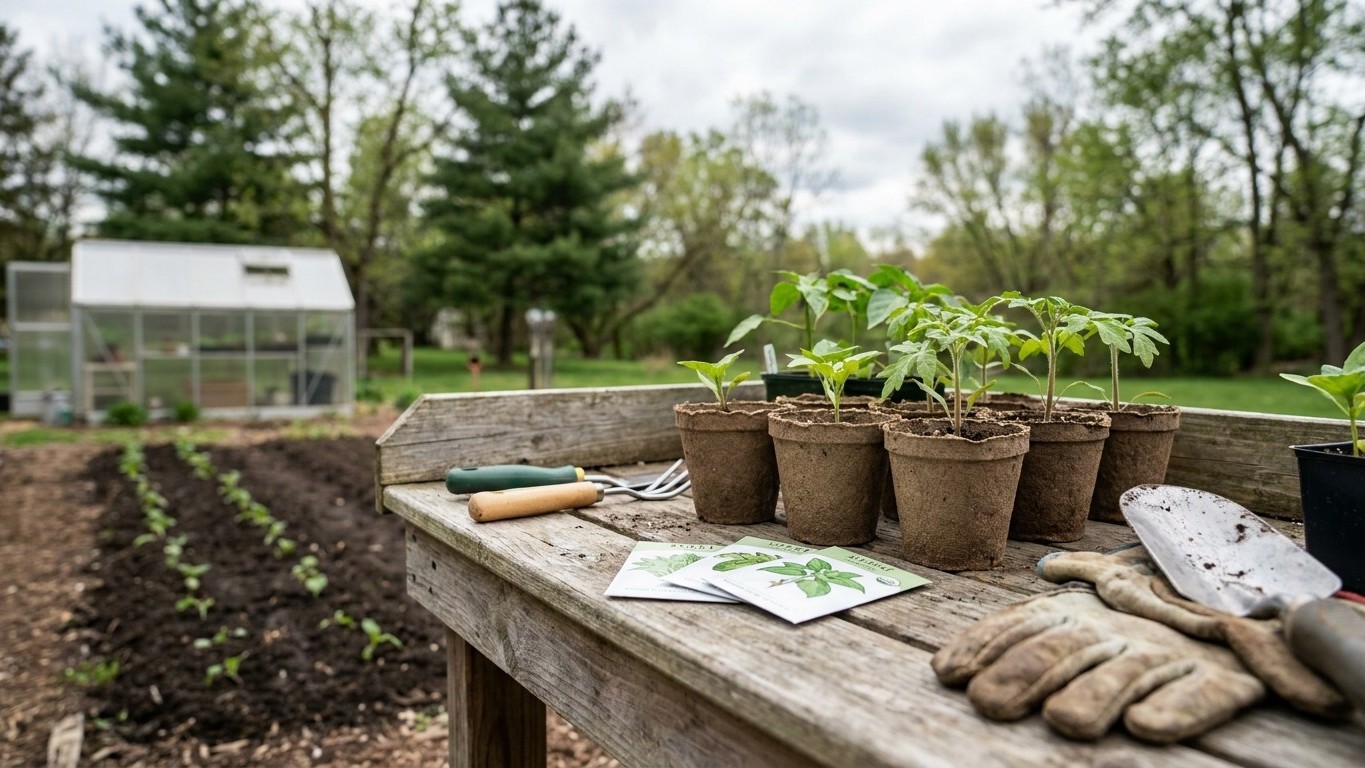

April is the frost window itself in most of Utah, not the start of it. In the Salt Lake area the last spring freeze can land anywhere from April 12 to April 29, so cold-hardy crops go in the ground now while tomatoes, peppers, and squash wait. Use the month to sow hardy greens and roots outdoors and start warm-season transplants indoors.
What goes in the ground in April

The number that matters here is 30 to 70 percent: that is the freeze probability NOAA NCEI assigns across the April 12 to April 29 window at the Salt Lake City reference station. Translation: on any given day in that stretch, there is still a real chance of a 32-degree freeze. That rules out tender crops outright, but it does not shut the garden down. Frost-tolerant vegetables germinate and grow through light freezes without damage, which is exactly why April belongs to them.
Peas, spinach, lettuce, kale, radishes, and carrots can all go into the ground as soon as the soil is workable, meaning it crumbles in your hand instead of forming a mud ball. Onion sets and bare-root asparagus crowns belong outdoors now too, along with rhubarb divisions and any bare-root fruit trees, berry canes, or roses still dormant at the nursery. None of these need a frost-free stretch to succeed.
| Plant now (frost-tolerant) | Wait until after last frost |
|---|---|
| Peas, spinach, lettuce, kale | Tomatoes, peppers, eggplant |
| Radishes, carrots, beets | Squash, cucumbers, melons |
| Onion sets, bare-root asparagus | Snap and pole beans |
| Bare-root fruit trees and canes | Corn |
The USDA Plant Hardiness Zone Map puts Utah anywhere from 4a to 9a, a range built on one measurement: average annual extreme minimum temperature. That range matters here because it explains why a gardener in a high mountain valley is working with a different calendar than someone near the state’s southern border. Salt Lake’s own frost dates are a starting reference, not a statewide instruction. Higher ground pushes the safe planting window later; the warmer south moves it earlier.
What to start under cover
Count backward from the last frost window instead of from a date on a calendar. Tomatoes and peppers want to be 6 to 8 weeks old, with a real root system, by the time they go into warm soil after the freeze risk passes. If that transplant date falls anywhere near the April 12 to April 29 range for the valley, seed for those crops should already have been started weeks earlier. Starting now is not wasted, though: the transplants will simply be smaller and better suited to a slightly later planting date, which works fine at higher elevations where the frost window runs later anyway.
Squash, cucumbers, and melons run on a shorter clock, needing only 3 to 4 weeks under cover before they go outside. Starting those now lines up well with a transplant date in May, once the freeze risk has cleared for the local elevation.
| Crop | Weeks indoors before transplant |
|---|---|
| Tomatoes, peppers, eggplant | 6 to 8 weeks |
| Squash, cucumbers, melons | 3 to 4 weeks |
The two ways this goes wrong are mirror images of each other. Start too early and the seedlings outgrow their pots, turn leggy reaching for light, and sit rootbound long before the ground is warm enough to take them. Start too late, especially at higher elevation, and the plant runs out of growing season before the first fall freeze arrives, which NOAA NCEI puts between October 18 and October 29 in the same reference location. Neither mistake is fixable once it happens, which is why the backward count matters more than the forward one.
What is ready to pick
April harvests in Utah are modest, and that is normal rather than a sign of a lagging garden. Overwintered kale and spinach, if they made it through the cold months under mulch or row cover, are usually the first real harvest of the season. Rhubarb sends up its first stalks this month too, though newly planted crowns should be left alone for their first year so the plant can build root reserves instead of feeding a harvest.
Established asparagus beds, three years old or older, may start pushing spears late in the month depending on elevation and soil warmth. Anything younger than that should not be cut at all yet. Cold frames and low tunnels can be pushing a small but steady supply of lettuce, spinach, and green onions, and chives that overwintered outdoors are usually among the first things to regrow with no help at all.
Stored crops deserve a check this month as well. Potatoes, winter squash, and onions held over from the previous season are approaching the end of their storage life, and soft spots, sprouting eyes, or a sweet fermented smell mean it is time to use or discard that piece before it spreads rot to the rest of the bin.
The jobs that matter this month

Dormant pruning of fruit trees, grapes, and berry canes is running out of runway in April. Once buds swell and break, cuts heal more slowly and the tree wastes energy on wood that is about to be removed anyway, so this is the last realistic window at lower elevations, and still an open one higher up where dormancy lingers longer.
Soil that has dried out enough to crumble rather than smear is ready for a first working-over: turning in compost, breaking up compaction from winter, and raking beds level before the first direct sowings go in. A basic soil test now, checking pH and major nutrients, gives enough lead time to correct deficiencies before the heavy planting months arrive. Compost piles that sat quiet over winter benefit from a turn to restart the breakdown process as temperatures climb.
Irrigation lines and drip systems should get a full check before the growing season demands them daily: look for cracked fittings, chewed tubing, and clogged emitters while there is still time to order replacement parts. Tools that spent winter in a shed need a real cleaning and a sharpening pass, since dull pruners tear plant tissue instead of cutting it cleanly, leaving wounds that heal slower and invite disease.
Peas and other climbers need their supports in place now, before they sprawl and tangle on the ground. Succession sowing of quick crops like radishes and lettuce, every couple of weeks rather than all at once, keeps a steady harvest coming instead of one glut followed by a gap. And this is the month to start scouting for early pests: aphids clustering on tender new growth and cutworms cutting seedlings off at the soil line are both easier to deal with caught early than after they have spread through a bed.
What not to do in April
The most common mistake is trusting the air instead of the soil. A stretch of 70-degree afternoons does not mean the ground has warmed to match, and tomatoes, peppers, and squash set into cold soil sit stalled, sometimes for weeks, sometimes permanently, even if a hard freeze never actually hits them. Wait for the freeze window to close for the local elevation, not for a warm afternoon that feels like summer.
A related error is pulling row covers and cold frame lids off too soon after a mild spell. The freeze probability across the April 12 to April 29 window in the valley, and later at higher elevation, does not drop to zero just because a few days felt warm. Keep protection in place and remove it gradually, checking forecasts rather than trusting a feeling.
Nitrogen applied at the wrong moment causes its own problems. Feeding fruit trees or shrubs heavily right before a cold snap pushes soft, tender new growth that a late freeze can kill outright, undoing months of careful dormant pruning in a single bad night. And spring-flowering shrubs like lilac and forsythia should not be pruned now if flowers matter: those buds were set the previous season, and cutting them back removes the very blooms the plant is about to produce.
Checking this against your own county
A statewide answer for April is a starting point, not a set of instructions for a specific yard. Utah’s elevation swings, the difference between a shaded mountain valley and an open southern desert, and local microclimates can move a real planting date by weeks in either direction from the Salt Lake reference numbers used here. Before committing seed or a fruit tree to the ground, check both the current freeze outlook for the specific county and the state’s own guidance through the Utah State University Extension, which tracks local conditions far more closely than any single statewide date can.
Common questions
When is the last frost date in Utah?
At the Salt Lake City reference station, NOAA NCEI’s 1991-2020 climate normals put the last spring freeze between April 12 and April 29, based on a 30 to 70 percent freeze probability band. Higher elevations across the state typically see frost linger later than this valley figure.
Can I plant tomatoes in April in Utah?
Only under cover as transplants started indoors. Tomatoes go into outdoor soil after the local last-frost window closes, which falls between April 12 and April 29 in the Salt Lake area and later at higher elevation.
What vegetables can I direct sow in April in Utah?
Peas, spinach, lettuce, kale, radishes, and carrots all tolerate the freeze risk still present in April and can go directly into workable soil this month.
What USDA hardiness zone is Utah in?
Utah spans USDA Plant Hardiness Zones 4a to 9a, according to the USDA Plant Hardiness Zone Map built on 1991-2020 normals. That is a statewide range driven by average extreme minimum temperature, not a single number that applies everywhere in the state.
Gardeners who plant by the Moon can check the April 2027 moon planting calendar, a tradition rather than a proven method.