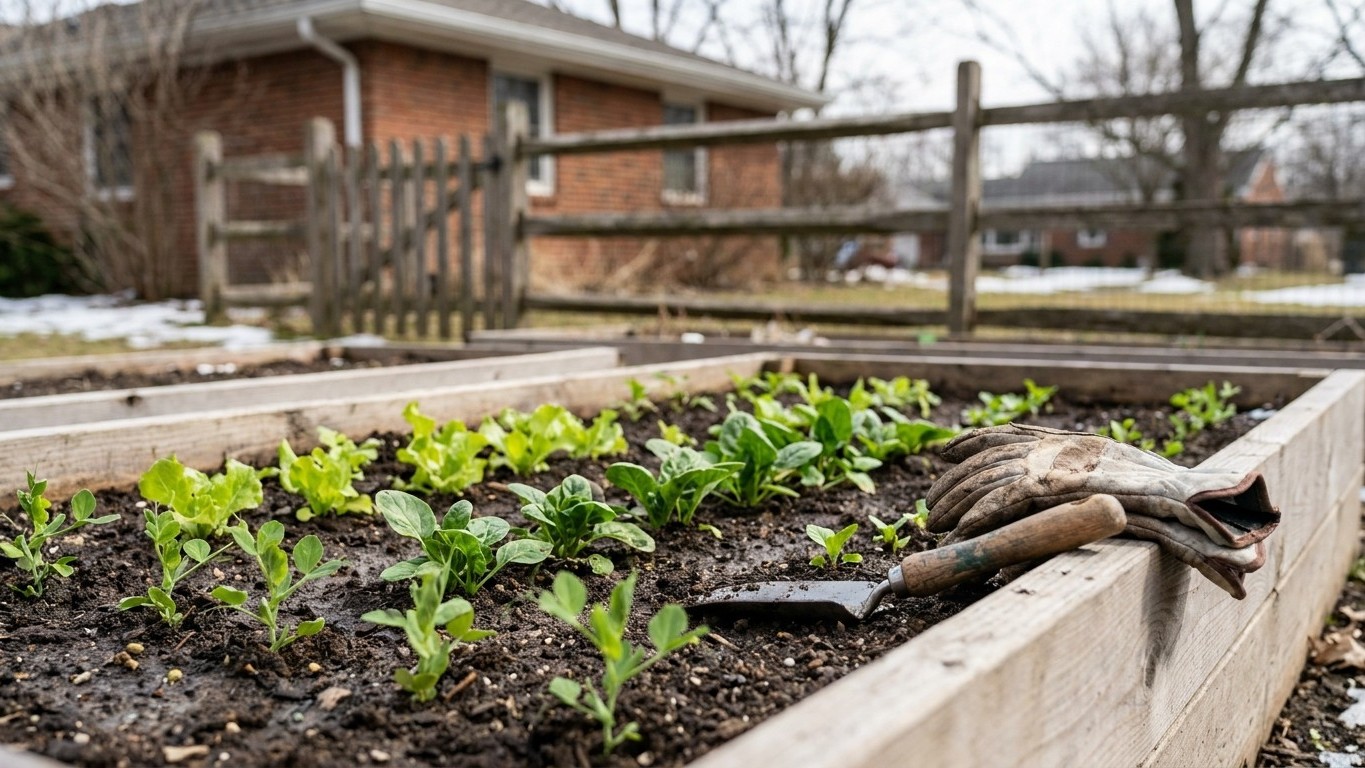

In most of Utah, March is still weeks away from reliable planting weather. The last spring frost for the Salt Lake City area falls between April 12 and April 29, and higher elevations run colder still. What goes into open ground now is limited to the toughest hardy crops and bare-root plantings, while the real work this month happens indoors, under cover, and in bed prep.
What goes in the ground in March

Soil temperature decides this month, not the date on the wall. Utah gardens sit in USDA hardiness zones ranging from 4a to 9a, with Salt Lake City as the commonly cited reference point. That range matters because a Wasatch Front backyard and a high-desert plot in the northern part of the state are not playing by the same rules, even in the same week of March.
With the last frost window still four to eight weeks out for most of the state, March is not the month for anything tender. What it does allow, once the ground has thawed and can be worked without turning to mud, is a short list of cold-hardy crops that shrug off frost: spinach, peas, and cold-tolerant lettuce can go in as direct-sown seed if the soil crumbles rather than clumps. Onion sets and shallots can also go in early, since both tolerate a hard freeze after establishment. Garlic, if it was not planted the previous fall, is a gamble this late and rarely worth the risk.
Where cover changes the equation
Cold frames and low tunnels buy real time here. A cold frame can push soil temperature up several degrees over open ground, which is often the difference between seed that rots and seed that germinates. Gardeners running cold frames can get a head start on carrots, beets, and radishes weeks before open-ground planting would make sense.
March is also a solid window for bare-root plantings: fruit trees, roses, asparagus crowns, and strawberry crowns can all go in while they are still dormant, provided the ground is workable and not frozen solid. Forcing rhubarb or chicory indoors, in a dark, cool spot, is another way to get an early harvest without touching outdoor soil at all. What should not happen this month is direct-sowing anything frost-tender, no matter how mild a particular afternoon feels.
What to start under cover
Seed starting in March works backward from the frost window, not forward from the calendar. Tomatoes, peppers, and eggplant typically need six to eight weeks indoors before they are ready to transplant, and transplanting itself has to wait until after the last frost risk has passed in mid-to-late April at the earliest for the Salt Lake area, and later at higher elevations. Counting back from that window puts the start date for these crops squarely in March for much of the state.
Cool-season transplants run on a shorter clock. Broccoli, cabbage, and kale generally need four to six weeks under cover before they go outside, which means a March start lines up with an April or early-May transplant date, once soil has warmed and the worst frost risk has eased.
The two ways this goes wrong both come from ignoring that math. Starting tomatoes too early means six or eight extra weeks indoors under weak light, producing leggy, rootbound plants that sulk for weeks after transplant instead of taking off. Starting too late, on the other hand, leaves too few frost-free weeks for a full harvest before fall frost arrives, especially at higher elevations where the growing season is already short. Counting backward from the actual frost window for a specific county, rather than a generic date, is the only way to get this right.
What is ready to pick
March harvests in Utah come mostly from what survived winter, not from anything newly planted. Kale, leeks, and other hardy greens that overwintered under mulch or snow cover can often still be harvested, since cold sweetens rather than damages many of these crops. A cold frame running through winter may also be holding spinach or lettuce that never stopped growing, just slowly.
Indoors, sprouts and microgreens fill the gap when nothing outdoors is ready. Both grow fast enough to produce a harvest in one to two weeks, which makes them the most reliable fresh crop this time of year regardless of what is happening outside.
The other job this month is triage on what is already stored. Squash, potatoes, and onions held over from the previous fall need a check for soft spots, sprouting, or the telltale smell of one bad specimen starting to affect its neighbors. Squash with a soft patch near the stem, potatoes that have started sprouting eyes in storage, and onions gone soft at the neck are all signs to use them now rather than let them go further. Catching these early saves the rest of the batch.
The jobs that matter this month

Dormant pruning of fruit trees and cane fruit is one of the highest-payoff jobs on the calendar, and March is often the last comfortable window to finish it before buds break. Pruning after growth starts stresses the tree and can cut into the current season’s fruit; pruning now, while the plant is still dormant, costs nothing and shapes the whole year ahead.
Seed ordering belongs on this list too, and it is later in the window than it feels. Popular varieties of tomatoes, peppers, and specialty greens sell out from seed suppliers well before planting season, so placing orders now avoids settling for whatever is left on the shelf in May.
Soil work pays off disproportionately this month. Testing pH and nutrient levels while beds are still empty means there is time to amend before anything goes in the ground, rather than trying to correct a deficiency after plants are already struggling. Turning compost, cleaning and sharpening tools, and repairing raised beds or fencing are all jobs that take an afternoon now and save a delay later, once planting season actually starts and every week counts.
Finally, walk the stored crops one more time. Squash, potatoes, onions, and any root vegetables still in cold storage should get a hands-on check for rot, since one overlooked squash can spoil an entire bin by the time anyone notices the smell.
What not to do in March
The most common mistake this month is trusting the air temperature over the soil. A warm, sunny afternoon in the 60s does not mean the ground has caught up, and tomatoes or peppers set out on a mild day will simply sit and sulk, or die outright, once a cold night follows. Soil temperature, not air temperature, decides when warm-season crops are safe, and in most of Utah that point is still weeks away in March.
Uncovering cold frames or removing winter mulch too early after a mild stretch is the second trap. A few warm days can trigger new growth on hardy crops, and that tender new growth is exactly what a late freeze will damage. It is safer to vent a cold frame during the day and close it back up at night than to remove protection entirely based on one good week.
Nitrogen timing is the third pitfall. Feeding a heavy dose of nitrogen to dormant fruit trees or overwintered perennials too early can push soft, frost-tender growth before the plant is ready to handle a cold snap. Waiting until growth is clearly underway, rather than fertilizing on the calendar, avoids feeding a plant into a freeze it cannot survive.
Checking this against your own county
A state-wide answer for March is a starting point, not an instruction specific to any one yard. Elevation alone can shift a frost window by weeks, and the difference between northern Utah and the warmer south, or between a valley floor and a nearby bench, changes what is safe to plant well beyond what a single state-wide date can capture. Salt Lake City’s own frost data, sitting in a comparatively mild valley, already runs earlier than much of the surrounding high country.
| Location type | Typical frost pattern | What it means for March |
|---|---|---|
| Salt Lake Valley (reference station) | Milder valley climate | Earliest realistic window for hardy direct-sowing |
| Higher elevation / mountain valleys | Colder, later thaw | Soil likely still frozen or too wet to work |
| Southern Utah | Warmer overall pattern | Hardy crops may go in sooner than the state-wide window |
For dates specific to a county or elevation, the Utah State University Extension service publishes local planting guidance that accounts for these differences.
Common questions
Can tomatoes go outside in Utah in March?
No. The last frost window runs from April 12 to April 29 for the Salt Lake area, and later at higher elevations, so tomatoes started in March should stay indoors under grow lights until well after that window closes.
Is it too late to plant garlic in March?
Garlic is normally a fall-planted crop, and a March planting rarely has time to size up properly before summer heat sets in. Shallots and onion sets are a more reliable alternative for a spring start.
What should I prune in March?
Fruit trees and cane fruit still dormant, before buds break, are the priority. Pruning after growth resumes adds stress and can reduce the current season’s fruit.
Why does my county seem ahead of or behind this schedule?
Elevation and regional climate differences across Utah are significant enough to shift frost windows by weeks in either direction. Checking county-level guidance through Utah State University Extension gives a more accurate picture than a state-wide date.
Gardeners who plant by the Moon can check the March 2027 moon planting calendar, a tradition rather than a proven method.