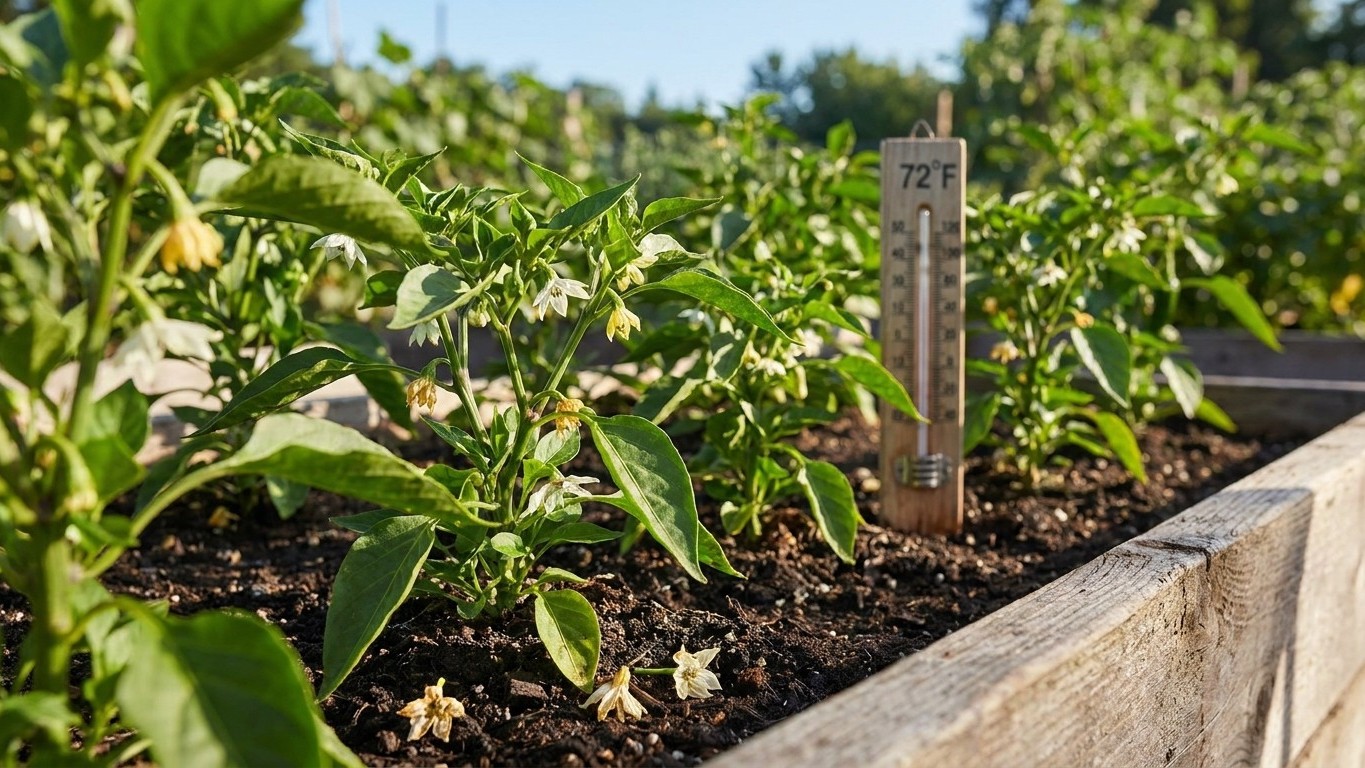

Start pepper seed indoors 8 to 10 weeks before transplant day, timed to soil at 60 F and clear of frost, following Utah State University Extension’s guidance for pepper starts. In coastal and Southern California, frost barely enters the calculation; NOAA’s 1991-2020 Climate Normals show zero freeze days across 30 years at the Los Angeles reference station. Farther north and inland, in the Central Valley and the Sierra foothills, frost still sets the outdoor clock. Either way, the seed-starting date is arithmetic you run backward from your own transplant target, not a fixed date on a seed packet.
The short answer
Los Angeles averages 2.4 days a year at or above 90 F, based on NOAA’s 1991-2020 Climate Normals for that reference station. That’s a thin slice of the calendar, and it matters because pepper flowers stop setting fruit once daytime highs push past 90 F for any real stretch, according to Utah State University Extension. A couple of scorching afternoons a year is a manageable nuisance for a pepper plant. A week-long heat spike, which shows up in inland valleys and desert-adjacent gardens more often than the coastal average suggests, is a different problem, and this site doesn’t carry a number for those areas beyond the Los Angeles station. Garden in Sacramento, Fresno, Bakersfield or anywhere east of the coastal hills, and you should expect more 90-degree days than the reference figure implies, and plan for shade cloth or extra irrigation during flowering.
The other failure point sits at the opposite end of the thermometer. Utah State University Extension notes that pepper fruit set fails when nights drop below 55 F, just as reliably as when days climb past 90. This site does not carry summer night-minimum data for any California location, and that gap matters more here than the heat side does. California’s coast, inland valleys and mountain foothills can post very different overnight lows on the same calendar date, and none of that difference can be guessed from a spot’s latitude or from how cold its winters run. A garden sitting at the same latitude as a desert city can still drop into the 40s some summer nights if it sits at elevation or catches a marine air pattern rolling in off the coast. The only dependable fix is tracking your own overnight lows through the flowering and early fruiting weeks, rather than assuming a warm afternoon means a warm night followed it.
Put the two thresholds together and a pattern holds across most of the state: pepper fruit set has a workable middle ground, roughly between 55 F nights and 90 F days, and how much of the growing season falls inside that window depends entirely on where in California you garden. That’s the real reason to start seed early enough that flowering lands before the hottest stretch of summer, and late enough that transplants aren’t fighting cool spring nights this page can’t quantify for your specific yard.
When to start seed here
Run the calendar backward from the date you plan to move transplants outside, and the indoor seed-starting date falls out on its own.
- Establish your frost status first. Coastal and Southern California essentially don’t have one: NOAA’s 1991-2020 Climate Normals for the Los Angeles reference station show zero days at or below 32 F across 30 years of daily records, with a frost-free season listed as 365 days. Garden in that band, and frost isn’t your constraint; heat and water are. Inland, the picture flips. The Central Valley, the foothills and the Sierra freeze in a normal year, and this page doesn’t hold a frost date for those regions specifically, so find your local last-frost date before going further. Don’t borrow the coastal answer for an inland garden, and don’t assume frost-free automatically means an early transplant date either, since coastal mornings under a marine layer can be slow to warm the soil even without frost risk.
- Wait for the soil, not the air, to reach 60 F. Utah State University Extension sets the transplant trigger at 60 F soil, cleared of frost risk. A sunny but cold week won’t warm four inches of soil the way a mild, overcast stretch will, so check with an actual soil thermometer rather than reading the forecast and guessing.
- Count back 8 to 10 weeks from that transplant date. That’s the indoor window Utah State University Extension gives for pepper seedlings to reach transplant size. If your coastal soil typically hits 60 F in early spring, that points to a late-winter indoor start. If your inland garden doesn’t clear frost and reach 60 F soil until later in spring, the indoor start slides later to match.
- Recheck both conditions right before moving plants outside, not just on the day you started counting. A late cold snap or a slow-to-warm spring can push the real transplant date later than the arithmetic first suggested. Treat the 8-to-10-week count as a planning tool you adjust, not a fixed deadline you defend.
None of this changes based on where in California you garden, only the dates you plug into it. The coast starts earlier because frost isn’t a delay factor; the valley and the mountains start later because it is. Run the same four steps either way, and the date that comes out will fit your actual yard instead of a statewide average.
What goes wrong here
California’s climate produces a specific, repeatable set of pepper failures, tied directly to the heat and water patterns most of the state shares to some degree.
- Blossom drop from a hot spell or a cool night: Utah State University Extension ties pepper fruit set failure to both ends of the range, nights below 55 F and days above 90 F. Los Angeles only averages 2.4 such hot days a year, but a single heat spike, or a late cold snap during flowering, can drop blossoms without much warning. Track your own overnight and afternoon readings through the flowering stretch rather than relying on the seasonal average, and if a heat spike is forecast, run shade cloth or extra water at the root zone to help flowers hold on the plant instead of dropping.
- Sunscald where the sun runs strong: peppers that lose leaf cover to heavy pruning, wind damage or an early heat spell expose bare fruit directly to sun, and under California’s high UV load that shows up as pale, leathery patches on the fruit’s sun-facing side. Leave foliage in place to shade developing peppers rather than pruning for looks, and hold off on major pruning during the hottest stretch of summer.
- Blossom-end rot from uneven watering: the dark, sunken patch at the fruit’s bottom end comes from a calcium shortage at the fruit itself, usually caused by soil drying out between waterings rather than an actual lack of calcium in the soil. California’s dry summers, and in many areas active watering restrictions, make this a recurring issue. Even, consistent soil moisture delivered on a schedule, rather than whenever the plant looks thirsty, does more to prevent it than any soil additive.
Common questions
Does California ever get pepper-killing frost?
Coastal and Southern California generally don’t; the Los Angeles reference station recorded zero freeze days across 30 years, per NOAA’s Climate Normals. The Central Valley and the Sierra foothills do freeze in a normal year, so gardeners there need their own local last-frost date rather than the coastal answer.
How many 90 F days should I plan around for fruit set?
The Los Angeles reference station averages 2.4 days a year at or above 90 F. This site doesn’t publish that count for other California locations, so inland and desert-adjacent gardeners should expect a higher number and watch their own conditions during flowering.
What soil temperature should I transplant peppers at?
Utah State University Extension sets the mark at 60 F soil, after frost risk has cleared. Check with a soil thermometer rather than judging by air temperature alone.
How long before transplant should I start pepper seed indoors?
Utah State University Extension recommends 8 to 10 weeks indoors before transplanting. Count backward from your local frost-clear, 60 F soil date to land on your indoor start date.