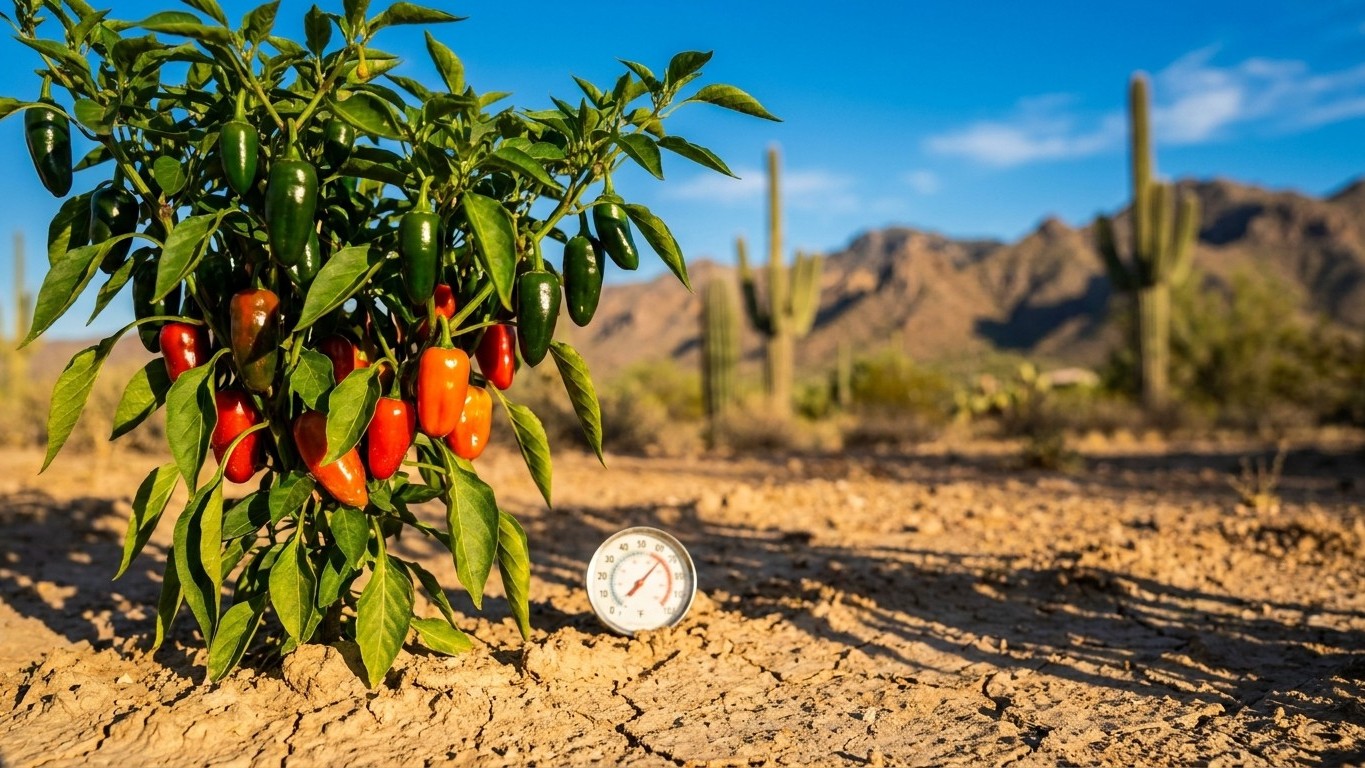

Pick peppers once the fruit has reached full size for its variety and feels firm, usually 70 to 85 days after transplanting. Then keep them out of the refrigerator. Clemson Extension puts ideal storage at 45 to 50°F, and a domestic fridge runs colder than that. Below about 45°F, peppers pit and soften, a form of chilling injury. It is the mistake nearly everyone makes with the first good harvest.
Keeping them, and for how long
Peppers are a warm-season crop, and that holds after the fruit comes off the plant. Clemson Cooperative Extension’s Home & Garden Information Center says harvest comes about 70 to 85 days after transplanting. It sets the storage conditions at “temperatures of 45 to 50 °F and 80- to 90-percent relative humidity for two to three weeks” (Clemson Extension pepper fact sheet). Two numbers matter here: a narrow temperature band and a fairly high humidity. Miss either one and the clock runs faster.
Why does the fridge hurt peppers?
A domestic refrigerator is colder than the 45 to 50°F band. Below about 45°F, pepper tissue is damaged by the cold itself, which growers call chilling injury. The skin develops small sunken pits and the flesh goes soft. Often the damage shows up only after the fruit returns to a warm kitchen, so a pepper that looked fine in the crisper on Tuesday can be slimy by Friday.
Humidity is the second half of the problem. At 80 to 90 percent relative humidity, a pepper loses water slowly and stays glossy. In dry air the skin wrinkles within days, even at a safe temperature. California’s dry interior summers make this easy to underestimate.
How long do picked peppers keep?
The figure to write down is 45 to 50°F. Two to three weeks is the ceiling under those ideal conditions. It is a maximum, not a promise. A pepper picked a little overripe, bruised by a pruner, or already stressed by heat on the plant will not last that long. Treat the range as the best case and plan to use the fruit well before it ends.
Condition at picking sets the starting point. Fruit with the skin intact, a short stem left on, and no soft spots has the best shot at the full window. Peppers that have started to wrinkle on the plant, or that show sunken patches, belong in tonight’s dinner.
If the harvest is bigger than the household can use in two or three weeks, the better plan is to freeze the surplus or cook it down rather than to push the storage limit. Chilled peppers that have already pitted can still go into a cooked dish. Their texture is the thing that fails first, and a sauce or stir-fry hides it.
Where in the house that actually is
Few homes hold 45 to 50°F on purpose, so the job is to find the spot that comes closest. Each common location has a different problem:
- The refrigerator runs colder than the band, so chilling injury is the risk.
- A heated or air-conditioned living space is warmer than the band, and peppers lose water and firmness faster.
- The garage swings with the weather, hot on an inland afternoon and cooler overnight, and the average tells you little.
- An interior closet or pantry away from the oven and sun usually sits in the middle.
Of those, the cool interior pantry or a closet on the shaded side of the house usually comes closest in California. Most homes here have no cellar, so there is no ready-made cold room. A shaded north-side pantry in a coastal house may sit near the band for much of the year. The same closet in an inland house in July may run well above it, and then the peppers need to be eaten sooner.
Measuring beats guessing. Put a thermometer in the spot for a full day and night before you trust it with a harvest, and read the low and high, not just the number at noon. A min/max thermometer does this well. If the reading stays between 45 and 50°F, the spot works. If it runs warmer, shorten the plan from weeks to days. A cheap hygrometer will tell you whether the humidity is anywhere near 80 to 90 percent. Skipping this check means finding out by the smell of the shelf.
To raise humidity in a dry spot, keep the peppers in a loosely closed container or a perforated bag, so moisture stays around the fruit without sealing it in. A fully sealed bag traps water on the skin and invites rot. Check every few days and pull out anything that has started to soften, since one bad pepper speeds up the rest.
When the fridge is the only option, use it for short stretches only. Pick or buy only what you can use in a few days and expect some softening. That is better than letting them sit warm, but it is a compromise.
How do you know a pepper is ready to pick in California?
Start with the calendar. Clemson’s 70 to 85 days runs from transplanting, so the date you set the plants out drives the harvest date. Utah State University Extension says to transplant when the soil reaches 60°F, after frost, and to start seedlings indoors 8 to 10 weeks ahead. Count from the day they go in the ground, then watch the fruit more than the calendar.
Frost shapes the planting date differently around the state. The reference station for Los Angeles has about 365 frost-free days, and no freeze occurs there in an average year. Coastal and southern California gardeners are not waiting on a last frost, so the limits are heat, drought and water restrictions. Northern California, the Central Valley and the Sierra do freeze. A gardener there has to wait for the soil to warm and should not copy a Los Angeles schedule.
Heat and cool nights both matter for what the plant does with its flowers. Utah State University Extension says fruit set fails at both ends: nights below 55°F or days above 90°F. The Los Angeles reference station averages 2.4 days a year at 90°F or more, so the hot end seldom interrupts there. Inland summers reach 90°F far more often, so check your own local count. Night temperatures vary from one yard to the next, so the only reliable record is a thermometer in your own garden. If flowers drop without setting fruit, Why Peppers Fail to Set Fruit in California walks through the causes.
On the plant, a fruit is ready when it has reached full size for its variety, the skin is glossy and the flesh feels firm when squeezed gently. Peppers can be picked green once they are full size, or left to ripen to red, yellow, orange or another color depending on the variety. Ripe color takes longer, and the fruit is sweeter, but it also stays exposed longer to sun and to animals. What Eats Pepper in California, and When covers who goes after the fruit and the timing.
Cut the stem with pruners or scissors, leaving a short piece attached. Pulling can snap branches, which are brittle. Regular picking tells the plant to keep flowering, so a plant picked every few days usually produces more than one left to hold its first fruit. Gardeners in a freeze zone should pick every full-size fruit when a frost is forecast, since frost-damaged peppers turn soft and do not recover. The full growing picture is in Growing Peppers in California.
Common questions
Can I store peppers in the refrigerator if I have no better place?
You can, for a few days. A refrigerator is colder than the 45 to 50°F that Clemson Extension gives as ideal, and below about 45°F peppers pit and soften. Use the fridge for a short stretch with fruit you plan to eat soon, and keep the rest in the coolest interior spot you have.
How long do peppers last after picking?
Clemson Extension says two to three weeks at 45 to 50°F and 80- to 90-percent relative humidity. That is a maximum under ideal conditions. In a warmer room, expect days rather than weeks, and check the fruit often.
Should I pick peppers green or wait for color?
Either works once the fruit is full size, firm and glossy. Waiting for red, yellow or orange gives a sweeter pepper, though the ripening time varies by variety. Color takes longer and leaves the fruit exposed on the plant, so pick green if heat, pests or an approaching freeze is a worry.
Do I need to pick before frost in California?
It depends on the region. Along the coast and in southern California, no freeze occurs in an average year, so the plants can keep producing. Northern California, the Central Valley and the Sierra do freeze, and there you should pick every full-size fruit before a frost is forecast. Your county extension office can tell you what to expect in your area.