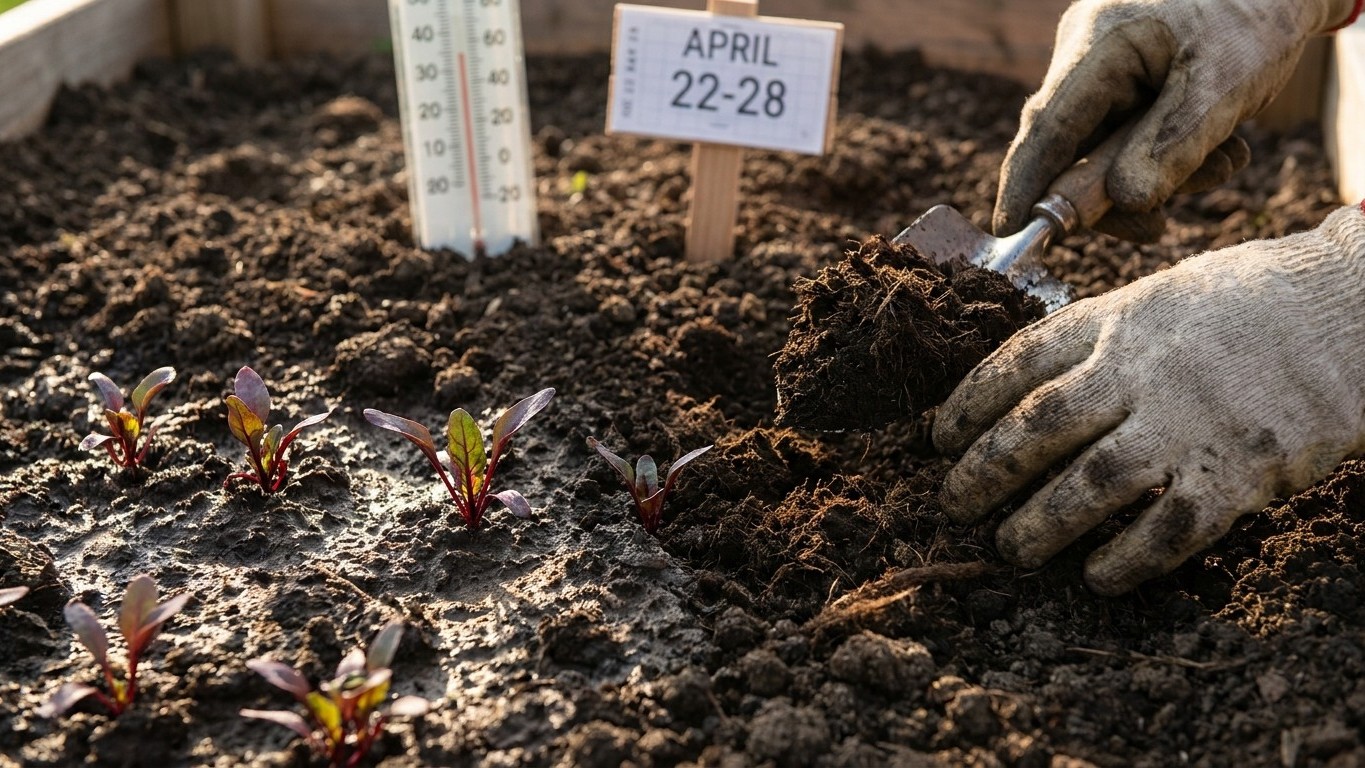

Wisconsin’s state soil holds water like a silt loam should, but it isn’t the sandy, deep-draining ground beets actually prefer. See When to Sow Beets in Wisconsin for exact timing, but as a rule, sow two to three weeks before the last spring frost, between April 16 and April 29 depending on where you garden, keep the bed evenly moist through the first six weeks, and watch for heat above 85 F once the roots are sizing up. Miss either window and you get a different failure each time.
The short answer
Wisconsin’s official state soil is the Antigo series, an Alfisol formed under forest cover, named by state law in 1983. USDA data on the surface horizon of its major components puts it at 20 percent sand, 10 percent clay and 70 percent silt, a loam-to-silt texture with a surface pH around 5.5 and organic matter near 3.0 percent. It’s classified well drained. That combination tells you something useful before you ever dig a bed: a soil this heavy in silt holds moisture well between rains, which sounds like an advantage, but it also compacts and crusts more easily than a sandy loam, and a crusted surface is exactly what a beet seedling struggles to push through.
Utah State University Extension is blunt about what beets actually want: deep, sandy, well-drained ground rich in organic matter, amended with no more than 1 inch of composted material per 100 square feet. Antigo-type soil gets partway there on drainage and organic matter, but the silt fraction, not sand, is what dominates the texture. That mismatch is the reason so much Wisconsin beet advice centers on loosening the bed and working in compost before sowing, rather than assuming the native ground is ready as-is.
The pH matters too. At 5.5, Antigo soil sits on the acid side of what beets tolerate comfortably. Left uncorrected, that acidity can tie up nutrients the crop needs to bulk up a root rather than just leaves.
On heat, the picture is less complete. There’s no published figure here for how many days a year any Wisconsin location spends above 90 F, and this page won’t invent one. What is documented is the threshold that actually damages a beet root: temperatures above 85 F combined with water stress produce woodiness. That 85 F line, not a 90-degree day count, is the number worth tracking on a thermometer in your own garden as the roots mature.
None of this is a diagnosis of your yard. A state spans hundreds of mapped soil series, and the Antigo profile represents the state as a whole, not the particular patch of ground behind your house. River-bottom soil, hill-country soil, and anything a builder graded or filled will all behave differently. Treat these numbers as the regional tendency, then confirm your own with a soil test, and see Beet Soil in Wisconsin for a deeper breakdown of what to amend before sowing.
The six weeks that decide it here
Sowing beets two to three weeks ahead of the last frost means, for most of Wisconsin, seed goes into the ground sometime between late March and mid-April, with the crop’s first six weeks of growth landing squarely in that April-to-May stretch. That window is when Utah State Extension says water stress does its damage: not later in summer, but right at the start, while the root is still deciding whether to bulk up or send up a flower stalk instead.
Wisconsin spring in that stretch tends to swing rather than settle. Cold, wet system after cold, wet system can move through, followed by a run of drying wind that pulls moisture out of the top few inches of soil fast, especially in a silt-dominant bed that crusts once it dries at the surface. That swing, wet one week and dry the next, is the actual mechanism behind bolting risk here. It isn’t a single dry month; it’s the seedling and young root getting yanked between saturated and parched inside the same six-week window, right when the plant is most sensitive to it.
The lakeshore complicates this further. Lake Michigan delays the first fall freeze along the shoreline well past what inland southern Wisconsin sees, where the first freeze typically arrives in early October, and the freeze comes earlier still moving north. That doesn’t change the bolting math at the start of the season, but it does mean a gardener near the lake has more room at the back end of the season if a spring sowing runs late or a second, fall-harvest sowing is worth trying.
Practically, this means the six weeks after sowing deserve more attention than any other stretch in the beet’s life cycle. A bed that looks fine on sowing day can dry out fast three days later if a windy stretch follows a cold front, and the plant won’t announce the stress until it’s already flowering instead of bulking.
What goes wrong here
- Bolting from an early dry-then-wet swing. A silt-heavy bed that crusts after a dry spell, then gets soaked by the next system, stresses young roots right in the six-week window that decides bolting. Keep the surface evenly moist rather than letting it cycle between soaked and cracked; a light mulch over the row helps buffer the swings this soil and this spring produce.
- Woodiness from heat above 85 F layered on water stress. This is a separate failure from bolting, and it shows up later, once roots are sizing, not at germination. If a summer hot spell above 85 F coincides with a bed that’s gone dry, the root turns fibrous and tough. Deep, less-frequent watering through hot stretches, rather than the light daily sprinkle that Antigo’s silt surface can shed anyway, keeps the root growing instead of toughening.
- Surface crusting blocking germination. A silt-dominant soil at 70 percent silt can seal over after a hard rain, trapping seedlings underneath before they emerge. Working in the recommended inch of compost per 100 square feet before sowing breaks up that crusting tendency without overloading the bed with organic matter.
- Acid pH holding back root development. At a surface pH near 5.5, nutrient availability isn’t what it would be closer to neutral. A soil test before sowing, followed by lime if the test confirms it, is worth the wait rather than guessing.
Checking this against your own county
Everything above describes the state’s representative soil and its documented spring frost window, not the specific bed you’re working. Wisconsin’s soil survey covers hundreds of mapped series, and county-level conditions, especially anything altered by grading, fill or decades of cultivation, can differ completely from the Antigo profile. The reliable next step is a soil test through your county’s cooperative extension office, which will return the actual sand-silt-clay breakdown, pH and organic matter for your ground rather than the statewide reference figure. The University of Wisconsin-Madison’s Division of Extension, at extension.wisc.edu, is the named resource for that testing and for county-specific planting guidance across the state.
Common questions
Does Wisconsin’s Antigo soil need amending before I sow beets?
Most beds will benefit from working in organic matter, since Utah State Extension recommends no more than 1 inch of composted material per 100 square feet, and a silt-dominant surface like Antigo’s tends to crust without it. A soil test first tells you whether pH correction is also needed, since the representative surface pH runs around 5.5.
How many days from sowing to harvest should I expect?
Beets are direct-sown, so the days-to-maturity count runs from seeding in the ground, not from a transplant date. Check the seed packet for the specific variety’s range and count forward from your actual sowing date rather than your last frost date.
Is bolting the same problem as a woody root?
No, and treating them as one problem is the most common mistake. Bolting comes from water stress in the first six weeks after sowing and causes the plant to flower instead of bulking a root. Woodiness comes later, when heat above 85 F combines with water stress on a maturing root. Different timing, different fix.
Can I trust the state soil figures for my own garden?
Only as a starting point. The Antigo series figures are USDA’s representative values for that mapped series’ surface horizon, not a measurement of any individual garden bed. A worked bed, a filled lot or a different soil series entirely nearby can all produce very different numbers, which is why a direct soil test through your county extension office matters more than the state reference.