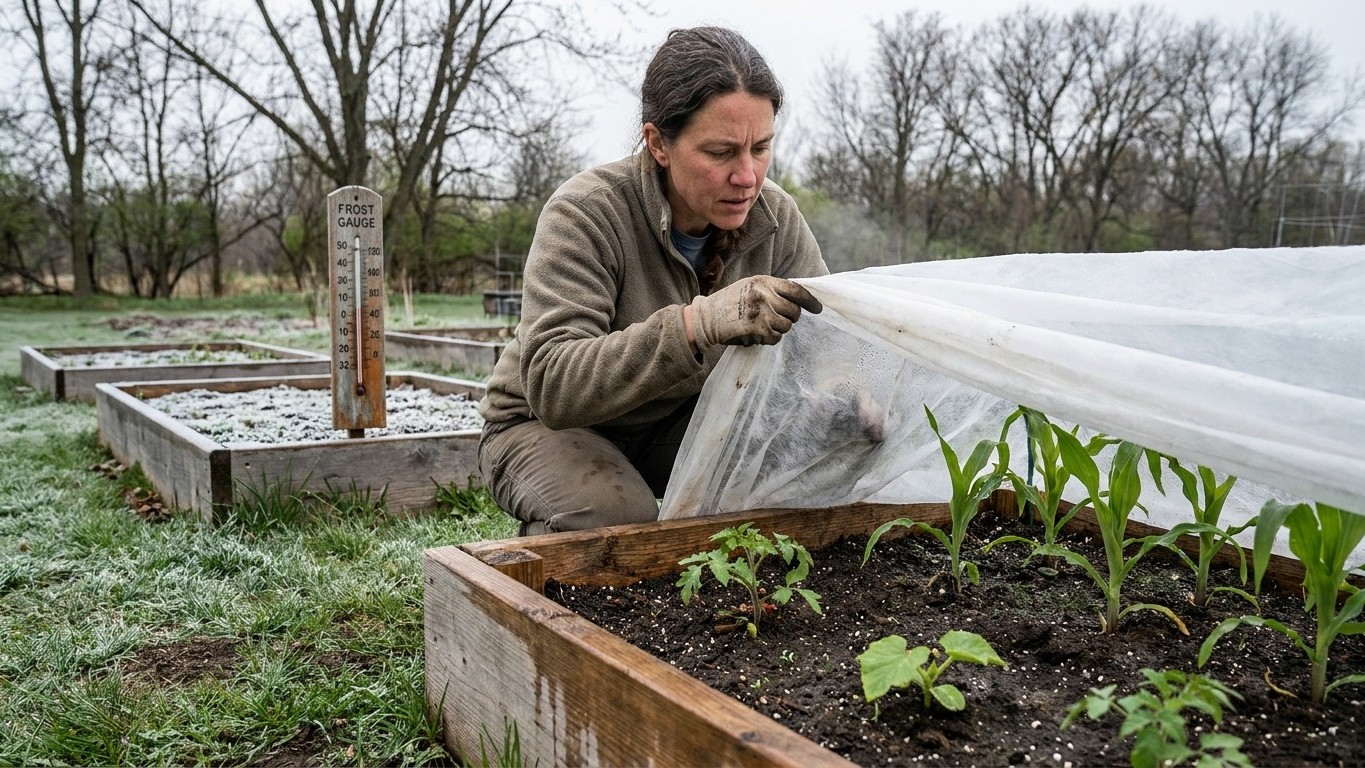

Gardening in Wisconsin means working inside a frost-free window of roughly 171 to 196 days, in a state that spans USDA zones 3b to 6a. That range, not the calendar month, is what decides which crops are realistic here, and how much risk you’re accepting when you plant early.
How long your season really is

| Factor | Figure |
|---|---|
| USDA Hardiness Zone | 3b to 6a |
| Average last spring frost | April 16 to April 29 |
| Average first fall frost | October 17 to October 29 |
Put those dates together and you get a frost-free window somewhere between 171 days, in a colder or later year, and 196 days, in a milder or earlier one. That’s the number that actually governs what you can grow. Not the zone map on the seed packet, not the general reputation of the Midwest, but the count of days between the last hard freeze in spring and the first one in fall.
A window in that range is generous enough for most vegetable gardens, but it still rules some things out, especially toward the shorter end. Full-season winter squash, some slicing tomato varieties bred for 90-plus days to maturity, and long-season dent corn all need most of that window with no margin for a late spring or an early fall. Warm-season crops like peppers cut it close too, since Growing Peppers in Wisconsin generally means starting seed indoors well before the last frost to give fruit enough time to mature, while cool-season, quick-maturing crops covered in Growing Carrots in Wisconsin, Growing Beets in Wisconsin, and Growing Spinach in Wisconsin fit far more comfortably inside that same window. In the northern part of the state, where zone 3b conditions push the season shorter still, those same crops become a real gamble rather than a routine planting choice, and the same tight timing is worth keeping in mind when figuring out When to Carve a Pumpkin in Wisconsin before the first fall frost sets in.
Averages are not promises
The dates above come from NOAA climate normals covering 1991 to 2020, and they describe a probability band, not a guarantee. Half of all years, by definition, run colder or later than the average on one end or the other. A last frost date of April 16 doesn’t mean frost is done by April 16. It means that in some years it is, and in others it isn’t, and the safe move is to treat the later end of the range, April 29, as the one to plan around if a hard freeze would wreck a full flat of transplants.
That’s also why the hardiness zone figure is worth naming carefully. The USDA system is built on one variable, the average annual extreme minimum temperature, and 3b to 6a is a statewide range, not a single number. A gardener near the reference station used for the freeze data, close to Milwaukee, is working with different conditions than one two hundred miles north. Treat the zone and the frost dates here as a starting estimate for the state as a whole, not a substitute for the specific numbers where you actually garden.
What the summer does to a garden here
Milwaukee’s climate normals put the average number of days reaching 90F or hotter at 7.0 a year. That’s a modest heat load compared to much of the country, and it matters more for what it doesn’t do than for what it does. Sustained stretches above roughly 90F are what cause tomatoes to drop their flowers without setting fruit, push lettuce and spinach into bolting, and shut down most cool-season crops for the summer. With only about a week of that heat spread across the season on average, Wisconsin gardens generally avoid the long dead middle that defines summer gardening farther south.
The practical result is one continuous growing season rather than two separated shoulder seasons. Cool-season crops like peas, spinach, and lettuce can often run from spring into early summer and pick back up again in early fall, without a long enforced gap in between. Tomatoes, peppers, and squash get a summer stretch that’s warm enough to set fruit reliably without the flower-drop problem that plagues gardens with three or four weeks of 90-plus heat in a row.
Winter is the other side of that coin, and it’s the more demanding one. The average daily minimum in the coldest month sits at 17.2F, which is the figure that decides whether a perennial, shrub, or fruit tree survives the winter at all, as distinct from the record low or the seasonal average. That’s cold enough to kill many marginally hardy perennials outright if they’re planted for a zone warmer than what a given part of the state actually gets, which is a common mistake when gardeners buy plants rated for a broad regional average instead of their local zone.
What tends to go wrong in Wisconsin
The University of Wisconsin-Madison Division of Extension tracks a recurring set of insect pests in home vegetable gardens across the state. A handful of them account for most of the damage gardeners actually report:
- Colorado potato beetle: the most recognizable pest of potato plants, moving in to feed starting in May.
- Squash vine borer: a serious, hard-to-control problem, with adults laying eggs starting the last week of June.
- Striped and spotted cucumber beetles: show up on cucurbits through the growing season and carry bacterial wilt from plant to plant.
- Imported cabbageworm, cabbage looper, and diamondback moth: recurring caterpillar pests on cabbage-family crops through summer.
That’s not a complete inventory. The same extension guide also flags squash bugs, several root maggot species on onions and cabbage, flea beetles, cutworms, aphids, European corn borer, asparagus beetle, and slugs among the pests home gardeners in the state regularly deal with. None of this is a treatment calendar, and it shouldn’t be read as one. It’s a shortlist of what to watch for and roughly when, so that damage on a plant has a name attached before you decide what, if anything, to do about it.
Where to check before you plant
Everything above describes Wisconsin at the state level, and a state stretching from zone 3b to zone 6a covers a lot of ground. A planting calendar built around the reference station near Milwaukee can run two to three weeks off for a garden near Lake Superior, and Lake Michigan itself delays the first fall freeze along the shoreline while inland spots in the south typically freeze earlier, in early October, and the north earlier still.
The University of Wisconsin-Madison Division of Extension is the land-grant source built for exactly this gap, with county-level offices that track local frost data, pest pressure, and planting windows specific to your part of the state. Before locking in a planting date or betting on a long-season variety, a quick check with the county office is worth more than any statewide average.