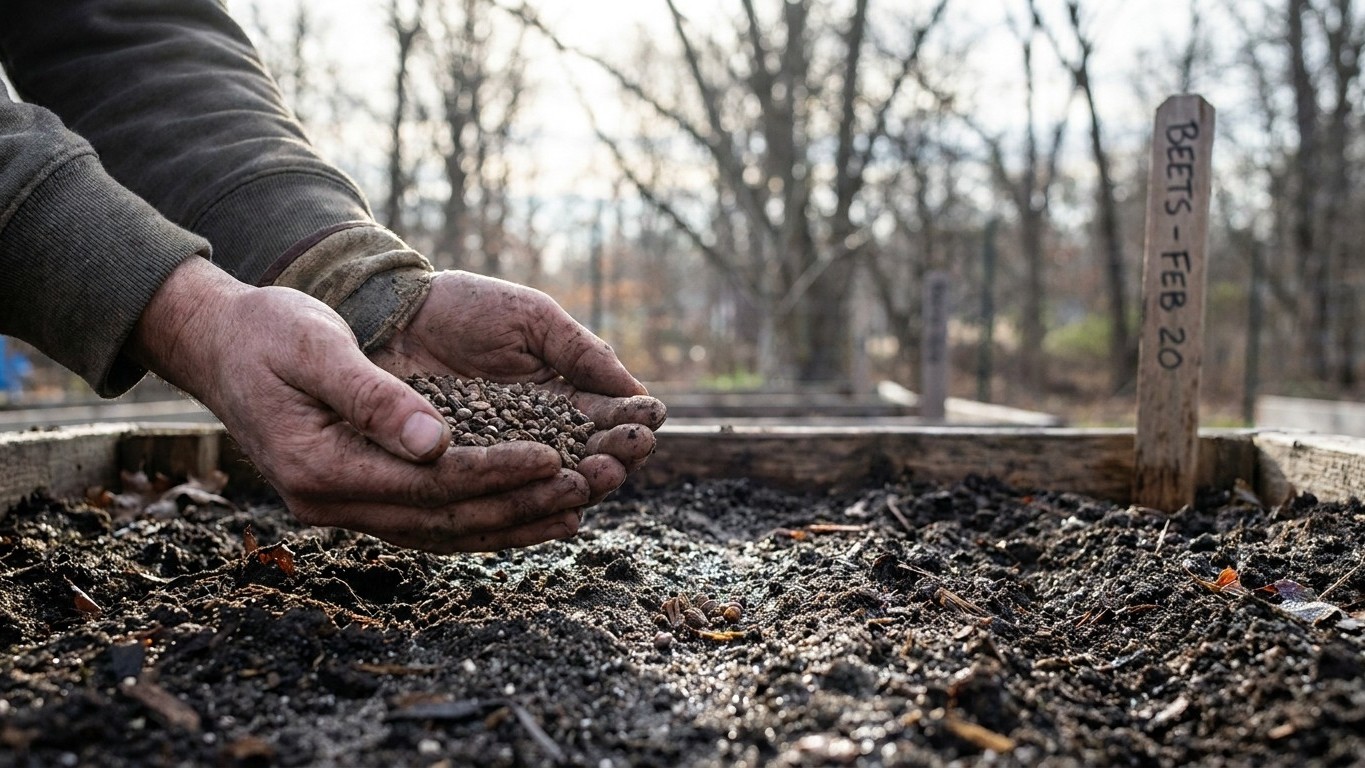

Yukon gardeners get one shot at getting the beet bed right, and the window opens two to three weeks ahead of the territory’s average last frost, which the Whitehorse A station puts at June 5. That points most growers toward late May for direct seeding, with the exact week shifting by soil temperature, elevation, and how close the garden sits to the Yukon River valley or a colder upland pocket.
The short answer
Start with what’s under your boots. Across the mapped agricultural soils of Yukon, the most common profile is a Brunisol, a young soil whose horizons are still sorting themselves out, typical of recent or coarse parent material. It covers 41 percent of the mapped surface, with Gleysolic soils as the runner-up. The median surface pH sits around 6.8, close to neutral, and the texture runs loam to silt: 47 percent sand, 15 percent clay, 38 percent silt, with organic matter around 12.0 percent. Drainage is classed as imperfect.
Set that against what a beet actually wants. Utah State University Extension describes the ideal bed as deep, sandy, and well-drained, rich in organic matter, amended with no more than 1 inch of composted material per 100 square feet. Yukon’s typical profile is close on texture, the sand-heavy loam-to-silt mix isn’t far from what a beet root prefers to push through, but the imperfect drainage is the sticking point. A root vegetable that wants water to move through freely will sit in a soil that holds it a beat longer than ideal, especially where snowmelt keeps the upper horizon saturated into late spring.
The heat side of the equation works the other way. Utah State University Extension flags 85 F combined with water stress as the trigger for woody roots. How many days a year Whitehorse spends above 90 F isn’t published here, but Yukon summers run short and cool by any garden standard, and that kind of sustained heat stress is rarely the territory’s problem. If a beet crop fails here, heat-driven woodiness is low on the list of suspects, cold, wet soil and a short window are much more likely culprits.
None of this is a diagnosis for one particular backyard. Yukon’s agricultural soil survey spans hundreds of mapped soil series, and a median figure from a hundred sampled components can miss a garden built on river-bottom silt, drained muskeg, or fill brought in during a driveway project. Treat the Brunisol profile as a starting point for what the region’s ground tends to do, not a number to write on a seed packet, and pull a real soil test before amending anything by the inch.
The six weeks that decide it here
Sowing two to three weeks before June 5 lands the first six weeks of a beet’s life somewhere in the second half of May through most of June, the stretch when Yukon’s spring is still deciding what kind of season it will be. That window matters more than any other for beets, because it’s the period Utah State University Extension identifies as the one where water stress triggers premature flowering, the bolting failure that turns a root crop into a seed stalk before it’s sized up.
Yukon spring in that stretch tends to run dry as snowmelt tapers off and before summer rain patterns establish, with cool nights that slow both germination and root swelling. That combination, thirsty soil surface plus lingering cold, is exactly the setup Utah State University Extension warns about for bolting: it isn’t the heat of July causing the problem, it’s the dry spell in the first six weeks after the seed goes in the ground. A gardener who sows on schedule but then lets the bed dry out during a stretch of clear, breezy May weather is doing more damage to the crop than one who sows a week late into moister ground.
The other wrinkle is that June 5 is a mean date, not a guarantee. Environment and Climate Change Canada’s normal is the midpoint of a range, which means in roughly half of all years the last frost falls later than June 5. Sow two to three weeks ahead of that average and there’s a real chance young beet seedlings meet a frost after they’ve already emerged. That’s a separate risk from bolting, and it’s one reason growers at higher elevation or away from the Whitehorse area often push their sowing date later rather than earlier, accepting a shorter season over a frost hit on tender seedlings.
Because beets are direct-sown, none of this six-week clock starts with a transplant. The 60 to 80 days most varieties need to reach harvest size count from the day seed goes into the ground, not from a seedling set out weeks later. That makes the sowing date itself the single biggest lever a Yukon gardener has over whether the crop finishes before fall cold shuts things down.
What goes wrong here
- Seedlings hit by a late frost after an early sowing. Sowing on the two-to-three-week schedule ahead of the June 5 mean assumes an average year, but the frost lands later than average about half the time. Watch the local forecast through emergence and keep a floating row cover on hand to throw over seedlings if a cold night is called after they’ve popped through.
- Bolting from a dry spell in the first six weeks. Yukon’s typically dry late-spring stretch is the exact condition Utah State University Extension names as the bolting trigger. Keep the top few inches of soil consistently moist from sowing through the sixth week rather than watering only when the surface looks dusty.
- Slow, patchy germination in cold, imperfectly drained soil. The territory’s dominant Brunisol profile drains imperfectly, and a cool, wet upper horizon in May can leave beet seed sitting too long before it sprouts, inviting rot. Raise the bed a few inches or work in extra organic matter, staying under the 1-inch-per-100-square-feet guideline, to help the top layer warm and dry between waterings.
- Running out of season before the root sizes up. With 60 to 80 days needed from seeding and a frost-defined growing window that’s already tight this far north, a delayed sowing (waiting out a wet week, for instance) can push harvest into fall cold. Choose the earlier end of that maturity range when the calendar looks tight, and don’t wait past the safe sowing window hoping for drier soil.
- Assuming heat woodiness is the risk to manage. Because Yukon rarely delivers the sustained 85 F-plus stretches that cause woody roots, spending effort shading or misting against heat is largely wasted here. Put that attention into consistent early watering instead, since bolting from cold-season dryness is the far more likely failure.
Common questions
Can you direct sow beets in Yukon?
Yes, and it’s the only recommended method. Beets don’t transplant well, and the 60 to 80 day maturity window Utah State University Extension describes runs from the day seed goes into the ground, not from a seedling stage.
What is the best time to plant beets in Yukon?
Aim for two to three weeks before the average last frost, which the Whitehorse A station places at June 5, putting most sowings in the second half of May. Because that frost date is a mean, not a guaranteed cutoff, keep a row cover ready in case a colder night follows.
Do beets need full sun in Yukon?
Beets generally perform best with strong, consistent light through their root-forming weeks, and Yukon’s long summer daylight hours work in a gardener’s favor there. The bigger variable locally is soil moisture in the first six weeks, not light.
How long do beets take to mature in Yukon?
Utah State University Extension gives a range of 60 to 80 days from seeding, and that range, not a fixed number, is what to plan around given how tight the territory’s frost-to-frost window can run, especially away from the warmer Whitehorse area.