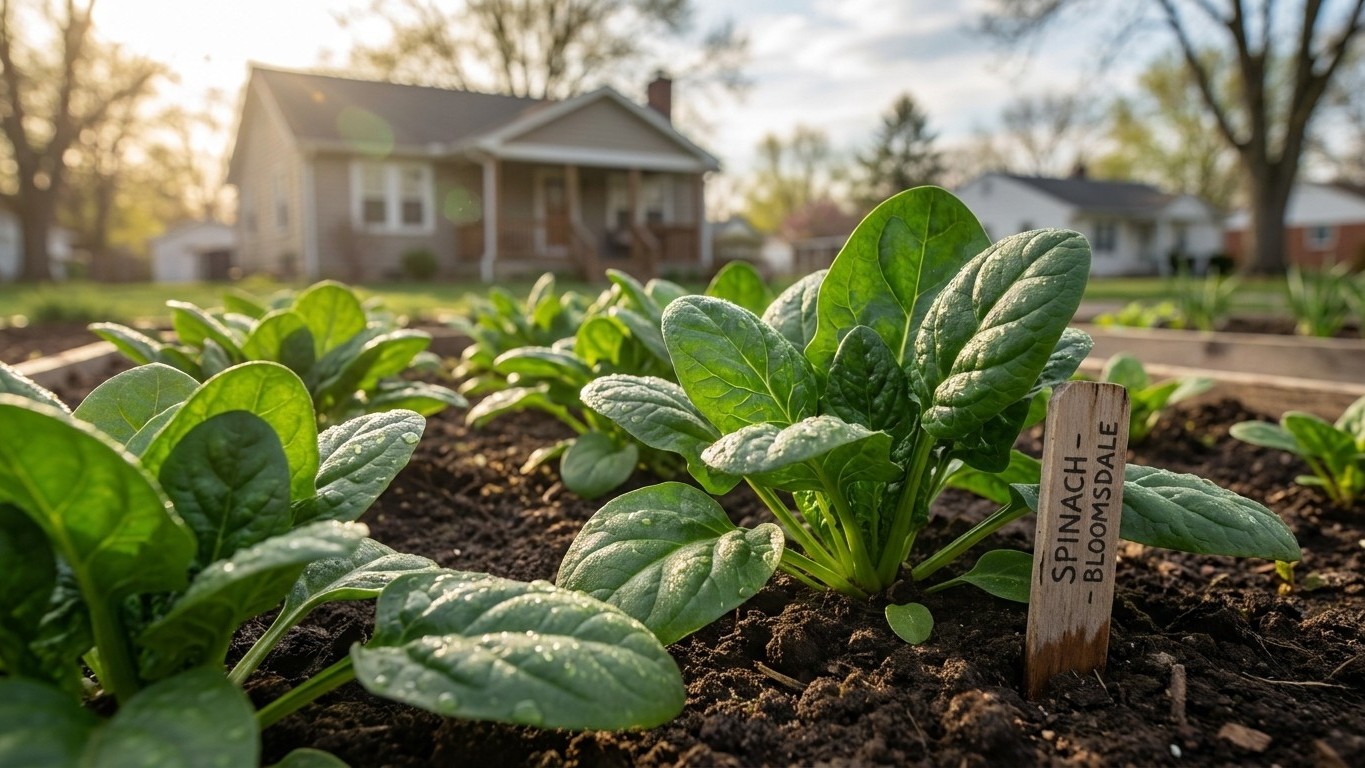

In Anchorage, the plant that flowers because of long days does exactly that no matter how cool the air stays. Spinach sown once the ground thaws will start bolting well before the summer solstice, and growers really only get two workable windows a year: an early spring crop that beats the lengthening days, and a When to Sow Autumn Spinach in Alaska crop timed to finish before the first frost between September 22 and October 1.
The short answer
On the longest day of the year, Anchorage gets 18 hours and 56 minutes of daylight. That number is the whole story for spinach here. Will Spinach Bolt Early in Alaska? Spinach bolts, meaning it stops making leaves and rushes to flower and seed, in response to long days and warm temperatures together. Anchorage supplies the long days in a way almost nowhere else in the country does, and it does so for weeks on either side of the solstice, not just on one peak day.
That matters because a cool Alaska summer does not buy a gardener extra weeks the way it might for a heat-sensitive vegetable. Spinach’s growth stays good only where temperatures don’t exceed 75 F, and Anchorage rarely reaches that ceiling on the thermometer; the reference station records an average of 0.0 days a year at 90 F or above, which is about as mild a summer heat load as an inhabited part of the country gets. So the heat side of the equation is nearly a non-issue here.
The day length side is the opposite story. Daylight in Anchorage is already running long well before the solstice and stays long for weeks afterward, and that stretch of light is what pushes spinach toward flowering regardless of how comfortable the temperatures feel to a person standing in the garden. So the limiting factor here is day length, not heat. A gardener who assumes “it’s cool outside, so my spinach has more time” is working from the wrong variable. The plant isn’t reading a thermometer to decide when to bolt; it’s reading the clock on daylight, and in Anchorage that clock runs faster than almost anywhere in the Lower 48.
This is why the spring crop and the fall crop have to be treated as two separate, short campaigns rather than one long growing season. Sow too late in spring and the crop meets the long June days before it has made much of a harvest. Sow too early in late summer and the crop meets warm soil that resists germination; sow too late and it meets the first frost before it’s worth cutting. There isn’t a long, forgiving middle season for spinach the way there is for something like kale or chard. The daylight curve simply doesn’t allow it, and no amount of shade cloth changes the mechanism, since day length, not light intensity, is what triggers the bolt.
How long the spring window really is
- The last spring frost at the reference station falls between May 3 and May 12, and the standard guidance is to sow spinach 2 to 3 weeks before that date, which lands seed in the ground somewhere between roughly mid-April and the last day of April.
- Through the first half of May, daylight in Anchorage is already climbing fast toward the solstice peak of 18 hours 56 minutes, and growth stays comfortable as long as temperatures don’t exceed 75 F, a ceiling this climate rarely tests given a mean of 0.0 days a year at 90 F or hotter.
- Because heat isn’t the constraint, the harvest clock is really set by day length: once daylight moves well past the range spinach tolerates before flowering, the plant shifts into bolting mode, and that shift tends to happen within roughly four to six weeks of a mid to late April sowing, well before the solstice itself arrives.
- That leaves a usable spring window of about a month to six weeks from sowing to the point where the crop is best harvested, not the full length of an Alaska spring. Waiting past that stretch usually means finding tall, seeding plants instead of a second cutting.
- Several spinach varieties commonly grown by home gardeners, including Bloomsdale, Melody, Teton, and Olympia, don’t change this calendar. Published data doesn’t break out days-to-maturity for any of these four by name, so variety choice is a matter of leaf shape and taste preference here, not a way to stretch the day-length limit.
The autumn crop, and when the soil lets you sow
The fall crop is set by counting backward from a realistic harvest date. With the first fall frost falling between September 22 and October 1, and the standard guidance of sowing 50 to 75 days ahead of the day you want to harvest, the sowing window for an Anchorage garden lands roughly between mid-July and the second week of August. Sow earlier than that and the crop is finished too soon and may bolt in the still-long late-summer days; sow later and there isn’t enough time before the cold shuts things down.
Soil that’s too warm to germinate
Spinach seed germination drops off once soil temperature climbs above 80 F. In much of the Lower 48, that’s the real obstacle to an autumn sowing: gardeners in hot regions have to wait for soil to cool before seed will even come up. Anchorage is a different case. With an average of 0.0 days a year reaching 90 F in the air, soil here is unlikely to sit anywhere near that 80 F germination ceiling through most of the summer, so this particular obstacle is far less of a factor than it is farther south. It’s still worth checking soil temperature directly with a probe before sowing, rather than assuming, since a warm stretch of sun on bare soil can push it warmer than the air reading suggests.
The frost that ends the season
The frost is the real deadline here. Counting back 50 to 75 days from a harvest around September 22 lands a sowing date near July 9 to August 3; counting back from the later end of the frost range, October 1, shifts that to mid-July through mid-August. Splitting the difference, a mid-July to early-August sowing gives the crop its best shot at reaching a useful size before the first frost arrives and closes things down for the year.
| Crop | Sow window | What ends it | Harvest target |
|---|---|---|---|
| Spring crop | Mid to late April | Lengthening daylight, not heat | Late May into June |
| Fall crop | Mid-July to early August | First frost (Sept 22 to Oct 1) | Before the frost date |
Checking this against your own county
Everything above is anchored to a single reference station, and Alaska covers an enormous range of microclimates from the coast to the Interior to the far north, where frost-free days run far shorter than the roughly 143 frost-free days typical around Anchorage. A garden a few hundred miles away can have a meaningfully different last frost, first frost, and even a different pattern of daylight-driven bolting risk depending on latitude.
The most reliable way to pin down local numbers is to contact the University of Alaska Fairbanks Cooperative Extension Service, which publishes region-specific planting guidance for Alaska gardeners. Local extension offices can confirm frost dates for a specific area and adjust the sowing math accordingly, rather than relying on a single statewide estimate.
Common questions
Can shade cloth or row cover delay bolting in Alaska?
Bolting in spinach is triggered by day length and temperature, not by light intensity, so shading the bed doesn’t shorten the number of daylight hours the plant experiences. Row cover can help moderate temperature swings, but it won’t stop the day-length signal that pushes the plant to flower.
Is there any spinach variety that resists bolting in long-day climates like Alaska?
Bloomsdale, Melody, Teton, and Olympia are commonly grown varieties, but no published data compares their bolting tendency specifically, so there’s no verified variety-based shortcut around the day-length mechanism in this climate.
Does bolted spinach mean the harvest is over?
Once a plant bolts, its energy shifts to flowering and seed rather than leaf growth, and the leaves tend to turn bitter as the plant approaches that ceiling around 75 F. At that point, pulling the plant and replanting for the next window is usually more productive than waiting on it.
Why does warm soil, not cold soil, block the fall sowing?
Spinach seed germination drops once soil rises above 80 F, which is the opposite problem from a spring crop, where cold soil and frost are the concern. In Anchorage’s mild summers this warm-soil obstacle is less severe than in hotter states, since the air here averages 0.0 days a year at 90 F or above.