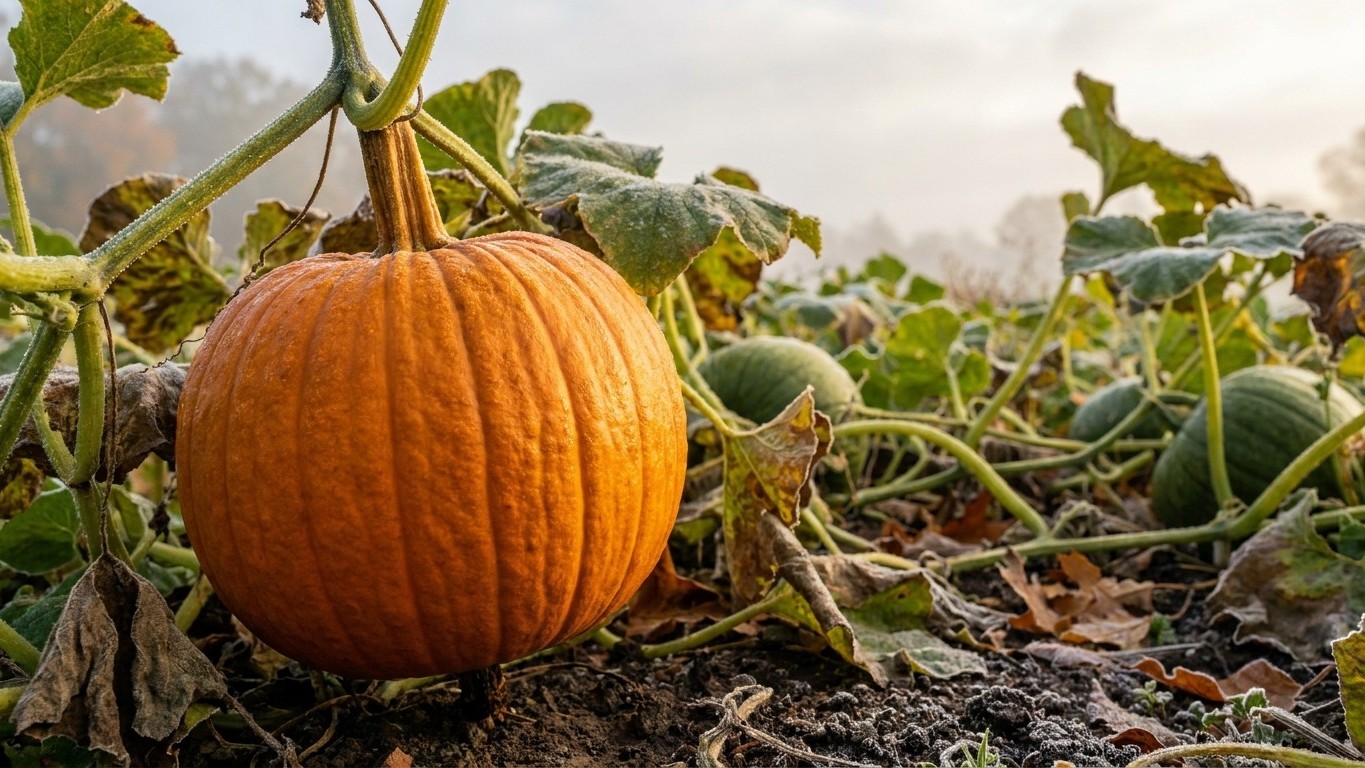

Most years, yes, a Kansas pumpkin patch can ripen before frost, but the seed date is not what decides it. What decides it is the day the first female flower opens. For a deeper look at Will Pumpkins Ripen Before Frost in Kansas?, the short version is this: Kansas’s first fall frost lands in the October 23 to November 2 window at the reference weather station, and a pumpkin needs 45 to 55 days from that flower to a hardened, colored fruit. Count backward from frost and the safe flowering window closes well before Labor Day in a rough year.
The short answer
Start with the frost, not the calendar month. NOAA’s 1991-2020 climate normals put the first fall freeze at the reference airport station somewhere between October 23 and November 2. That’s a ten-day spread, and it exists because frost dates are probabilities, not appointments. Some years the cold arrives on the early edge of that window; other years it holds off past it. A pumpkin grower who plans for the late edge of the window is planning for a year that may not show up.
Utah State University Extension’s guidance on pumpkin timing gives the other half of the equation: 45 to 55 days from flowering to a mature, ripe fruit. Not from seeding. Not from transplanting. From the day the flower opens and, if pollinated, begins setting fruit. That distinction matters because a pumpkin vine can spend three or four weeks growing leaves and runners before it ever produces a flower worth counting. Two gardeners who planted the same seed on the same day can still end up with flowers opening two weeks apart, depending on vine vigor, heat, and how many male flowers show up before the females do.
Put the two numbers together and the arithmetic runs like this: subtract 45 to 55 days from a frost date that itself falls somewhere between October 23 and November 2. Do that math against the early end of both ranges (a frost that arrives October 23 and a fruit that needs the full 55 days) and the last safe flowering date lands around the final days of August. Do it against the late end of both ranges (a frost that holds off until November 2 and a fruit that only needs 45 days) and the cutoff stretches to roughly the third week of September. The honest answer sits somewhere inside that stretch, late August to mid-September, and no gardener will know exactly where until the season plays out.
That’s the window that matters here, not a single circled date on a wall calendar. A flower that opens inside it has a real shot at ripening. A flower that opens after it is racing a frost it probably won’t beat, and the fruit it produces is more likely to stay a hard green ball than turn the orange a jack-o’-lantern needs.
When to sow here
Working backward from that flowering window means working out When to Sow Pumpkins in Kansas, and that date is not the last frost date. It’s later, sometimes considerably later, because soil temperature lags air temperature by weeks in spring. The last spring frost at the reference station falls between April 4 and April 18, but pumpkin seed needs soil that has reached 65°F, and bare ground in this part of the country typically doesn’t hold that mark until well into the following month. Sowing the day after the last frost, is usually sowing into soil that’s still too cold for the seed to germinate reliably.
- Wait for the frost window to close. April 4 to April 18 is when the air stops freezing at the reference station, but that date only clears the way, it doesn’t start the clock.
- Track soil temperature, not the air. Utah State University Extension ties germination to 65°F soil, and that threshold typically arrives after the last frost, not alongside it. A soil thermometer pushed two inches down in the afternoon is the only reliable check.
- Use row cover to move the date earlier. Clear or spun-fiber row cover warms the bed during the day and holds some of that heat overnight, and growers commonly find it buys about two weeks of lead time over bare soil left exposed.
- Count forward from the actual sowing date to the expected flowering date. Vines typically run several weeks of vegetative growth before the first female flowers open, so a seed sown in late May might not flower until early July, not late June.
- Check that flowering date against the frost window. If the projected flowering date falls after mid-September, the maturation math no longer clears the first fall frost with room to spare.
What goes wrong here
- A late flower that never colors. When the first strong female flowers open in late September instead of late August, the fruit is still counting down its 45 to 55 days when frost shuts the season down. The remedy is to sow as early as the 65°F soil threshold allows and to pinch back excess vine growth so the plant puts energy into flowering rather than sprawling.
- A fruit caught by frost before the skin hardens. Even a fruit that colors up can still have a soft rind, and a hard freeze splits or mushes that rind fast. The remedy is to watch the frost window closely as it approaches and to harvest any fruit that has already turned solid orange, stem attached, rather than leaving it out for one more week of size.
- A vine that dies back before the fruit finishes hardening. Powdery mildew, vine borers, or simple late-season exhaustion can kill the foliage weeks before frost actually arrives, which stops the plant from feeding the fruit even though the calendar still has time left. The remedy is to keep the vine as healthy as possible into September, since a pumpkin that stops receiving sugar from the leaves stalls wherever it is when the vine gives out.
Insect pressure adds another layer to that last failure. Squash bugs and cucumber beetles both weaken vines from the inside out during the exact stretch when a Kansas pumpkin needs its foliage intact, and both already have dedicated coverage on this site for identifying and managing them in Kansas conditions rather than repeating that detail here.
Checking this against your own county
Every date in this guide comes from a single reference weather station, and gardens away from that station, especially in low-lying rural spots or at higher elevation, often see frost arrive earlier in fall and linger later in spring, sometimes by one to two weeks. That gap is enough to shift the whole flowering window. Before locking in a sowing date, check current-season guidance from K-State Research and Extension, which tracks local frost data and pest pressure by county and can confirm whether a particular patch of ground runs earlier or later than the statewide figures suggest.
Common questions
Can I still get a ripe pumpkin if I sow in June?
It depends on how quickly the vine reaches flowering. A June sowing needs to produce strong female flowers within roughly six to eight weeks to leave enough room for the 45 to 55 day maturation before the first fall frost window opens.
Does variety choice change the timing math?
Variety affects vine vigor and how many flowers a plant sets, which indirectly shifts when the first fruit-bearing flower opens. Names commonly grown by home gardeners include Connecticut Field, Howden, Jack Be Little, Baby Boo, Cinderella, Sugar Pie, Wolf, Casperita, and Atlantic Giant, though no maturation figure specific to any one of them is published here.
What happens if frost hits before the fruit fully colors?
A pumpkin caught green by frost generally will not finish ripening off the vine the way a tomato might. Harvest before frost whenever the fruit has already turned solid color and the stem has started to dry.
How should I store pumpkins after harvest?
Utah State University Extension’s guidance points only to keeping harvested pumpkins somewhere they will not freeze, without giving a specific storage temperature or keeping time, so treat that as the limit of the published advice.