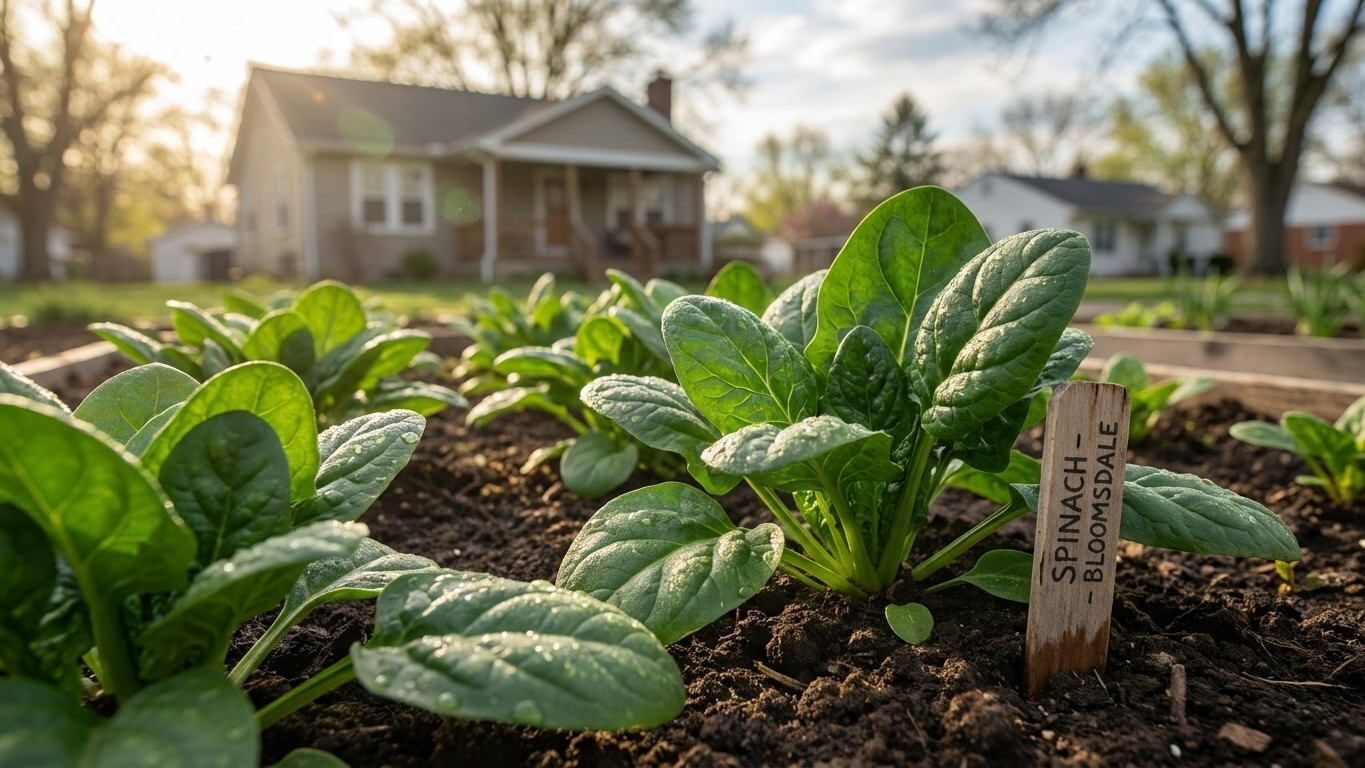

Spinach sown in coastal Maine typically bolts in the first half of June, once the lengthening days pass the point where flowering kicks in, not because the weather has gotten hot. Will Spinach Bolt Early in Maine? Portland’s climate rarely pushes past 90 degrees (just 3.8 days a year on average), so heat isn’t the limiting factor here. Day length is.
The short answer
On the longest day of the year, Portland gets 15 hours and 15 minutes of daylight. That’s a lot of light, and for spinach, light is the trigger that matters most. Long days push the plant toward flowering, a process gardeners call bolting, and once it starts, the leaves turn bitter and the whole plant redirects its energy into a seed stalk. This happens whether or not the thermometer ever climbs into uncomfortable territory.
That’s the part that trips people up. A gardener moving to Maine from a hotter state might assume the cooler summers buy extra weeks of harvest. They don’t, at least not through the mechanism most people expect. Spinach bolts under long days and warm temperatures together, and Maine’s summer light is plenty long enough to set that process in motion well before the heat ever becomes a factor. A mild July afternoon in the 70s won’t stop a spinach plant that’s already responding to 15-plus hours of daylight.
So which is it here, day length or heat? In coastal Maine, day length does almost all the work. The heat load is genuinely low. Fewer than four days a year reach 90 degrees, and the growing-season temperatures spend most of their time well under the 75-degree ceiling that spinach prefers. If Maine had Georgia’s day length and Maine’s temperatures, spinach might hang on much longer into summer. It doesn’t work that way. The days get long here too, just later in the calendar than in the Deep South, and that lengthening light is what ends the spring crop.
Inland and northern Maine complicate this slightly. Those areas run colder in both directions, later spring frosts, earlier fall frosts, but the day length at a given date doesn’t change much across the state. A gardener in Aroostook County sees almost the same June daylight as one in Portland. What changes is how much usable growing time sits on either side of that light-driven bolt point, which is really a story about frost dates more than sunlight.
The practical takeaway: don’t plan a Maine spinach patch around waiting out the heat, because there isn’t much heat to wait out. Plan around the calendar instead. Once the days stretch past a certain length, roughly early-to-mid June along the coast, the plants are going to bolt regardless of how mild the summer feels. For gardeners looking to extend the harvest beyond that spring window, When to Sow Autumn Spinach in Maine covers the shortening-day counterpart to this same bolting mechanism.
How long the spring window really is
Working out the real spring window means stacking a few known numbers against each other. Here’s how it breaks down for a coastal Maine garden:
- Start with the last frost date. Coastal Portland’s last spring frost falls between April 22 and May 1, based on 1991-2020 NOAA climate normals.
- Sow 2 to 3 weeks before that date. That puts a realistic sowing window somewhere around early April to mid-April, since spinach seed tolerates cold soil far better than it tolerates heat.
- Expect several weeks of good growth. Spinach grows best under 75 degrees, and April and May in Maine sit comfortably in that range most years, so early growth tends to be strong.
- Watch the calendar, not the thermometer, as June approaches. Daylight is climbing toward that 15-hour-15-minute peak, and the bolting trigger is tied to that light, not to a hot spell.
- Expect bolting by early-to-mid June. That gives a usable spring harvest window of roughly 8 to 9 weeks from sowing to the point where the crop turns bitter and runs to seed.
Variety choice can shift the edges of that window somewhat, though it’s worth being honest about what’s actually documented. Four varieties commonly show up in seed catalogs and extension guidance: Bloomsdale, Melody, Teton, and Olympia. No bolt-resistance data or maturity timing for any of these four is published in the source used for this article, so treat variety selection as a matter of local trial and error rather than a guaranteed way to stretch the spring window.
The autumn crop, and when the soil lets you sow
A fall spinach crop in Maine faces a completely different obstacle than the spring crop does. Instead of racing lengthening days, it’s racing shortening ones, and the challenges sit at both ends of the window.
Soil too warm to germinate
Spinach seed struggles to germinate once soil temperatures climb above 80 degrees, according to Utah State University Extension. This is the reason fall sowing can’t simply happen “whenever it cools down a little.” Late summer soil often holds heat well past the point where the air feels comfortable, and a seed dropped into overheated soil may simply sit there instead of sprouting. Coastal Maine’s mild heat load, again just 3.8 days a year above 90 degrees, means this problem is less severe here than it would be in a hotter state, but late July and early August soil can still run warm enough to slow or block germination. Waiting until soil temperatures ease, typically as August moves along, gives seed a much better shot at coming up reliably.
The frost that ends the season
On the other end, the first fall frost along the coast lands between October 9 and October 21. Working backward from a realistic harvest target in that window, and using the 50-to-75-day planting-to-harvest guidance published for a fall crop, puts the sowing date somewhere between early August and late August. Sow too early and germination fights the warm soil described above. Sow too late and the plants run out of season before the first hard frost shuts things down. That leaves a fairly narrow but workable stretch, roughly the first three weeks of August, as the practical sowing window for a coastal Maine fall crop. Inland and northern parts of the state, where frost arrives earlier, need to shift that window a bit earlier as well.
Checking this against your own county
Every number above is built from the Portland reference station, and Maine is a big enough state that inland and northern counties run meaningfully colder in spring and fall. A garden two hours north of Portland might see its last frost weeks later and its first fall frost weeks earlier, which squeezes both the spring and fall spinach windows described here. Before locking in a sowing date, it’s worth checking local frost data and soil conditions directly. University of Maine Cooperative Extension maintains county-level guidance and can confirm how much these statewide numbers shift for a specific location. Local extension offices also track soil temperature trends in a given season, which matters more for the fall sowing decision than any fixed calendar date.
Common questions
Does shade cloth delay bolting in a Maine garden?
Shade can lower soil and air temperature slightly, which helps with the 75-degree growth ceiling, but it doesn’t change day length. Since day length is the dominant bolting trigger in Maine’s mild summers, shade cloth offers limited protection against bolting itself, even if it helps leaf quality a little longer.
Can spinach be grown through a Maine summer instead of just spring and fall?
Not reliably. The long daylight hours around the summer solstice trigger bolting regardless of how mild the temperatures stay, which is why spring and fall remain the two practical windows rather than a continuous summer crop.
Is a light frost harmful to a fall spinach crop?
The source used for this article addresses germination and bolting thresholds but doesn’t publish separate light-frost and hard-freeze data for spinach. The only frost figure available here is the general first fall frost date for the region, which should be treated as the point the season effectively ends for planning purposes.
Why do the four named spinach varieties matter if there’s no data on them?
Bloomsdale, Melody, Teton, and Olympia are commonly available options, but this article’s source doesn’t publish maturity length or bolt-resistance figures for any of them. That means variety selection in Maine comes down to local experience and extension recommendations rather than a documented performance edge.