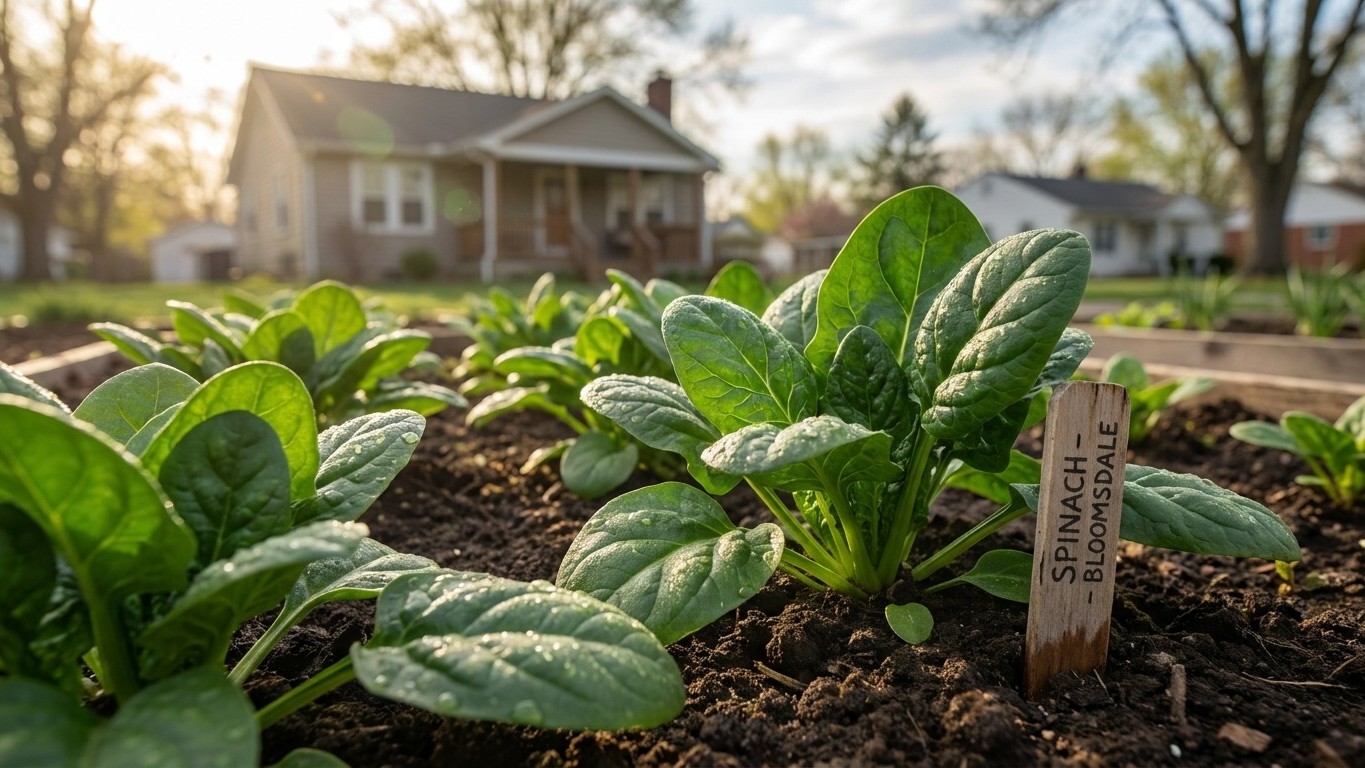

South Dakota gardeners get one real shot at spring spinach and one shot at fall spinach, and both windows run short. Will Spinach Bolt Early in South Dakota? In this territory, spinach bolts from a mix of long summer daylight and heat climbing past 75°F, not from either factor working alone. That combination closes the spring window by late May or early June and forces the fall crop into a narrow slot once soil finally cools out of the range that blocks germination; see When to Sow Autumn Spinach in South Dakota for those exact dates. Every date below comes from the reference NOAA station, and a garden a few miles away can run a week or two behind or ahead of it.
The short answer
On the longest day of the year, the reference city for this territory sees 15 hours and 15 minutes of daylight. That’s several hours past the 12-hour mark that starts short-day onions bulbing elsewhere on this site, and for spinach that length of daylight is a problem, not a bonus. Spinach flowers, or bolts, once days stretch long, and it does that regardless of how mild the temperatures feel that week. A cool June in this part of South Dakota does not buy extra weeks of leafy growth. The plant is answering the clock, not the thermometer, once daylight climbs well past 14 hours.
That’s only half the story. This territory also averages 13.8 days a year at 90°F or hotter, and spinach’s own growth ceiling sits far below that mark, at 75°F. Once daytime highs push past that number, growth slows, leaves turn bitter, and the plant is primed to send up a flower stalk. So the two forces that end a spinach planting here, the calendar and the thermometer, arrive close together: day length crosses into bolting territory well before the solstice, and by early summer the 75°F ceiling starts getting hit too. The answer isn’t day length or heat working separately. It’s both landing within a few weeks of each other, which is why the spring window closes fast here instead of fading out gradually the way it might farther north.
For gardeners, the practical upshot is that neither a shaded row nor a cooler backyard microclimate fixes the day-length half of the equation. Shade can knock down heat load and buy a little time on the 75°F side, but it does nothing to change how many hours the sun stays up. That’s the part of the equation gardeners in this territory tend to underestimate, since it feels like weather should be the only variable at play. It isn’t. Spinach is reading two signals at once, and in a state where summer daylight runs long, the day-length signal often shows up before the heat does.
How long the spring window really is
Working out the real spring window means stacking three numbers on top of each other: the recommended sowing date, the last frost date for this territory, and the point where temperatures start crossing that 75°F ceiling.
- Start with the frost date. At the reference station for this territory, the last spring frost falls between April 29 and May 9.
- Move sowing back two to three weeks. Spinach seed goes into the ground before that frost date, not after it, since the crop handles cold soil far better than heat. That puts sowing somewhere between April 8 and April 25, depending on how the season is running.
- Track the days as they lengthen. Daylight climbs every day between that sowing window and the June solstice, working toward the 15-hour-15-minute peak. Spinach picks up the bolting signal well before the solstice actually arrives.
- Watch the temperature climb alongside it. This territory racks up an average of 13.8 days a year at 90°F, and most of them land in July, but the 75°F growth ceiling for spinach gets crossed earlier, typically as spring turns into early summer.
- Add it up. From an early-to-mid April sowing to the point in late May or early June when both day length and heat have pushed past spinach’s comfort zone, gardeners here are working with roughly six to eight weeks of good spring growth, not a full season.
That window is tighter than it looks on paper, because the two constraints don’t take turns, they overlap. A gardener who sows on the early side of that April range and harvests as soon as leaves are usable gets the most out of it. Waiting until the frost date has safely passed, the way many vegetables prefer, wastes days that spinach can’t afford to lose here.
The autumn crop, and when the soil lets you sow
Warm soil delays the start
The first obstacle to a fall spinach crop isn’t cold, it’s heat still sitting in the ground from summer. Spinach seed germinates poorly once soil temperature climbs above 80°F, and in a territory averaging 13.8 days a year at 90°F air temperature, the ground itself often stays too warm to sow through most of July and into August. Utah State University Extension names 80°F as the germination ceiling and doesn’t publish a fixed sowing calendar around it, since soil temperature swings with mulch, rainfall and how exposed a particular bed is to afternoon sun. The practical guidance for this territory is to wait until the hottest stretch of summer has broken and soil has had a chance to cool, rather than sowing by a date circled on the calendar regardless of conditions.
The frost sets the finish line
The other end of the fall window is easier to pin down. First fall frost at the reference station for this territory arrives between September 24 and October 4, and Utah State University Extension recommends sowing a fall spinach crop 50 to 75 days before the date a gardener wants to harvest. Counting back from a harvest target in that late-September window puts sowing somewhere in the second week of July through the middle of August, depending on how early or late the crop needs to come in. That’s a workable stretch, but it leans on the soil having cooled enough to germinate reliably, which in some years pushes the practical start closer to the back half of that range than the front. Four varieties commonly grown for fall harvest, Bloomsdale, Melody, Teton and Olympia, suit this kind of planting, though no maturity data for any of them is published in the source behind these figures.
Checking this against your own county
Every date in this article comes from one reference weather station, and gardens even a short drive away can run a week or two behind or ahead of it, more with elevation change or a low spot that collects cold air. Suburban and rural gardens in this territory typically see the last spring frost later and the first fall frost earlier than the airport-station figures used here, which shrinks the workable window on both ends rather than stretching it.
Before locking in a sowing date, check current conditions and local frost records with South Dakota State University Extension. They track conditions at the county level and can confirm whether a given spring is running early or late against the normals cited here, which matters more for spinach than for most vegetables, since the plant is reacting to a moving target of day length and heat rather than a single frost date.
Common questions
Does shade help spinach avoid bolting in South Dakota?
Shade can lower the temperature spinach experiences, which helps on the 75°F side of the problem. It does nothing about day length, so a shaded row will still pick up the bolting signal once days stretch long, just possibly a little later than a row in full sun.
Can I grow spinach through the middle of summer in South Dakota?
No. By midsummer, day length is at or near its 15-hour-15-minute peak and daytime highs regularly push past the 75°F growth ceiling, with an average of 13.8 days a year reaching 90°F. Both bolting triggers are active at once, so summer sowing isn’t a workable plan here; the fall window is the better bet.
Which spinach variety bolts slowest in this territory?
Bloomsdale, Melody, Teton and Olympia are all grown for fall harvest in similar climates, but the source behind these figures doesn’t publish bolt-resistance data for any of them, so no variety comparison can be made here.
What if the soil is still warm when the fall sowing window opens?
Wait rather than sow into soil above the 80°F germination ceiling. Watering a bed a day or two ahead of sowing and mulching lightly can help pull soil temperature down faster, and sowing later within the 50-to-75-day range still leaves enough time to reach harvest before the first fall frost arrives.