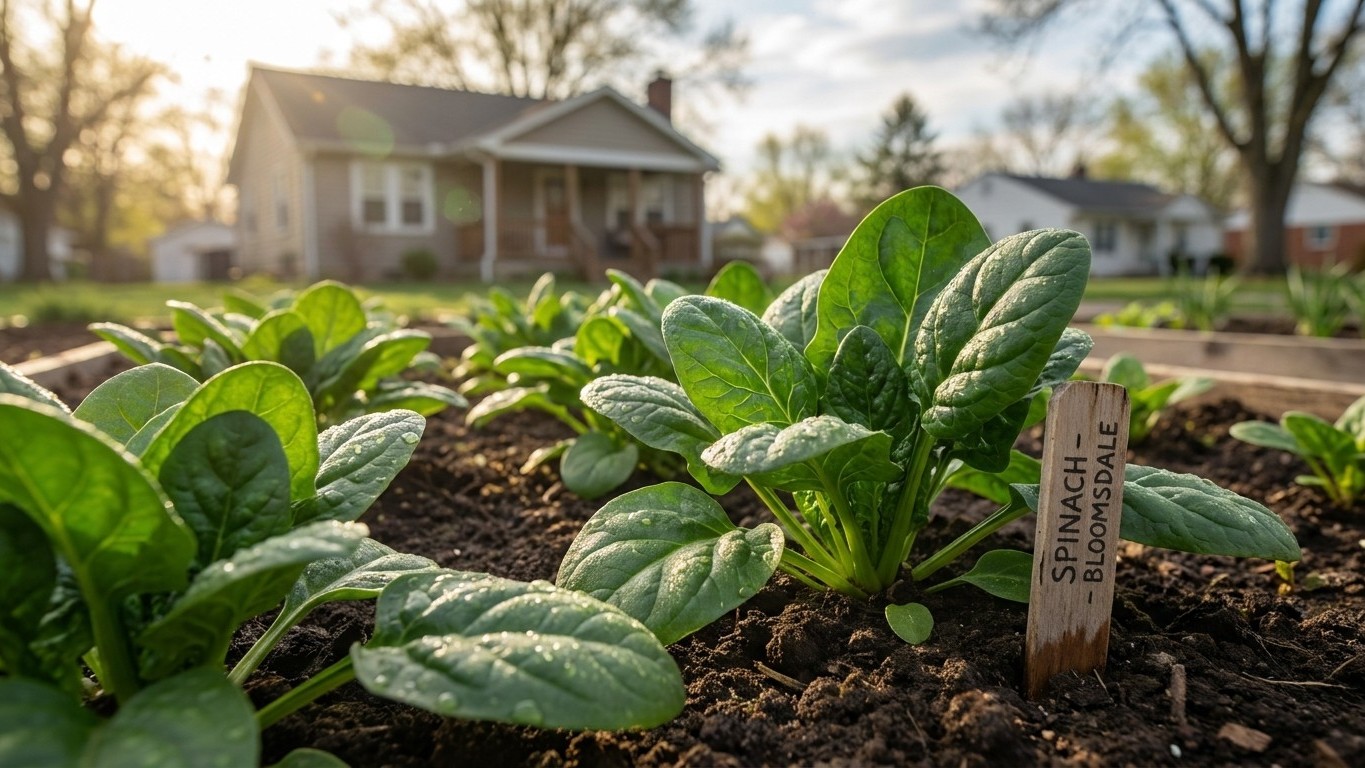

For Missouri gardeners, spinach sown in spring runs out of cool weather fast. Will Spinach Bolt Early in Missouri? Expect bolting by late May into June, sometimes sooner if a heat spell hits in April or May. The trigger isn’t only temperature: it’s day length itself, and Missouri’s long summer days arrive on schedule no matter how mild the season feels. A fall-sown crop sidesteps that clock, but only if timed around soil temperature and the season’s first frost.
The short answer
At the reference city near Kansas City, the longest day of the year brings 14 hours and 46 minutes of daylight. That’s a lot more light than midwinter, and it matters more to spinach than any thermometer reading. Long daylight hours, by themselves, push spinach into flowering. The plant doesn’t wait for a heat wave; the lengthening days from April into June are already doing that work, whether the summer feels mild or not.
Missouri doesn’t hand out mild summers as compensation, either. The Kansas City reference station averages 32.7 days a year at 90 degrees F or hotter, a heat load that starts building well before the solstice. Spinach grows best below 75 F; past that ceiling growth slows and leaves turn bitter, which speeds the plant’s shift toward seed production. The same rising temperatures that stress the plant arrive right alongside the long days already triggering bolting on their own.
That combination is the honest answer to when Missouri spinach bolts: day length and heat are working against the crop at the same time, not one or the other. Even in a cool, rainy spring, once daylight climbs toward 13 or 14 hours, spinach starts shifting toward flowering stalks. Add in the heat that follows a few weeks later, and there’s no real spring reprieve to bank on.
What this means for a home garden is straightforward: plant early, harvest fast, and don’t expect a crop to hold into June. The plants set out in mid-March get weeks of usable growth before the calendar and the thermometer both turn against them. Waiting until May to sow spring spinach in Missouri usually means chasing a crop that’s already decided to bolt before it’s worth eating. A better strategy may be to skip the spring gamble altogether and look at When to Sow Autumn Spinach in Missouri instead, since a fall crop avoids the lengthening days that push spring plantings toward bolting.
How long the spring window really is
Two numbers set the boundaries of a Missouri spring spinach crop: how early it’s safe to sow, and how soon the plant stops growing well. Lining them up shows how short that window actually runs.
- Count back from the last frost. The 30 to 70 percent probability window for the last spring freeze at the Kansas City reference station falls between April 6 and April 20, with the Kansas City International Airport station running about five days earlier than downtown, and southern Missouri milder still. Spinach seed can go in the ground two to three weeks before that date, putting the earliest sowing somewhere in the middle of March for most of the state.
- Track the calendar toward the ceiling. Spinach grows well up to 75 F. Missouri routinely crosses that mark well before summer officially starts, often by the first half of May, and stays there with few breaks once the 32.7 annual days above 90 F start piling up through late spring into summer.
- Watch daylight climb at the same time. Because day length alone can push spinach toward flowering, the plant is under pressure from two directions well before the solstice. By mid-May the days are already long enough, combined with rising heat, that bolting risk is climbing fast.
- Add up the usable weeks. Sowing in mid-March and expecting reliable growth until temperatures settle above 75 F for good leaves a window of roughly eight to nine weeks. That’s enough time for one solid harvest of baby or mature leaves, but not much more, and any sowing delayed into late April shrinks that window considerably.
That math is why so many Missouri gardeners describe spring spinach as a get-in, get-out crop. It rewards an early start far more than most vegetables, because every week of delay costs from both ends: the frost date on one side, the rising heat and daylight on the other.
The autumn crop, and when the soil lets you sow
Fall is usually the better season for Missouri spinach, since the days are shortening instead of lengthening, removing the trigger that forces spring plantings to bolt. But autumn brings two obstacles of its own, and both need checking before seed goes in the ground.
Soil too warm to germinate
Spinach seed germinates poorly once soil temperature climbs above 80 F, according to Utah State University Extension. Missouri’s summer heat load, that same 32.7 days a year at 90 F or hotter, keeps soil well above that mark through most of July and often into August. Sowing during that stretch usually means poor, spotty germination even if the seed itself is fine. The soil needs to cool before a fall crop has any real chance, which in most of the state means waiting until temperatures start easing later in August.
The frost that ends the season
On the other end of the calendar sits the first fall frost, which arrives at the Kansas City reference station between October 18 and October 29, with the same north-south adjustment: the Kansas City International Airport station runs earlier than downtown, and southern Missouri stays frost-free longer. Utah State University Extension recommends sowing a fall crop 50 to 75 days before the target harvest date. Aiming to harvest in the second half of October, right before that frost window closes, means counting back 50 to 75 days lands sowing somewhere between early August and early September.
Put the two obstacles together and the practical fall sowing window in most of Missouri opens in mid-to-late August, once soil has cooled below that 80 F mark, and closes by early September to leave enough of the 50 to 75 day cycle before frost. It’s a narrower target than spring, but it comes without the day-length pressure that cuts the spring crop short.
Checking this against your own county
Every date in this article comes from a single reference station, and Missouri stretches from the Iowa line to the Arkansas border, a distance that shifts frost dates and heat loads more than most gardeners expect. Southern counties routinely see a later first frost and an earlier last one than the figures used here, stretching the usable spring window and pushing the fall sowing date later too.
Before locking in a planting date, check those local specifics with University of Missouri Extension, which maintains county-level offices and current guidance for gardeners across the state at extension.missouri.edu. A local office can confirm soil temperature trends and frost timing than any statewide average.
It’s also worth knowing what isn’t published. Varieties commonly grown in Missouri gardens, including Bloomsdale, Melody, Teton, and Olympia, don’t come with a standardized days-to-maturity figure in the extension guidance used for this article, so treat any specific number attached to a variety name with some skepticism unless it comes straight from the seed packet.
Common questions
Can I stop spinach from bolting in Missouri summers?
Not by watering or shading alone, since the flowering trigger is largely tied to day length rather than moisture. Harvesting before the days get too long, and switching to a fall planting instead of pushing a spring crop into June, works better than trying to fight the bolting response directly.
Does shade cloth help delay bolting?
Shade cloth can lower soil and air temperature a few degrees, which helps keep spinach under the 75 F growth ceiling a little longer, but it does nothing about day length, the other half of what triggers flowering during Missouri’s long summer days.
Is fall spinach sweeter than spring spinach in Missouri?
Many gardeners find fall spinach holds better flavor, likely because it matures as days shorten and temperatures ease rather than climbing toward the 75 F bitterness threshold the way a late spring crop does.
What happens if I sow spinach in Missouri’s summer heat?
Germination usually suffers once soil runs above 80 F, per Utah State University Extension, so a mid-summer sowing often means thin, spotty stands even before day length or heat has a chance to cause bolting later.