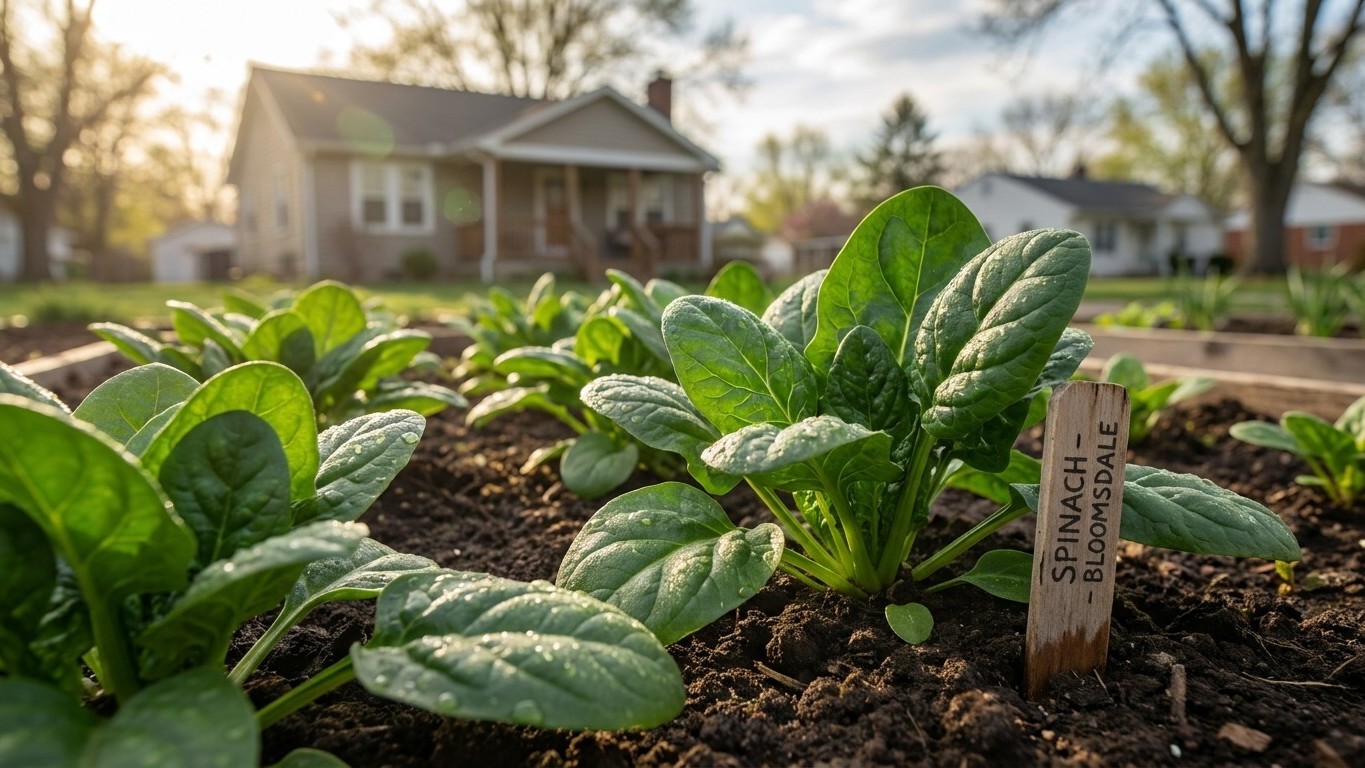

Spinach in Maryland typically starts bolting as May turns into June, sometimes sooner in a warm spring. The trigger isn’t heat alone: the lengthening days that arrive on schedule every year push the plant toward flower stalks whether or not the thermometer cooperates. That timing squeezes the spring crop into a handful of weeks, but When to Sow Autumn Spinach in Maryland works around the problem, using shorter days and cooling soil to stretch the harvest into fall before frost shuts things down.
The short answer
On the longest day of the year, the reference city used for this state’s climate data logs 14 hours and 45 minutes of daylight. That number matters more than most gardeners realize, because spinach flowers in response to long days: once daylight stretches past a certain point, the plant reads that as a signal to stop making leaves and start making seed. A cool, cloudy summer does nothing to slow that clock down. The days get long here whether the air sits at 68 degrees or 95, and the plant responds to the light, not the thermometer.
That’s the detail that trips up a lot of gardeners who moved to Maryland from farther south. They assume a mild spring buys extra weeks before the crop turns bitter and shoots up a stalk. It doesn’t. The lengthening days between the spring equinox and the solstice are doing the real work of pushing the plant toward bolting, and that clock runs on the calendar, not the forecast.
Heat adds a second, overlapping pressure. According to Utah State University Extension, spinach grows best below 75 degrees Fahrenheit; above that line, growth slows and the leaves turn bitter, so 75 degrees functions as a ceiling on both quality and yield. Maryland doesn’t waste much time getting there. The Baltimore area averages 24.6 days a year at 90 degrees or hotter, and by late May daytime highs are already brushing that 75-degree mark regularly, well before the hottest days actually arrive.
So the honest answer is both. Day length starts the process everywhere in the state at roughly the same time each year, because the sun doesn’t check a zip code. Heat then closes the door faster in some seasons than others, particularly if a warm stretch lands in April or early May instead of waiting for June. A gardener Growing Spinach in a shaded, north-facing bed might squeeze out a few extra days over a neighbor growing it against a sunny south wall, but nobody in Maryland gets an extra month out of shade alone. Will Spinach Bolt Early in Maryland? The lengthening days set the outer limit for everyone; the heat decides how much of that limit anyone actually gets to use.
How long the spring window really is
Lay the sowing rule next to the local frost dates and the bolting trigger, and the spring spinach season in Maryland turns out to be short.
- Start with the sowing rule. Spinach seed goes in the ground two to three weeks before the last expected frost. Statewide, that last frost falls between April 3 and April 16, based on NOAA’s 1991-2020 climate normals for the reference station, putting a typical sowing date somewhere from mid-March to the start of April for most of the state. Western Maryland’s mountain counties, Garrett and Allegany, run weeks behind that; the Eastern Shore tends to warm a bit earlier.
- Add the growth ceiling. Once daytime temperatures start holding above 75 degrees regularly, spinach growth and quality both fall off. That threshold typically arrives well before the hottest days of summer show up, since Maryland’s push toward 90-degree afternoons builds gradually through May and into June.
- Layer in the daylight clock. Day length is climbing fast through April and May, closing in on that 14 hour, 45 minute peak at the solstice. Spinach doesn’t wait for the solstice itself to react; the lengthening days earlier in the season are already nudging the plant toward flowering.
- Add it up. That leaves a usable spring window of roughly six to eight weeks: sow in mid-to-late March, expect the harvest to wind down and bolting to begin sometime in May, occasionally stretching into the first days of June in a cool, cloudy year. Four varieties often show up on Maryland seed racks, Bloomsdale, Melody, Teton, and Olympia, but there’s no published data on any of them changing that day-length or heat math. Treat the timing above as the baseline no matter which one lands in the seed packet.
The autumn crop, and when the soil lets you sow
The fall planting sidesteps the day-length problem by running the calendar in reverse: shortening days after the summer solstice stop pushing the plant toward bolting, so a late-summer sowing can grow leaves right through cooling weather without turning bitter. Two things still limit exactly when that sowing can happen.
Soil too warm to germinate
Spinach seed struggles to sprout once soil temperatures climb above 80 degrees Fahrenheit, and Maryland ground holds onto summer heat well into the season. With the Baltimore area averaging nearly 25 days a year at 90 degrees or hotter, topsoil often sits above that 80-degree line through most of August. Waiting for the soil to cool, rather than watching the calendar, is what actually opens the fall sowing window here. In most of the state that point arrives sometime in the second half of August or the first half of September, later in a hot year, earlier after a cool, rainy stretch.
Racing the fall frost
The other boundary is the season’s end. The first fall frost across most of Maryland lands between October 26 and November 5, again based on the reference station’s climate normals, with the Eastern Shore running a bit milder and the western mountains reaching frost noticeably earlier. Counting back from a harvest date in that window, using the 50 to 75 days from sowing to harvest, points to a fall sowing date somewhere between mid-August and mid-September for most of the state. That’s a narrow overlap with the soil-temperature limit above, which is exactly why fall spinach in Maryland rewards gardeners who track soil temperature directly rather than just circling a date on the calendar. Sow too early and the seed sits in ground too warm to sprout well; sow too late and the plant runs out of days before frost ends the season.
Checking this against your own county
Every number above comes from a single reference station, and Maryland’s geography is stretched enough that no single station speaks for the whole state. Garrett County’s growing season looks nothing like Somerset County’s. Local frost dates, late-summer soil warm-up, and even the timing of that 75-degree heat ceiling can shift by two or three weeks from one county to the next.
The University of Maryland Extension keeps county-level guidance and local offices that track this kind of variation directly, and its horticulture staff can confirm current frost expectations and soil conditions for a specific address rather than a statewide range. Anyone planting near a county line, at higher elevation, or close to the Chesapeake Bay’s moderating effect will get a more useful answer from that office than from any statewide date range, spring or fall.
Common questions
Can shade delay spinach bolting in Maryland?
Some, but not much. Shade lowers soil and leaf temperature, which helps with the 75-degree heat ceiling, but it does nothing to change day length, and day length is the trigger that starts the bolting process regardless of temperature. Expect a few extra days from shade, not a few extra weeks.
Does a bolted spinach plant still taste okay?
Once the plant sends up a flower stalk, the leaves generally turn bitter and the texture toughens, lining up with the same 75-degree threshold that marks both the growth ceiling and the point where flavor declines. It’s still safe to eat, but most gardeners pull bolted plants and replant rather than push through a bitter harvest.
Is fall spinach easier to grow than spring spinach in Maryland?
Many gardeners find it more forgiving, since shortening days after the sowing window work with the plant instead of against it. The main challenge shifts from bolting to germination, since warm late-summer soil above 80 degrees can slow seed sprouting until temperatures ease.
Do the four common spinach varieties bolt at different times?
Bloomsdale, Melody, Teton, and Olympia all show up in Maryland gardens, but there’s no published data tying any of them to a different bolting timeline for this state. Day length and the 75-degree heat ceiling apply the same way regardless of which one goes in the ground.