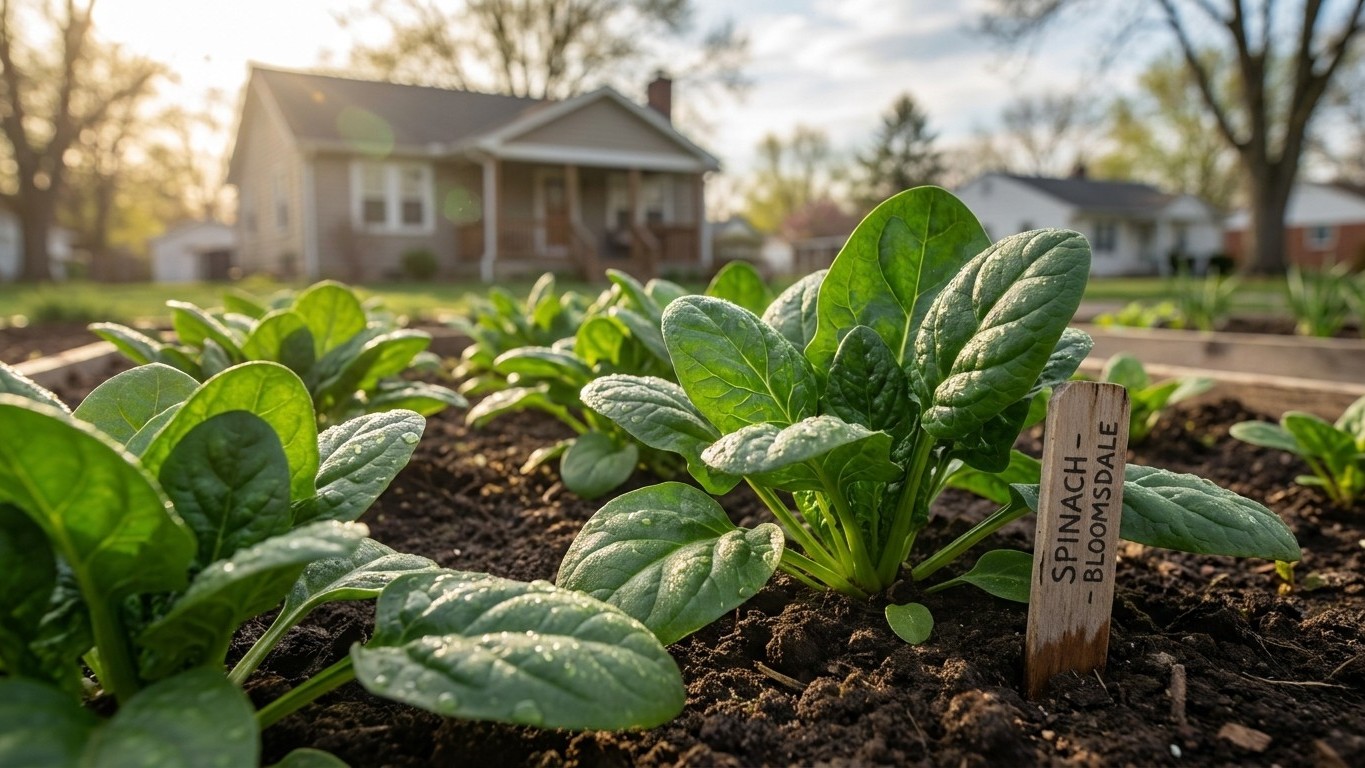

In western Washington, spinach bolts because of day length, not heat. The reference station near Seattle logs just 3.0 days a year above 90 F, so summer warmth rarely pushes plants to flower. What does is the 15 hours and 45 minutes of daylight at the June solstice: that alone is enough to trigger bolting, regardless of how mild the afternoon feels. The real question isn’t whether summer gets hot here, but Will Spinach Bolt Early in Washington? It’s how many weeks you have before the days get too long.
The short answer
On the longest day of the year, western Washington logs 15 hours and 45 minutes of daylight at the reference city near Seattle. That’s well beyond what spinach can tolerate before it starts sending up a flower stalk. Day length, not heat, is what shuts the door on spring spinach here.
That distinction matters because it’s easy to assume a cool, cloudy Puget Sound summer buys extra growing time. It doesn’t. Bolting in spinach is triggered by long days as much as by warm temperatures, according to Utah State University Extension. A crop sitting in 65 F weather under 15-plus hours of daylight will still flower, because the day length signal alone is enough to flip the plant into reproductive mode. Cool summers slow the clock somewhat, but they don’t stop it.
Heat plays a supporting role, not the lead one, in this particular region. The same NOAA climate normals that describe the mild spring and fall frost pattern here also show an average of only 3.0 days a year reaching 90 F. Compare that to Utah State’s 75 F growth ceiling, the threshold above which spinach quality drops and leaves turn bitter, and it’s clear this region rarely pushes plants into serious heat stress. Western Washington gardeners aren’t fighting scorching afternoons. They’re racing daylight.
So the two-part answer: heat is a minor factor here, day length is the dominant one. That flips the usual gardening assumption on its head. In a hot inland climate, the fall crop exists mainly to dodge summer heat. In western Washington, the fall crop exists to dodge the long days of early summer, since by the time daylight lengthens past what spinach tolerates, temperature has almost nothing to do with the bolting that follows. Anyone planning a spinach bed in Seattle, Tacoma, Olympia, or anywhere west of the Cascades should plan around the calendar of daylight, not a thermometer.
Practically, this means the growing calendar splits into two narrow crops rather than one long summer harvest. Spring spinach has to be sown, grown, and mostly harvested before the days lengthen too far past the solstice; there’s no salvaging a planting that’s still small when daylight peaks in June. Fall spinach works the opposite direction: it goes in once days are already shortening, after that same 15:45 daylight point has passed and temperatures have started falling back—see When to Sow Autumn Spinach in Washington for the exact timingk well below the 75 F ceiling.
How long the spring window really is
Utah State University Extension recommends sowing spinach 2 to 3 weeks before the last frost date. In western Washington, NOAA’s 1991-2020 climate normals put that last spring frost between February 27 and March 18, depending on where a given property lands in the 30-70% probability band. Working from there, the spring window breaks down like this:
- Earliest sowing date: Three weeks ahead of the earliest last-frost date (February 27) lands sowing around early February.
- Latest sowing date: Two weeks ahead of the latest last-frost date (March 18) lands sowing around early March.
- Cold, wet soil pushes that back in practice. A mild frost date doesn’t mean the ground is ready. Western Washington’s soggy late-winter soil and weak late-winter light hold spring crops back well past the date a calendar alone would suggest, so many gardeners don’t actually get seed in the ground until mid-to-late February or into March.
- Growth stays strong through the cooler weeks. With only 3.0 days a year above 90 F at the reference station, western Washington rarely pushes spinach anywhere near its 75 F growth ceiling during March, April, or most of May.
- Day length becomes the deadline, not the thermometer. As the calendar moves toward the June solstice and its 15 hours 45 minutes of daylight, spinach starts bolting regardless of how mild the air feels. That gives a realistic harvest window running from roughly mid-to-late April through late May or very early June, before the lengthening days catch up with the crop.
- Total usable spring season: around 10 to 12 weeks, counting from a February sowing to a harvest that wraps up before the days get too long.
The source names four spinach varieties, Bloomsdale, Melody, Teton, and Olympia, without publishing days-to-maturity or bolt-resistance data for any of them. That absence matters: without a documented maturity timeline, the only reliable way to plan a spring harvest here is around the frost date and the daylight calendar above, not a seed packet’s promised timeline.
The autumn crop, and when the soil lets you sow
Fall spinach in western Washington faces two separate obstacles, and neither of them is the cold most people assume. The soil has to cool down before seed will germinate reliably, and the season has to end before the first hard frost locks up growth. Both dates come from the same set of NOAA and Utah State figures used above, just read in the opposite direction.
Warm soil blocks germination
Utah State University Extension notes that spinach seed germination drops once soil temperatures climb above 80 F. Western Washington’s mild summers, with only 3.0 days a year reaching 90 F air temperature, mean soil rarely gets punishingly hot compared to inland climates. But late-summer soil still holds onto stored heat well into early September, especially in raised beds or anywhere with full afternoon sun. Waiting for that stored heat to drop, rather than watching the calendar alone, is what actually determines when fall sowing can start.
The frost that ends the season
NOAA’s 1991-2020 climate normals put the first fall frost in western Washington between November 13 and November 30. Utah State University Extension advises planting a fall spinach crop 50 to 75 days before the date you want to harvest. Working back from the earlier end of that frost window, November 13, a sowing 50 to 75 days ahead lands somewhere between late August and late September. Aiming for a harvest closer to the later frost date, November 30, shifts that sowing window later, into September and even early October in a mild year.
Put the two obstacles together and the practical fall window in western Washington runs from roughly late August through late September, once soil has cooled from summer but with enough time left before the season’s first hard freeze to bring the crop to harvest.
Checking this against your own county
Every figure above comes from a single reference station representing western Washington’s mild, maritime climate. That’s a reasonable stand-in for Seattle, Tacoma, Olympia, and the rest of the Puget Sound lowlands, but it says nothing about conditions east of the Cascades, where the climate turns to high desert with a shorter, harsher season and very different frost dates. Applying a Seattle-area frost window to Spokane or the Yakima Valley would throw off both the spring sowing date and the fall harvest deadline by weeks.
For a planting date calibrated to actual local conditions, county-level frost data, and soil temperature guidance, Washington State University Extension maintains offices and county-specific resources across the state. A call or visit to the local WSU Extension office will confirm whether a given property sits inside the mild western window described here or needs an entirely different calendar for the drier, colder interior.
Common questions
Does shade or partial sun delay bolting?
The Utah State University Extension guidance behind these figures ties bolting to day length and temperature, not sun intensity on the leaf. Shade cloth might keep the ground a few degrees cooler, which helps against the 75 F growth ceiling, but it does nothing about the actual number of daylight hours the plant experiences. Where daylight alone is enough to trigger flowering, as it is at 15 hours 45 minutes in western Washington’s June, shading alone won’t hold a crop back for long.
Can I grow spinach through summer here instead of just spring and fall?
Not reliably. Even though western Washington’s summers stay mild, averaging only 3.0 days a year above 90 F, the daylight itself works against a summer crop. Spinach bolts under long days regardless of temperature, so the weeks around the June solstice are the least suitable stretch of the whole year for spinach, mild air or not.
Are Bloomsdale, Melody, Teton, or Olympia better suited to this climate?
These four varieties turn up in spinach growing guidance, but no days-to-maturity or bolt-tolerance figures are published for any of them in the source data behind this article. Without that information, choosing between them for a western Washington garden comes down to availability rather than any documented performance difference in this specific climate.
Why does the frost date matter for planting if the real limit is day length?
Frost dates set the starting line, not the finish line. Spinach still needs safe conditions to germinate and establish in spring, which is why sowing is timed 2 to 3 weeks before the last frost. But once the plant is up and growing, it’s the calendar of daylight hours, climbing toward 15 hours 45 minutes at the June solstice, that decides when the crop is finished, regardless of how mild the frost-free stretch of spring turns out to be.