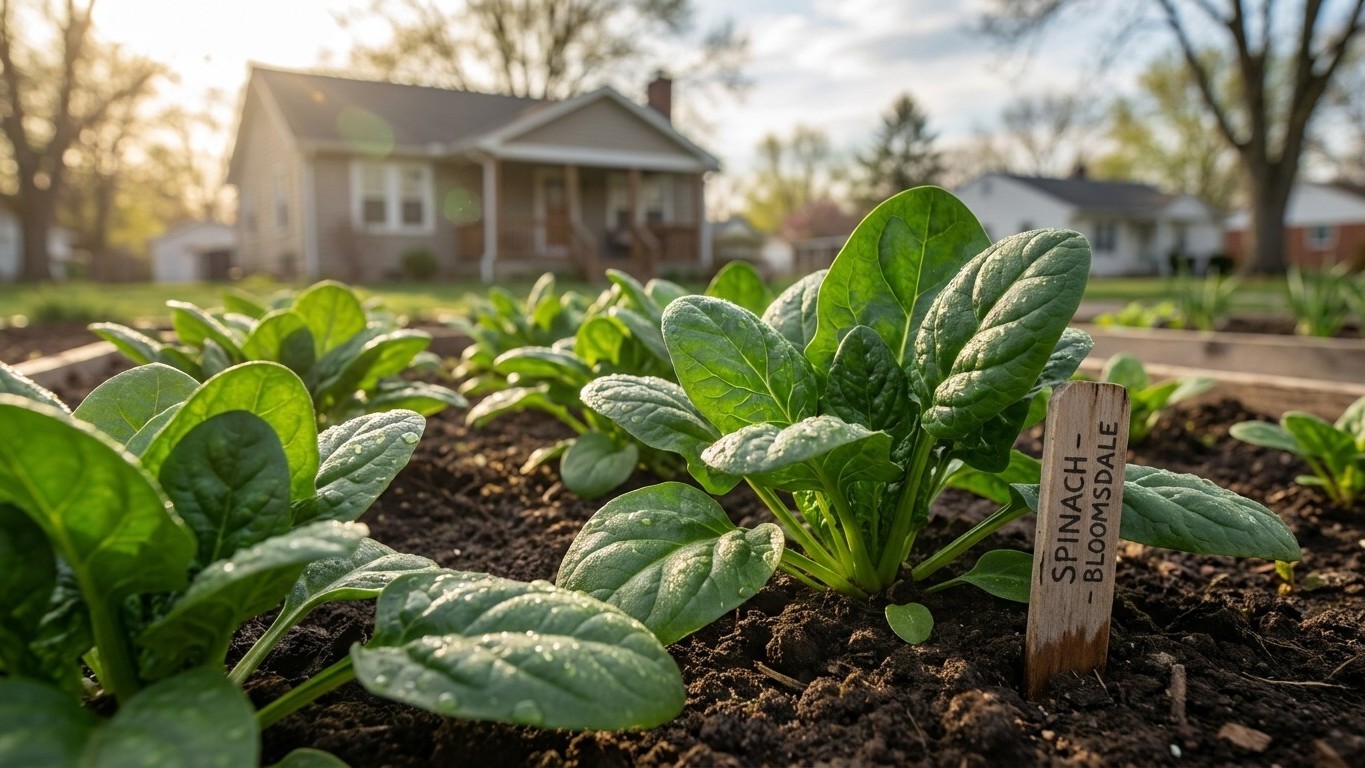

In Billings, spinach bolts once the calendar tips past late May to mid-June, when day length near the summer solstice stacks on top of rising heat. The real limiter here is both: the sun stays up nearly 15 and a half hours at peak, and Montana’s high-plains summer adds real heat load on top of that. A cool June does not rescue the crop, because day length alone is enough to flip the plant into flowering mode.
The short answer
On the longest day of the year, the reference city for this data gets 15 hours and 32 minutes of daylight. That number matters more than most gardeners assume. Spinach bolts during long days and warm temperatures together, so once day length climbs toward that June peak, the plant starts moving toward seed whether or not the thermometer cooperates. A mountain valley with a mild June won’t buy extra weeks the way it might for tomatoes or peppers, because the trigger isn’t heat alone.
Heat still plays its part. The reference station averages 28.3 days a year at 90 degrees or hotter, a heat load that pushes air temperatures well past the 75 degree ceiling where spinach growth quality falls off and leaves turn bitter. So the honest answer is that Montana hits spinach with both constraints at once: day length forces the bolt, and heat accelerates the decline in leaf quality before that even happens. Neither factor waits for the other.
This is why variety selection only goes so far. Extension guidance names four spinach varieties commonly grown in home gardens: Bloomsdale, Melody, Teton, and Olympia. No maturity dates, bolt-resistance ratings, or heat-tolerance figures are published for any of them in the sourced guidance, so picking one over another isn’t a documented shortcut around Montana’s day length and heat. What actually works is timing, not seed choice.
The practical takeaway: treat Montana as a two-crop-window state for spinach, spring and fall, and stop expecting a long spinach summer. Will Spinach Bolt Early in Montana? The days simply won’t allow it, and the heat load makes the leaves unpleasant even in the weeks right before bolting sets in. For the second half of that window, see When to Sow Autumn Spinach in Montana.
How long the spring window really is
- Start with the last spring frost. The reference station’s 1991-2020 climate normals put the last 32 degree freeze between April 29 and May 10, depending on the year.
- Count back for sowing. Spinach seed goes in the ground 2 to 3 weeks before that last frost date, which lands sowing somewhere in mid to late April for most of the region around Billings.
- Track the cool stretch. From that April sowing through late May, air temperatures generally stay under the 75 degree growth ceiling, and day length hasn’t yet climbed high enough to force flowering. This is the productive stretch.
- Watch the solstice approach. As June progresses toward the summer solstice, day length climbs toward that 15 hour 32 minute peak. Combined with the region’s heat load (28.3 days a year above 90 degrees, many of them clustering in June and July), the plant’s environment flips from spinach-friendly to bolt-triggering.
- Total usable window. That gives a spring spinach season of roughly eight to ten weeks, sowing in mid to late April and harvesting before the days get long enough and hot enough in June to push the crop to seed.
Mountain valleys elsewhere in the state can frost later or earlier than Billings does, which shifts this whole window in either direction. A valley that holds frost into late May compresses the spring crop further; one that clears frost in mid-April stretches it out by a couple of weeks. The mechanism stays the same either way: day length ends the spring crop, not the calendar.
The autumn crop, and when the soil lets you sow
A fall planting flips the problem. Instead of racing day length, the gardener is waiting on soil temperature to drop and racing the first hard frost from the other direction.
Soil too warm to germinate
Spinach seed germination drops noticeably once soil temperature climbs above 80 degrees. Montana’s summer heat load, that same 28.3 days a year above 90 degrees at the reference station, keeps soil warm well into late summer, especially in unshaded garden beds. Sowing fall spinach too early, while the soil is still holding July and early August heat, means poor germination and a thin stand. The practical fix isn’t a calendar date so much as watching the soil itself cool as summer heat eases, which typically happens as August gives way to early September in this region, though a home gardener should confirm with a simple soil thermometer rather than guessing from the date alone.
Counting back from first frost
The reference station’s first fall freeze arrives between October 1 and October 14. Guidance for fall spinach calls for sowing 50 to 75 days before the target harvest date, not before frost itself, since spinach tolerates cold far better than heat. Counting back 50 to 75 days from that October 1 to October 14 window puts sowing somewhere between mid-July and late August for most of the region. That window overlaps with the tail end of the hottest stretch of Montana summer, which is exactly why soil temperature, not the frost date, ends up being the tighter constraint on when fall spinach actually goes in the ground. A gardener who sows in mid-July on a hot year may need afternoon shade or extra watering just to keep soil under that 80 degree germination threshold long enough for seed to sprout.
Checking this against your own county
Billings sits in one of Montana’s milder valleys, and the frost dates and heat figures here reflect that specific location. Mountain valleys elsewhere in the state can see frost in nearly any month, which shifts both the spring sowing date and the fall harvest deadline earlier than what’s laid out above. Before locking in a planting date, check current recommendations with Montana State University Extension, which can point to local frost data and soil conditions for a specific county rather than the single reference station used here.
Common questions
Can spinach survive a full Montana summer if I keep it watered?
Watering addresses heat stress but does nothing about day length, and day length alone is enough to trigger bolting once the region approaches its June daylight peak of 15 hours 32 minutes. Watering may slow the decline in leaf quality slightly but won’t stop the plant from flowering.
Does shade cloth delay bolting?
Shade cloth can lower soil and air temperature somewhat, which helps with the 75 degree growth ceiling and bitterness threshold, but it doesn’t change how many hours of daylight the plant is exposed to. Since day length is part of what triggers bolting, shade cloth is a partial fix at best, not a documented solution in the sourced guidance.
What’s the best time to plant fall spinach in Montana?
Working backward from a first fall frost of October 1 to October 14, and using the 50 to 75 day sowing rule, most of the region lands somewhere between mid-July and late August. The tighter constraint is often soil temperature, which needs to fall below the 80 degree germination threshold before seed goes in.
Why isn’t there a days-to-maturity number for these spinach varieties?
The sourced Extension guidance names Bloomsdale, Melody, Teton, and Olympia as commonly grown varieties but publishes no maturity, bolt-resistance, or heat-tolerance data for any of them. Rather than borrow a number from another crop or another source, the honest approach is to plant by frost date and soil temperature, and treat variety choice as a secondary decision.