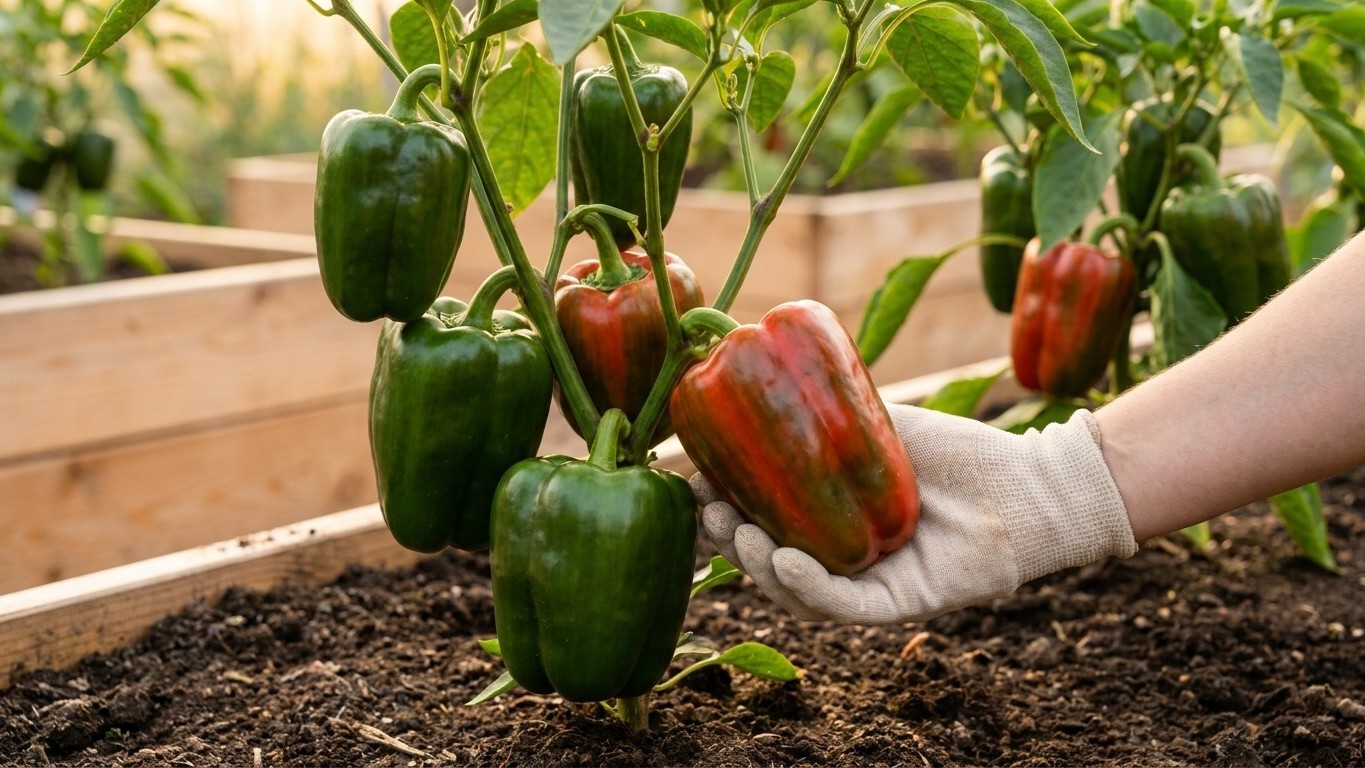

Plato is a bell pepper, one of the cultivars Clemson Cooperative Extension lists as recommended for home gardens. There’s no published days-to-maturity figure for this specific cultivar, so the honest answer on timing is the one printed on your own seed packet, paired with a rule that applies to every pepper: the soil has to be warm before you even start counting days.
What Plato Pepper Actually Is
Start with the type, because it tells you more than the name ever will. A bell pepper is the blocky, thick-walled fruit you already know from the produce aisle, the one that holds its shape when stuffed or roasted and carries no heat at all. Plato falls squarely in that category. Clemson Cooperative Extension includes it on its list of recommended cultivars for South Carolina gardens, identifying it simply as a bell pepper type worth growing.
That’s about as far as the published record goes. Unlike some cultivars that come with a full profile, no fruit size, no yield estimate, and no maturity window has been documented for Plato in the university sources behind this page. That’s worth stating plainly rather than papering over with a guess. A gardener who knows a number isn’t published is better off than one handed a confident figure that nobody actually measured.
One distinction matters here, and it’s easy to miss at a garden center in spring: ornamental pepper plants sold for their colorful foliage and marble-sized fruit are a different product entirely, bred for looks rather than the table, and many are not meant to be eaten. Plato is not one of those. It’s an edible bell pepper cultivar grown for the kitchen, but the reminder is worth making once, because the two categories sit on the same nursery shelf every April and get mixed up more often than they should.
If your seed packet or transplant tag doesn’t say “Plato,” you may be looking at a different bell pepper cultivar with its own characteristics. The type still holds, though. Sweet, thick-walled, no heat.
How Hot Is a Plato Pepper
None. That’s the short version, and it comes straight from the type rather than any measurement specific to this cultivar. Bell peppers are the one pepper category bred to carry essentially no capsaicin, which is the compound responsible for heat in the first place. Compare that to a jalapeno, which runs a moderate 2,500 to 8,000 Scoville units, or a habanero, which sits well into the extreme range, and you can see why bells get handed to kids and heat-averse cooks without a second thought.
No Scoville number exists for Plato specifically, and none should be invented here. Only two figures are solid enough to print in this kind of comparison: jalapenos at that 2,500 to 8,000 range, and the Carolina Reaper, which averages 1.64 million Scoville units in testing. Everything in between, including every bell pepper cultivar, gets described by category rather than by a precise measurement, because that measurement simply isn’t published.
What NC State Extension does say about pepper fruit in general is worth repeating, because it’s more useful than a fake number would be anyway: fruits are edible, the source notes, “but spiciness is unpredictable in intensity.” That caution is usually aimed at hotter types, but the mechanism behind it applies across the board. Capsaicin production ramps up under stress, drought, high heat, a plant struggling in poor soil. A pepper grown through a brutal, dry August will read differently than the same variety raised in a mild, well-watered season.
For a bell pepper like Plato, that unpredictability mostly shows up as a faint, occasional edge rather than real heat. It’s not going to turn into a jalapeno no matter how rough the summer gets. But the mechanism is the same one that makes every pepper a little bit of a gamble, and it’s a better explanation than a number pulled from nowhere.
What Plato Asks That Other Peppers Don’t
Days to maturity: use the packet, not a guess
This is the one place where filling a gap with a plausible-sounding number would do real harm. No days-to-maturity figure for Plato appears in the Clemson or NC State material behind this page, so printing one here would be an invention dressed up as fact. What actually applies to your garden is the number on your own seed packet or transplant tag. Seed lots vary, growing conditions vary, and that printed figure is the one tested against your specific seed source, which makes it more reliable than anything a general article could offer.
The one rule every pepper shares
Regardless of maturity date, every pepper, Plato included, is a warm-season, warm-soil crop. Peppers stall out, sometimes for weeks, when they’re set into ground that hasn’t warmed up yet, even if the air temperature feels fine. Soil at 65 degrees Fahrenheit or better at transplant time is the target most extension guidance points toward, and going in earlier doesn’t gain you anything. A pepper plant sitting in cold soil doesn’t grow faster once the weather finally turns; it just sat there losing time.
That single fact does more to determine your actual harvest date than any printed maturity number would. Two gardeners planting the same cultivar on the same calendar date, one into warm soil and one into soil still cold from a late spring, will see noticeably different timelines. For the mechanics of getting that timing right, our guide to transplanting peppers covers soil temperature and hardening-off in more depth, and if you’re starting from seed rather than buying transplants, the starting pepper seeds indoors guide walks through the indoor timeline that gets you to a warm-soil-ready transplant in the first place.
Taste and Use
Bell peppers earn their spot in home gardens because they’re genuinely versatile in the kitchen, and Plato inherits that reputation from its type. Sweet, mild, with thick walls that hold together under heat, a bell pepper works roasted whole, sliced raw into a salad, or stuffed and baked, since the fruit keeps its structure instead of collapsing the way thinner-walled peppers do.
No cultivar-specific tasting note for Plato appears in the Clemson or NC State material, which means the honest description is the type description, not an invented flavor profile dressed up as something unique to this variety. That’s a real limitation of the published record, and it’s better to say so than to manufacture a tasting note that sounds authoritative but isn’t backed by anything.
Where NC State Extension does offer cultivar-specific language for other peppers in its lineup, phrases like a “sugary sweet flavor” or fruit with “no heat but the prolific production of a habanero pepper,” those notes get quoted and credited because they come from an actual source. Plato doesn’t have an equivalent quote on record, so the fair answer is: expect a standard sweet bell pepper, good for stuffing, roasting, or eating fresh, and treat any more specific claim about its flavor with some skepticism until a source actually makes it.
Common questions
Is Plato pepper the same as a green bell pepper from the grocery store?
It’s the same type, a bell pepper, though the specific cultivar sold in stores usually isn’t disclosed. Plato is one named cultivar within that broad category, recommended by Clemson Cooperative Extension for home gardens.
Does Plato pepper have any heat at all?
As a bell pepper type, it’s bred to carry essentially no capsaicin, meaning no meaningful heat. Occasional mild variation can occur under plant stress, but it won’t approach the heat of jalapenos or hotter types.
When should I transplant Plato pepper seedlings outdoors?
No maturity date is published specifically for this cultivar, so the timing on your seed packet is the figure to follow. The one universal rule is to wait until soil has warmed, since cold soil stalls pepper growth regardless of the calendar date.
Are ornamental pepper plants the same as edible ones like Plato?
No. Many ornamental peppers are grown purely for colorful foliage and decorative fruit and are not intended to be eaten. Plato is an edible bell pepper cultivar meant for the kitchen, a different category entirely.