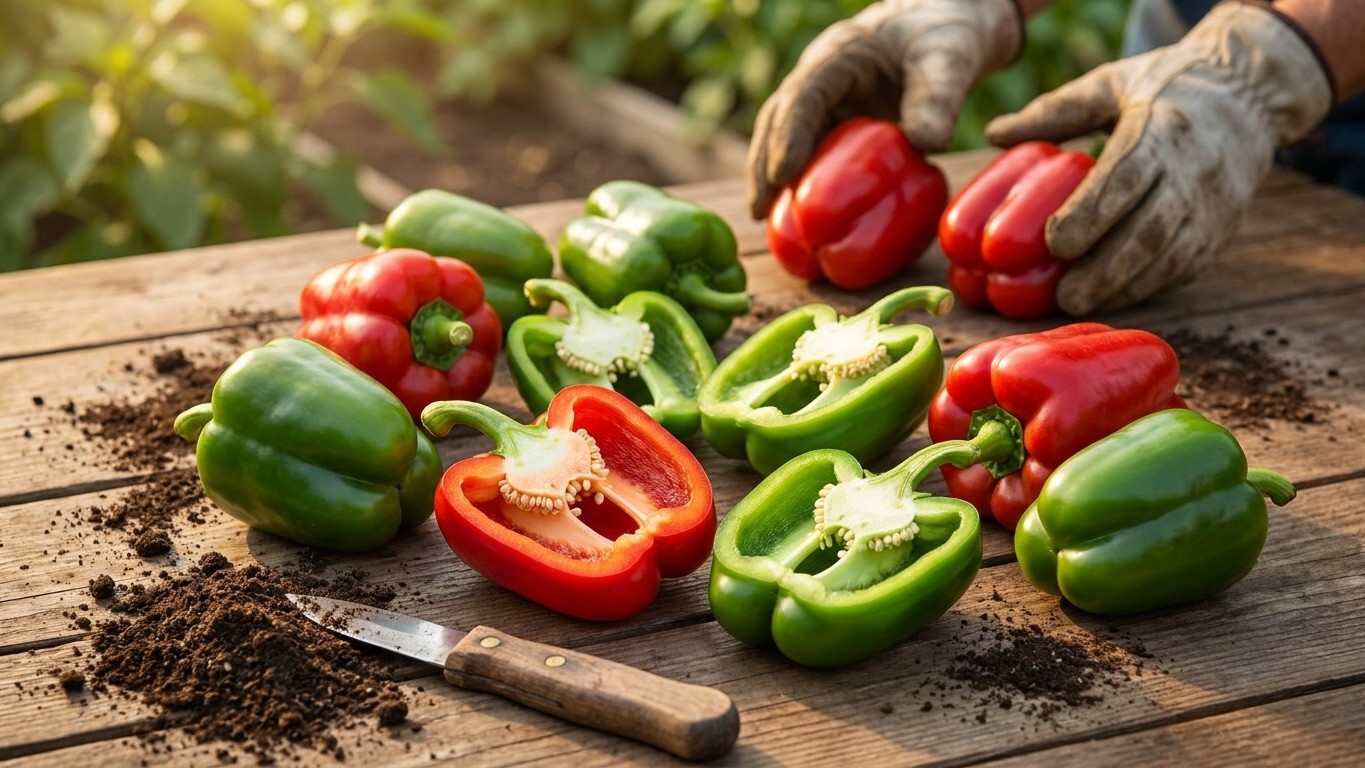

Vanguard is a bell pepper cultivar, one of the varieties named on Clemson Cooperative Extension’s recommended list for home gardens. That single fact, its type, tells you more than the name does: expect a sweet, blocky fruit with no heat, suited to stuffing, roasting, and fresh eating, not a pepper bred for fire.
What Vanguard Actually Delivers
Clemson Cooperative Extension lists Vanguard among the bell pepper cultivars recommended for South Carolina home gardens. That’s the extent of the university-sourced detail available for this specific name: a recommendation, tied to a type, without an accompanying profile of fruit size, wall thickness, or yield. NC State Extension’s plant database, which carries detailed grower notes for many pepper cultivars, doesn’t publish a separate write-up for Vanguard itself.
That gap matters more than it might seem. Plenty of seed catalogs will fill in numbers where the university sources leave blanks, and some of those numbers are accurate. But this page sticks to what’s documented, and what’s documented is a type and a recommendation, not a spec sheet. A gardener who knows that days to maturity, fruit weight, and expected yield aren’t published for Vanguard is in a better position than one handed a confident estimate that traces back to nothing.
What the bell pepper type does establish, reliably, is shape and use. Bell peppers grow blocky, three or four lobes typically, thick-walled enough to hold their form when stuffed and baked, and they ripen from green through yellow, orange, or red depending on how long they’re left on the plant. None of that changes cultivar to cultivar within the bell type.
One distinction worth stating once, because the two get confused in garden centers every spring: ornamental peppers sold for their colorful foliage and marble-sized fruit are a different category entirely, and many are not meant to be eaten. Vanguard is a food crop, grown for the kitchen, not the porch planter. If a tag says “ornamental” or “decorative,” that plant belongs in a different conversation than this one.
Is Vanguard a Hot Pepper?
No. As a bell pepper, Vanguard carries none of the capsaicin that makes jalapenos, habaneros, or cayennes bite. Bell peppers sit at the bottom of the heat scale, effectively zero, which is why they’re the pepper people slice raw into salads without a second thought.
Heat is a type-level trait, not something that varies wildly within bells, and it’s worth understanding how the scale actually works before comparing peppers across categories. A jalapeno measures 2,500 to 8,000 Scoville units. At the far extreme, the Carolina Reaper averages 1.64 million Scoville units, a figure confirmed through repeated lab testing, not a marketing claim. Those two numbers exist because they’ve been measured and published. No comparable figure exists for Vanguard, and none should be invented for it, because bells simply don’t carry the compound in meaningful amounts.
Here’s where NC State Extension’s language becomes useful even for a pepper as mild as a bell. Describing edible pepper fruit generally, the extension service notes that fruits are edible “but spiciness is unpredictable in intensity.” That caution was written with hotter cultivars in mind, but the underlying mechanism applies across the pepper family, bells included at the margins: plants under stress, drought, heat spikes, uneven watering, concentrate capsaicin and related compounds in their fruit. A bell pepper grown in a rough, dry summer might carry a faint sharpness that the same variety, grown in an easy season with steady moisture, never develops.
That’s the honest answer to the heat question for Vanguard. Expect sweet, not spicy, because the type dictates that outcome. But don’t expect total uniformity from one growing season to the next, because weather is doing some of the work that genetics doesn’t fully control.
Growing Vanguard: What the Cultivar Requires
Beyond its inclusion on Clemson’s recommended list, published grower details specific to Vanguard are thin. No days-to-maturity figure appears for this cultivar in the university sources behind this page. That’s not unusual; among the bell peppers commonly grown in home gardens, only a small number carry a published maturity count from these extension services, and Vanguard isn’t currently one of them.
The practical fix is the seed packet in front of you. Whoever packaged your Vanguard seed will print a days-to-maturity estimate on the label, and that number, tied to the specific seed lot and grower, is the figure that actually applies to your garden. Treat it as the working estimate rather than searching for a universal number that isn’t published.
The One Rule That Applies Regardless
What is constant across every pepper cultivar, Vanguard included, is the crop’s demand for warm soil. Peppers are a warm-season vegetable through and through, and soil temperature, not the calendar date, is what actually starts the clock on germination and early growth. Move seedlings into ground that’s still cold and the plants don’t die outright, but they stall, sometimes for weeks, sitting in place while warm-soil transplants set alongside them pull ahead. That stall can cost a grower most of a short growing season in cooler climates.
The reliable approach is starting seed indoors under controlled warmth, then hardening off and transplanting only once soil temperatures have climbed into the range peppers actually need. Readers building out a full pepper planting schedule should work from the site’s dedicated guides on starting pepper seeds indoors and transplanting peppers outdoors, both of which cover the timing and soil-temperature specifics that apply across cultivars, Vanguard included.
Taste and Best Uses for Vanguard
As a bell pepper, Vanguard’s flavor profile follows the type: sweet, mild, with none of the sharpness that defines hot peppers. That sweetness intensifies as the fruit ripens past green into yellow, orange, or red, since the sugars concentrate the longer the pepper stays on the plant before harvest.
The thick walls that define bell peppers as a category are exactly what make them useful in the kitchen. Sliced raw, they hold their crunch in salads and vegetable trays. Roasted whole under a broiler until the skin blisters and blackens, they turn soft and smoky, good peeled and layered into sandwiches or blended into sauces. Halved and stuffed with rice, ground meat, or grain mixtures, the wall structure keeps its shape through a full bake, which is precisely why bells are the standard choice for stuffed pepper recipes in the first place.
No cultivar-specific tasting note for Vanguard appears in either Clemson Cooperative Extension’s listing or NC State Extension’s plant records, so none is offered here beyond what the bell type itself establishes. A gardener who grows Vanguard should expect a solid, sweet, all-purpose bell pepper, useful raw, roasted, or stuffed, without any documented trait that sets it apart on flavor from other bells on the same recommended list.
Common questions
Is Vanguard pepper the same as an ornamental pepper?
No. Vanguard is an edible bell pepper recommended by Clemson Cooperative Extension for home gardens. Ornamental peppers, sold for colorful foliage and small decorative fruit, are a separate category, and many aren’t intended to be eaten.
How many days does Vanguard pepper take to mature?
No days-to-maturity figure is published for this cultivar in the university sources behind this page. Check the estimate printed on your specific seed packet, since it will reflect the seed lot you’re actually growing.
Is Vanguard pepper spicy?
No. As a bell pepper, it carries essentially no heat. Weather stress, drought or heat waves, can occasionally add a faint sharpness to any pepper’s flavor, but bells stay firmly on the mild end of the scale regardless.
Can Vanguard pepper seedlings go outside as soon as the weather warms up?
Wait until soil temperature, not just air temperature, has warmed enough for peppers, which need consistently warm ground. Transplanting into cold soil stalls growth for weeks, a setback that applies to Vanguard the same as any other pepper cultivar.
Related guides
- Sweet Banana Pepper: When to Plant the Tomatoes That Ripen All at Once
- Cubanelle Pepper: When to Plant the Tomatoes That Ripen All at Once
- Banana Supreme Pepper: When to Plant the Tomatoes That Ripen All at Once
- Jupiter Pepper
- Sunscald on Peppers
- Transplanting Peppers
- Scotch Bonnet Pepper: When to Plant the Tomatoes That Ripen All at Once