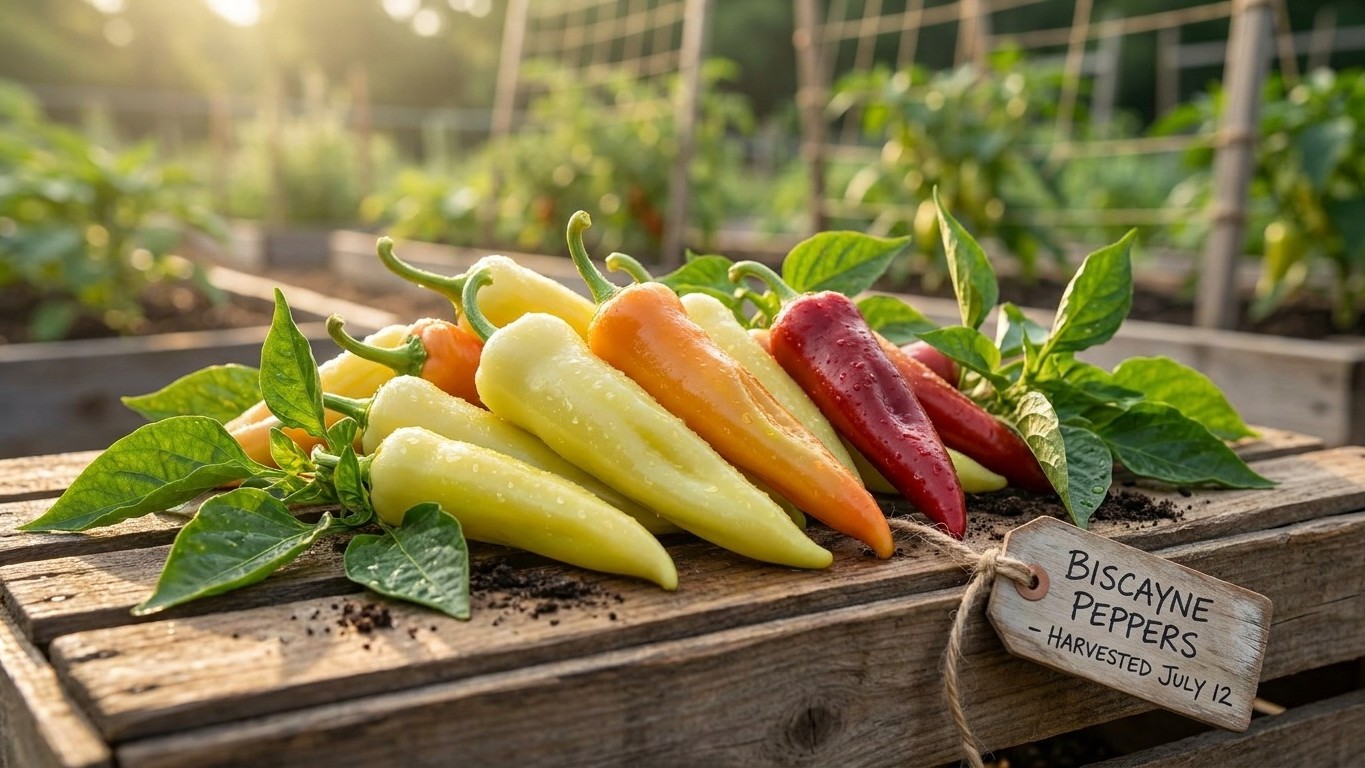

The Biscayne pepper is a banana pepper type, recommended by Clemson Cooperative Extension for home gardens. It’s mild by nature, not one of the fiery cultivars gardeners chase for bragging rights. No days-to-maturity figure or fruit-size number has been published for this specific cultivar, and that gap matters more than it seems, because it shapes what a grower can reasonably plan for and what has to come from the seed packet in hand.
What the Biscayne Pepper Actually Is
Type comes first, because it tells a grower more than the cultivar name ever will. Biscayne belongs to the banana pepper family, a group known for long, tapered, pale-yellow fruit that ripens to orange or red and carries little to no heat. That single fact, more than anything else about the name, predicts how the plant will behave in a garden bed and what the harvest will taste like.
Clemson Cooperative Extension lists Biscayne among its recommended pepper cultivars for South Carolina gardens, identifying it plainly by type: a banana pepper. That’s the extent of the official description on record. There’s no published fruit length, no listed yield per plant, and no maturity window specific to Biscayne in the university’s guidance.
NC State Extension, the second source behind pepper cultivar pages like this one, publishes general descriptions of pepper types and cautions about heat variability, but doesn’t add cultivar-specific detail for Biscayne beyond confirming its category. That absence is worth stating outright rather than papering over. A gardener who knows a number isn’t available can plan around that uncertainty. A gardener handed an invented figure can’t.
One distinction is worth making clear before going further: ornamental pepper plants, the kind sold for colorful foliage and holiday displays, are bred for looks and are not food. Biscayne is not one of those. It’s an edible cultivar grown for the kitchen, but the two categories get mixed up often enough at garden centers that it deserves a plain statement here.
How Hot Is a Biscayne Pepper?
Heat, for Biscayne, comes down to type rather than a specific number. Banana peppers sit near the mild end of the pepper spectrum, generally offering a tang more than a burn, similar in spirit to a mild pickled pepper on a sandwich rather than anything that demands a warning label. That’s the category Biscayne belongs to, and it’s the most honest way to describe its heat without pretending to a precision that doesn’t exist.
No Scoville figure has been published for Biscayne specifically. Only two cultivars in this kind of comparison carry a measured number at all: the Carolina Reaper averages 1.64 million Scoville units, and jalapenos run 2,500 to 8,000. Those two exist because they’ve been tested and reported. Biscayne hasn’t, and assigning it a figure would suggest a lab result that was never produced.
What NC State Extension does say, and it’s the useful part, is that pepper fruits are edible “but spiciness is unpredictable in intensity.” That single line explains more about a Biscayne harvest than a number would. Capsaicin, the compound behind pepper heat, concentrates under stress. A plant that goes through a drought spell, or bakes through a string of 95-degree afternoons, tends to produce fruit with more bite than the same cultivar grown in a mild, well-watered season. Two Biscayne plants growing thirty feet apart, one in a raised bed with consistent irrigation and one in dry, compacted soil, can turn out noticeably different fruit.
That variability is normal for peppers generally, not a defect specific to this cultivar. It’s also a reason to taste a small piece of the first fruit from any given plant before committing a whole batch to a recipe, rather than assuming this year’s harvest will match last year’s.
Growing Requirements That Set It Apart
What’s known and what isn’t
Beyond its classification as a banana pepper recommended by Clemson Cooperative Extension, published detail on Biscayne’s specific growing habits, whether it’s compact, disease-resistant, or bred for containers, is thin. The extension listing confirms the recommendation and the type; it doesn’t break down plant height, spacing needs, or resistance ratings the way some other cultivars’ entries do.
Days to maturity is the number gardeners ask for most, and it’s not published for Biscayne. Only one pepper cultivar in this kind of comparison set has a documented maturity window at all. For everything else, including this one, the figure that actually applies sits printed on the seed packet the gardener is holding. Seed lots vary by grower and by season, and the packet reflects testing done on that specific batch, which makes it a more reliable number than any general estimate pulled from elsewhere.
The one rule that applies regardless
What does hold true across every pepper cultivar, Biscayne included, is that peppers are a warm-soil crop. Soil temperature, not the calendar date, is what actually starts the clock on germination and early growth. Transplanting into ground that’s still cool from spring doesn’t just slow the plant down, it can stall it for weeks, and a stalled pepper plant rarely catches up fully even once the weather warms. Gardeners deciding when to move seedlings outdoors, or whether to start seeds indoors first, will get more specific guidance from dedicated pages on transplanting peppers and starting pepper seeds indoors than from anything cultivar-specific here.
Taste and Culinary Use
Flavor, like heat, tracks with type here. Banana peppers are known for a mild, slightly tangy taste with barely any heat, which makes them a natural fit for pickling whole or in rings, layering onto sandwiches, or slicing raw into a salad where a jalapeno would overpower everything else on the plate. That’s the profile Biscayne fits into as a member of the banana pepper category.
Neither Clemson Cooperative Extension nor NC State Extension publishes a taste note specific to Biscayne beyond its classification as a banana pepper. No source calls it “sugary sweet” or describes a distinct flavor twist the way some cultivar entries do for other peppers. Rather than invent a tasting note that sounds specific but isn’t backed by anything, the honest answer is that Biscayne should be expected to taste like a typical banana pepper: mild, a little tangy, good raw or pickled, and unremarkable in the best sense, meaning it does exactly what a banana pepper is supposed to do without surprises.
For kitchen use, that makes Biscayne a reasonable pick for anyone who wants pepper flavor and crunch without heat management. It won’t work as a substitute in a recipe built around a jalapeno’s kick or a habanero’s fruitiness, but it holds its own in the jars and sandwiches banana peppers were bred for.
Common questions
Is the Biscayne pepper spicy?
No, or very little. As a banana pepper type, it’s bred for mild flavor rather than heat. No Scoville figure is published for it specifically, but its category runs near the mild end of the pepper spectrum.
How many days does Biscayne take to mature?
No maturity window is published for this cultivar by Clemson Cooperative Extension. The figure printed on the seed packet is the one that applies, since it reflects testing on that specific seed lot.
Can I grow Biscayne pepper in a container?
Published guidance doesn’t specify container suitability for this cultivar. General pepper-growing practices, including warm soil and consistent watering, apply regardless of whether it’s grown in a raised bed or a pot.
Is Biscayne pepper the same as an ornamental pepper?
No. Ornamental pepper plants are sold for colorful foliage and are not food. Biscayne is an edible banana pepper cultivar recommended for the garden and the kitchen.