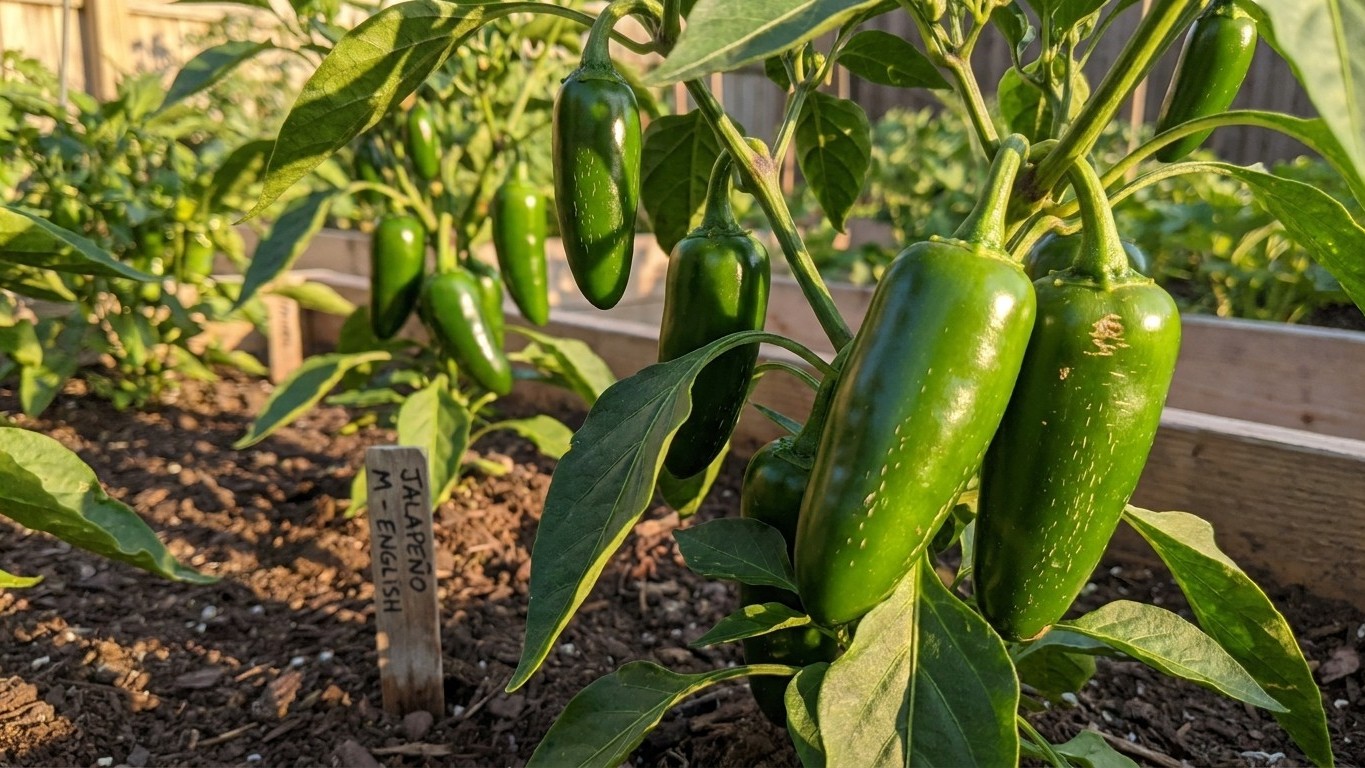

Jalapeno M is a jalapeno-type pepper on Clemson Cooperative Extension’s recommended list for home gardens. That single word, jalapeno, tells you more than the cultivar name ever will: moderate heat, thick walls, a fruit built for fresh salsa and pickling. What the university extensions don’t publish for this specific cultivar is just as telling, and it changes how you should plan your planting.
What Clemson and NC State Actually Say About This Cultivar
Start with the type, because it decides more than the name does. Jalapeno M is a jalapeno, which puts it in the moderate-heat category of peppers, not the sweet bells and not the extreme habaneros. Clemson Cooperative Extension includes Jalapeno M on its list of recommended cultivars for South Carolina gardens, describing it simply as a jalapeno-type pepper. That’s the extent of what the source says: type, and a place on a vetted list.
What’s missing matters too. No days-to-maturity figure is published for Jalapeno M by either Clemson Cooperative Extension or NC State Extension. No fruit size is listed. No yield estimate exists in the university literature. That’s not unusual for peppers on regional recommended lists; plenty of solid garden cultivars never get a full profile written up, and a grower is better served knowing that gap exists than being handed an invented number dressed up as fact.
One distinction is worth making plainly, since garden centers sell both kinds side by side. Ornamental pepper plants, the ones grown for colorful foliage and marble-like fruit clusters in fall decor, are a different category entirely and are not food. Jalapeno M is not one of those. It’s an edible cultivar grown for the kitchen, and nothing here applies to the decorative pots sold for looks alone.
How Hot Is a Jalapeno M Pepper, Really?
Heat in peppers tracks with type, not with a specific cultivar name, and jalapenos as a category run 2,500 to 8,000 Scoville units. That’s the only heat range on record for this type of pepper. No Scoville figure has been measured or published specifically for Jalapeno M, so quoting one would be inventing data that doesn’t exist. For comparison, the extreme end of the pepper world looks nothing like this: a Carolina Reaper averages 1.64 million Scoville units, more than 200 times hotter than a jalapeno at its spiciest.
NC State Extension’s language on unpredictability applies directly here, and it’s the most useful thing a grower can walk away with. Writing about pepper fruits generally, the extension notes they are edible “but spiciness is unpredictable in intensity.” That’s not a hedge, it’s a description of how capsaicin actually works in the plant.
Stress concentrates capsaicin. A jalapeno grown through a hot, dry stretch with irregular watering will often bite harder than the same cultivar grown in a mild, well-watered season. Drought stress, heat stress, and even harvesting fruit a little later than usual can all push a batch toward the top of that 2,500 to 8,000 range. There’s no way to promise a heat level in advance, because the plant itself is responding to conditions you don’t fully control. Two jars of salsa made from the same row, picked three weeks apart, can taste noticeably different.
Growing Requirements That Set This Cultivar Apart
Beyond its listing as a recommended jalapeno type, Clemson Cooperative Extension and NC State Extension don’t publish habit details specific to Jalapeno M, such as whether it’s compact, container-bred, disease-resistant, or unusually heat-tolerant compared to other jalapenos. That’s a real limit on what can be said with confidence about this particular cultivar.
Days to Maturity: Check Your Own Seed Packet
Only one pepper in the university literature behind this page carries a published days-to-maturity figure, and Jalapeno M isn’t it. Guessing a number based on “it’s a jalapeno” would be exactly the kind of confident-sounding error this page is trying to avoid. The figure that actually applies to your garden is printed on your seed packet or transplant tag, since seed lots and slight strain variations shift that count from one source to another. Treat that printed number as the one to plan around, not a generic average pulled from memory.
The One Rule Every Pepper Shares
What does hold true across every pepper type, Jalapeno M included, is that this is a warm-soil crop from the ground up. Peppers stall, sometimes for weeks, when transplanted into soil that hasn’t warmed enough. The plant doesn’t die outright in most cases, it just sits there sulking, roots barely expanding, while a neighbor’s pepper planted two weeks later into warmer ground catches up and passes it. If you’re timing your own planting, our guides on transplanting peppers and starting pepper seeds indoors walk through soil temperature thresholds and hardening-off steps in more depth than fits here.
What Jalapeno M Tastes Like and How to Use It
Neither Clemson Cooperative Extension nor NC State Extension publishes a cultivar-specific tasting note for Jalapeno M, so what follows is grounded in the jalapeno type itself, which is well established. Jalapenos are built for fresh use as much as for cooking: diced into salsa, sliced onto nachos, stuffed and baked as poppers, or sliced into rings for quick pickling in vinegar brine. The flesh is thick enough to hold up to grilling and stuffing without collapsing, and the flavor carries a grassy, bright quality alongside the heat rather than heat standing alone.
That’s a contrast worth naming against other pepper types on this site, since it shows how much the type label is doing. NC State Extension describes some ornamental and specialty cultivars in very specific terms, for instance one variety noted for a “sugary sweet flavor” and another prized for having “no heat but the prolific production of a habanero pepper.” Nothing comparable exists in the record for Jalapeno M. Rather than borrow a phrase from a different cultivar’s profile, the honest answer is that Jalapeno M delivers what jalapenos generally deliver: moderate, unpredictable heat wrapped in a thick-walled fruit suited to salsas, poppers, and pickling jars, with the actual bite of any given batch shaped as much by the season it grew in as by the seed packet it came from.
Common questions
Is Jalapeno M hotter than a standard jalapeno?
No Scoville figure has been published for Jalapeno M specifically. As a jalapeno type, it falls somewhere in the 2,500 to 8,000 Scoville range that applies to jalapenos generally, with the exact heat of any harvest shaped by growing conditions rather than fixed by the cultivar.
How many days does Jalapeno M take to mature?
That figure isn’t published by Clemson Cooperative Extension or NC State Extension for this cultivar. Check the days-to-maturity number printed on your specific seed packet, since it will reflect the actual seed lot you’re growing.
Can I plant Jalapeno M in cool spring soil?
Peppers as a group are warm-soil crops. Transplanting into cold ground doesn’t kill the plant outright in most cases, but it commonly stalls growth for weeks compared to plants set out once soil has properly warmed.
Are ornamental peppers sold nearby the same as Jalapeno M?
No. Ornamental pepper plants sold for their colorful foliage and decorative fruit are a separate category and are not intended as food. Jalapeno M is an edible jalapeno-type cultivar grown for the kitchen.