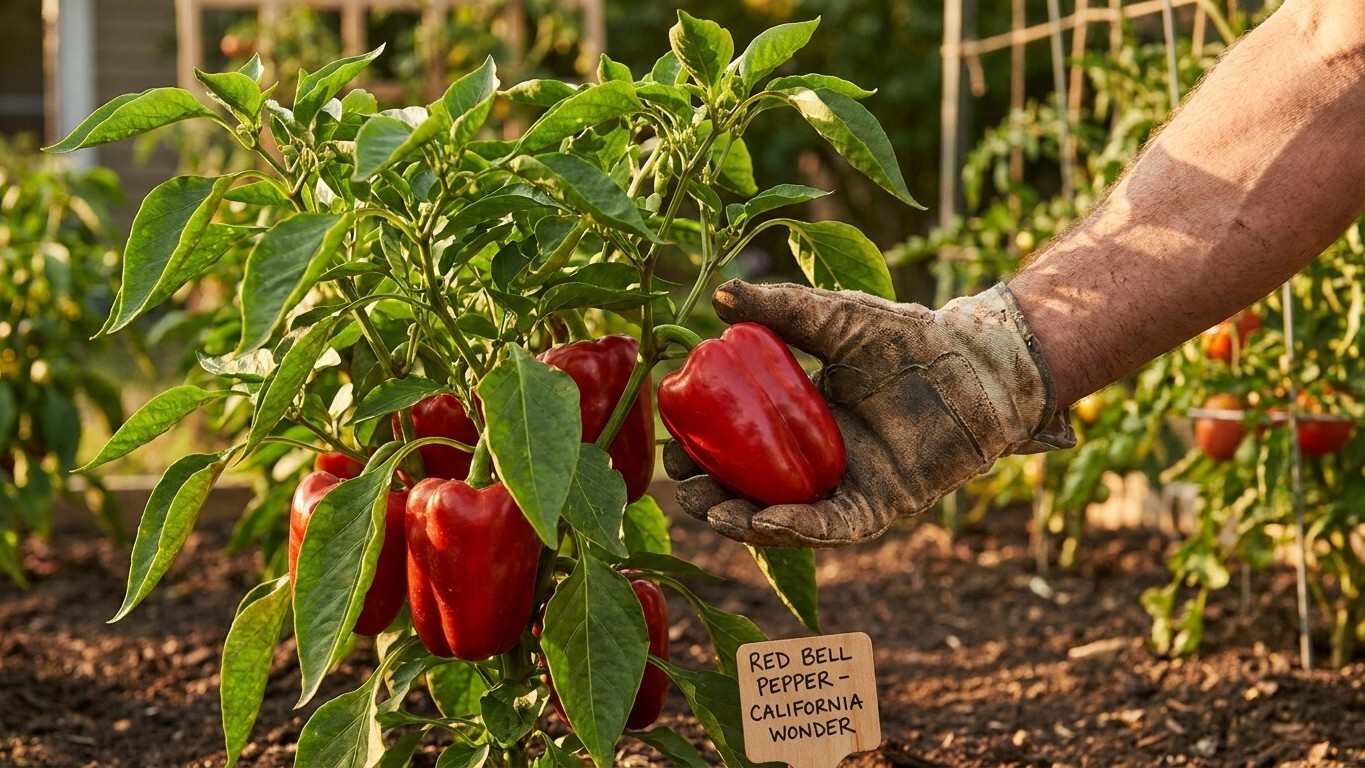

California Wonder is one of the pepper cultivars covered by university extension trial lists, and the direct answer for anyone planting it is this: no official transplant date exists for this specific variety. NC State Extension describes it only as heat-tolerant and disease-resistant, producing large red peppers, with no published maturity window. The planting date that matters is the one printed on your own seed packet, combined with soil that has actually warmed up.
What kind of pepper is California Wonder, really
Here is the part that trips up a lot of gardeners: Clemson Cooperative Extension sorts recommended peppers into clear groups, bell, banana, jalapeno, habanero, cayenne, and other hot peppers. California Wonder does not appear placed inside that grouping in the source material. That absence matters more than it looks. It means the usual shortcut, “the name tells you the type,” does not apply cleanly here.
What NC State Extension does say, word for word, is this: “Heat-tolerant, disease-resistant. Large red peppers.” That is the full description carried by the source, and it is worth sitting with rather than padding out. No fruit size in inches, no yield per plant, no days-to-maturity count. Two university extension programs, Clemson and NC State, are the only authorities behind this page, and neither one hands over a number for this cultivar’s timing or output.
A reader who knows what is missing is better off than one handed a confident guess dressed up as fact. So rather than inventing a maturity window or a fruit weight to fill the silence, the honest move is to say plainly: those figures are not published for California Wonder, and any number offered here would be invented, not measured.
One more distinction worth making once, clearly: ornamental pepper plants sold for their colorful foliage are a separate category entirely, bred for display and not for the table. California Wonder is not that. It is discussed here as an edible garden cultivar, and that line between decorative and edible should never get blurred, no matter how similar two pepper plants look on a nursery shelf.
How hot is a California Wonder pepper
The honest answer is that the source material does not assign a heat level to this cultivar, and because it is not placed in Clemson’s bell-banana-jalapeno-habanero-cayenne grouping, there is no type label to lean on either. That is a real gap, and pretending otherwise would misrepresent what NC State Extension and Clemson Cooperative Extension actually published.
What the numbers do look like elsewhere, for perspective: a Carolina Reaper averages 1.64 million Scoville units, while jalapenos run 2,500 to 8,000. Those two figures exist in the record because they were measured and published. Nothing comparable exists for California Wonder, so no Scoville number belongs anywhere near this cultivar’s name.
What NC State Extension does offer, in its own words, is a caution that applies broadly across pepper cultivars: fruits are edible “but spiciness is unpredictable in intensity.” That single line is more useful than a fake number, because it points at the mechanism. Capsaicin, the compound behind pepper heat, concentrates under plant stress. A dry August, a heat wave, uneven watering, all of it can push the same plant toward a sharper bite than it produced the year before. Two peppers off the same vine, picked weeks apart, can taste noticeably different.
That unpredictability is the real takeaway for anyone growing California Wonder for the first time. Taste a small piece before committing a whole pepper to a recipe, especially late in a hot, dry season. And again, keep this cultivar mentally separate from ornamental pepper varieties bred purely for foliage color; those plants are grown to be looked at, not eaten.
Growing conditions and care notes
Strip this down to what the source actually supports, and two traits stand out: California Wonder is described as heat-tolerant and disease-resistant. That is a meaningful pairing for gardeners in warmer states, since it suggests a plant built to handle a stretch of hot days without collapsing, and one less likely to fold under common pepper diseases than a more fragile cultivar. Beyond that pair, NC State Extension does not add details on plant height, spacing needs, or container suitability for this specific variety.
Timing: what’s published and what isn’t
Only one pepper in this broader reference base carries a published days-to-maturity figure, and California Wonder is not it. So instead of manufacturing a number, the useful advice is this: check the days-to-maturity printed on your own seed packet. That number reflects the actual seed lot and growing conditions the supplier tested, and it will serve you better than any generic estimate pulled from a related cultivar.
One rule holds regardless of which pepper you’re growing: this is a warm-soil crop from the start. Soil temperature, not the calendar date, is what triggers real root growth. Move transplants into cold ground too early and the plant does not die outright, it just sits there, stalled, sometimes for weeks, while warmer soil would have had it growing steadily. If you’re starting from seed indoors or figuring out when to move seedlings outside, that timing question is worth working through on its own before you touch California Wonder specifically. See the guide to starting pepper seeds indoors and the companion piece on transplanting peppers outdoors for the soil-temperature specifics that apply across every pepper cultivar, this one included.
Taste, texture, and what to do with the fruit
This is the section where it would be easiest to invent something, and the one place a reader could catch it if we did. NC State Extension’s description of California Wonder stops at “large red peppers.” No flavor note, no texture description, no suggested use. So rather than dressing that up with a sweetness claim or a cooking recommendation that sounds plausible but isn’t backed by the source, the honest position is to say so directly.
What can be said, using the broader pepper categories Clemson Cooperative Extension does describe, is how those groups typically get used in the kitchen. A sweet bell type holds its shape well for stuffing or roasting. A banana pepper leans mild and works nicely pickled. Jalapenos suit fresh salsa, poppers, and pickling brines. Cayenne types get dried and ground. Habaneros bring a fruity note used in small quantities because a little goes a long way. Without a confirmed type placement for California Wonder, though, slotting it into one of those categories would be a guess dressed up as fact.
The practical move for anyone growing this cultivar is to taste a small piece from the first ripe fruit before deciding how to use the rest of the harvest. That single bite will tell you more about sweetness and heat than any label can, especially given NC State’s own caution that intensity varies from plant to plant and season to season.
Common questions
Is California Wonder a bell pepper or a hot pepper?
The source material does not place it in Clemson Cooperative Extension’s type groupings, so it isn’t confirmed as either. NC State Extension’s description, “large red peppers,” doesn’t specify sweetness or heat level, so the safest approach is to check your own seed packet for the grower’s classification before assuming either way.
When should I transplant California Wonder pepper seedlings outdoors?
No official transplant date is published for this cultivar specifically. Use the days-to-maturity on your seed packet as your guide, and wait until soil has genuinely warmed, since peppers moved into cold ground stall for weeks regardless of variety.
Does California Wonder resist common pepper diseases?
NC State Extension describes it as disease-resistant, though the source doesn’t specify which diseases or pathogens that resistance covers.
Can I eat ornamental pepper plants that look similar to California Wonder?
No. Ornamental peppers are bred and sold for foliage display, not for eating, and should never be treated as a food crop regardless of how closely their fruit resembles an edible cultivar.