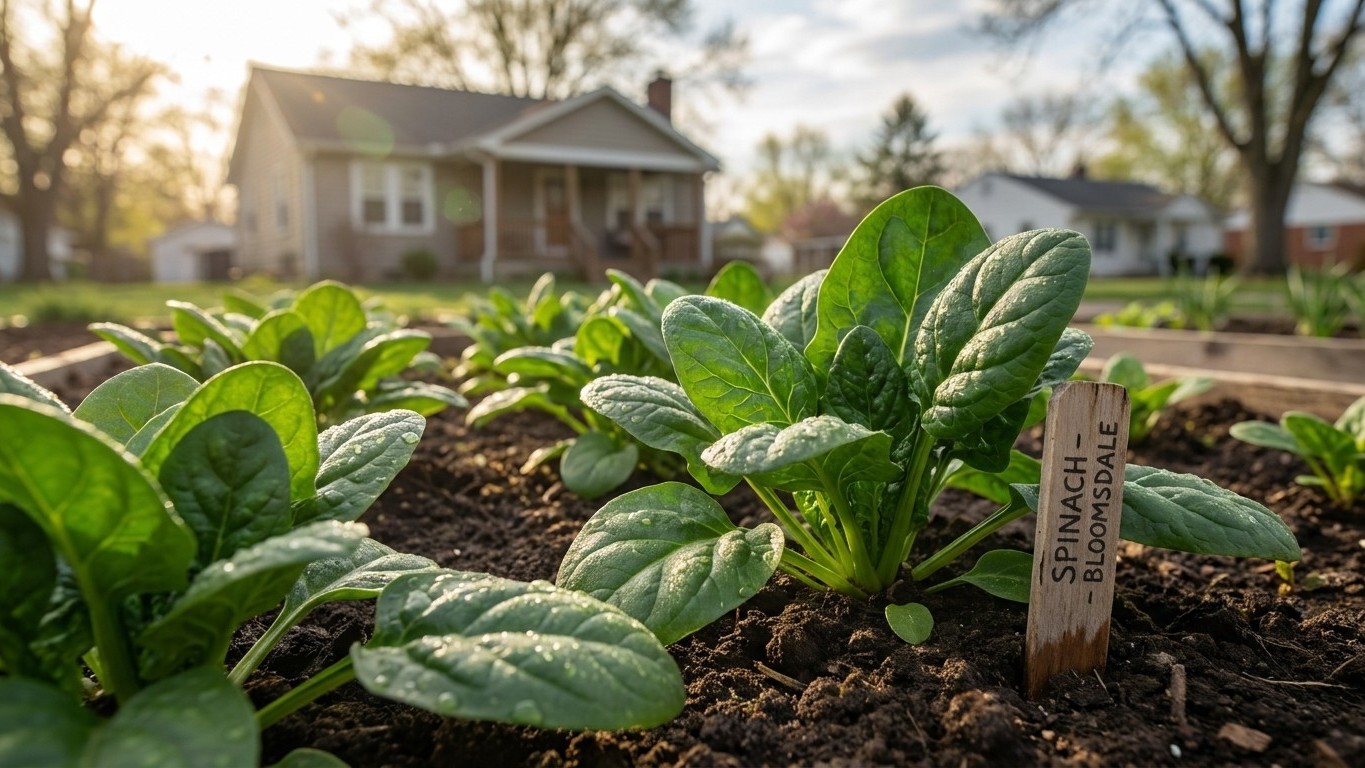

In the Northwest Territories, spinach doesn’t wait for hot weather before it bolts. It flowers because the days themselves stretch long enough to flip the plant’s internal switch, not because of heat piling up in the soil. With virtually no days reaching 90 F at Yellowknife, day length, not temperature, is what closes the growing window here. That leaves a short spring run before the June solstice, and a second chance in early fall if seed goes in before the average first frost, September 18.
The short answer
Yellowknife sits far enough north that the longest day of the year brings 19 hours and 30 minutes of daylight, close to sunup at breakfast and sundown near midnight. For onions, that kind of light load is a gift: it’s what lets long-day varieties bulb up in northern gardens where southern growers can’t. Spinach runs on the opposite rule, which raises the question, Will Spinach Bolt Early in Northwest Territories? Long daylight hours push the plant straight into flowering, a process gardeners call bolting, and once that starts the leaves turn tough, bitter, and the plant stops putting energy into anything worth eating.
That mechanism doesn’t care whether the air feels cool. A chilly, overcast Northwest Territories summer does nothing to slow the clock spinach is running against, because the trigger is the number of daylight hours hitting the leaves, not the thermometer reading. So the plain fact is this: the limit on spinach here is day length, not heat. That’s a different story from warmer provinces and states, where the plant often runs into trouble from summer heat and warm nights long before day length becomes the issue.
Heat barely factors into the equation at all in this territory. The climate record for the Yellowknife station shows an average of 0.0 days a year reaching 90 F. Spinach grows best where temperatures stay under 75 F, and above that mark the leaves turn bitter even before the plant actually bolts. In most of the Northwest Territories, that 75 F ceiling gets brushed against occasionally in a hot stretch, but it isn’t the dominant force pushing the crop toward failure. The daylight curve climbing toward the solstice is.
Practically, that means gardeners here should stop thinking about “beating the heat” and start thinking about racing the calendar toward June 21. Anything sown too close to the solstice is sown into daylight hours already near their yearly peak, and the plant will read that as a signal to flower almost immediately, regardless of how mild the air feels. The spring crop has to be planted, grown, and harvested before that daylight curve gets too steep, and the fall crop has to dodge the opposite problem: the first hard frost of autumn, which is why knowing When to Sow Autumn Spinach in Northwest Territories matters just as much as timing the spring planting.
How long the spring window really is
Working out how much usable spring gardening time exists in the Northwest Territories means stacking a few known numbers against each other rather than guessing at a single planting date.
- The average last spring frost at the Yellowknife station falls on May 25. That’s a mean date from a thirty-year climate record, not a guarantee: in roughly half the years on record, frost arrives even later than that, so treating May 25 as a safe cutoff is risky.
- Spinach is typically sown 2 to 3 weeks before the last frost date, which puts a realistic sowing window somewhere between roughly May 4 and May 11 in an average year, earlier if the ground has already thawed and can be worked, later in a colder-than-average spring.
- From that sowing point, the plant has only a few weeks before the daylight curve climbs toward its June 21 peak of 19 hours 30 minutes. Since long days alone are enough to trigger flowering, the crop is effectively racing the solstice rather than the thermometer.
- Because the region records essentially zero days above 90 F, heat stress isn’t cutting that window short. The clock is set by daylight, and that gives most Northwest Territories gardeners something in the range of four to six usable weeks between an early-May sowing and the point where lengthening days make bolting likely, regardless of how cool the summer stays.
- Named spinach varieties sold in northern seed catalogs, such as Bloomsdale, Melody, Teton, and Olympia, don’t come with published days-to-maturity or bolt-resistance figures specific to this region, so no variety here can be promised extra weeks based on its name alone.
The autumn crop, and when the soil lets you sow
A fall planting flips the spring problem on its head. Instead of racing lengthening days, the gardener is racing shortening ones and a ticking soil thermometer, then trying to squeeze in a harvest before frost shuts the whole thing down.
Soil still too warm to germinate
Spinach seed germinates poorly once soil temperatures climb above 80 F, according to Utah State University Extension. In much of the southern half of North America, that threshold is the real obstacle to a fall crop, forcing gardeners to wait out a scorching August before soil cools enough for seed to sprout. The Northwest Territories has the opposite problem in most years: with an average of 0.0 days above 90 F recorded at Yellowknife, soil rarely gets anywhere near that 80 F germination ceiling in the first place. That’s one advantage of gardening this far north. The obstacle to a fall sowing here is less about waiting for warm soil to cool, and more about simply not running out of season before frost.
The frost that ends the season
The average first fall frost at the Yellowknife station lands on September 18, another 1981-2010 mean rather than a hard boundary. As with the spring figure, frost can and does arrive later than that mean in roughly half of all years, and it can also arrive earlier in a cold one. Utah State University Extension recommends planting a fall spinach crop 50 to 75 days before the date you want to harvest, since no specific days-to-maturity figure is published for the crop. Counting back from a September 18 target harvest puts a realistic fall sowing window somewhere between late July and late August, roughly July 30 on the early side to August 29 on the later side, depending on how much margin a gardener wants to build in before that first frost risk climbs.
Checking this against your own county
Every figure above comes from a single climate station, Yellowknife A, and the Northwest Territories covers a lot of ground beyond that one reporting point. Communities farther north or at higher elevation typically run behind Yellowknife’s frost dates by days or weeks, which squeezes both the spring and fall windows described here even tighter.
Before locking in a sowing date, it’s worth checking local conditions against the Government of the Northwest Territories’ Department of Industry, Tourism and Investment, which runs the territory’s agriculture services program. Its staff can speak to microclimate differences that a single weather station thirty years of averages can’t capture, including how much later frost tends to hold off, or arrive, in a specific community.
Common questions
Does a cool Northwest Territories summer delay bolting?
No. Bolting in spinach is triggered by long daylight hours as much as by warmth, and the Northwest Territories’ long summer days push the plant toward flowering on schedule even when temperatures stay mild. A cool summer here does not buy extra growing weeks.
Is heat ever the real problem for spinach in this territory?
Rarely. The Yellowknife station records an average of 0.0 days a year at or above 90 F, so the 75 F growth ceiling that turns spinach leaves bitter elsewhere gets crossed only occasionally here. Day length, tied to the approach of the June solstice, is the dominant constraint.
When should a fall spinach crop go into the ground?
Utah State University Extension recommends sowing 50 to 75 days before the desired harvest date. Counting back from the average first fall frost of September 18 at Yellowknife puts a fall sowing window roughly between late July and late August, though local frost timing can shift that earlier or later.
Should the May 25 and September 18 frost dates be treated as safe cutoffs?
No. Both figures are 1981-2010 mean dates from Environment and Climate Change Canada, meaning frost arrives later than each date in about half of all years on record. They mark the midpoint of a risk window, not a guarantee, and a specific community’s actual frost timing can run well behind Yellowknife’s, especially farther north or at higher elevation.