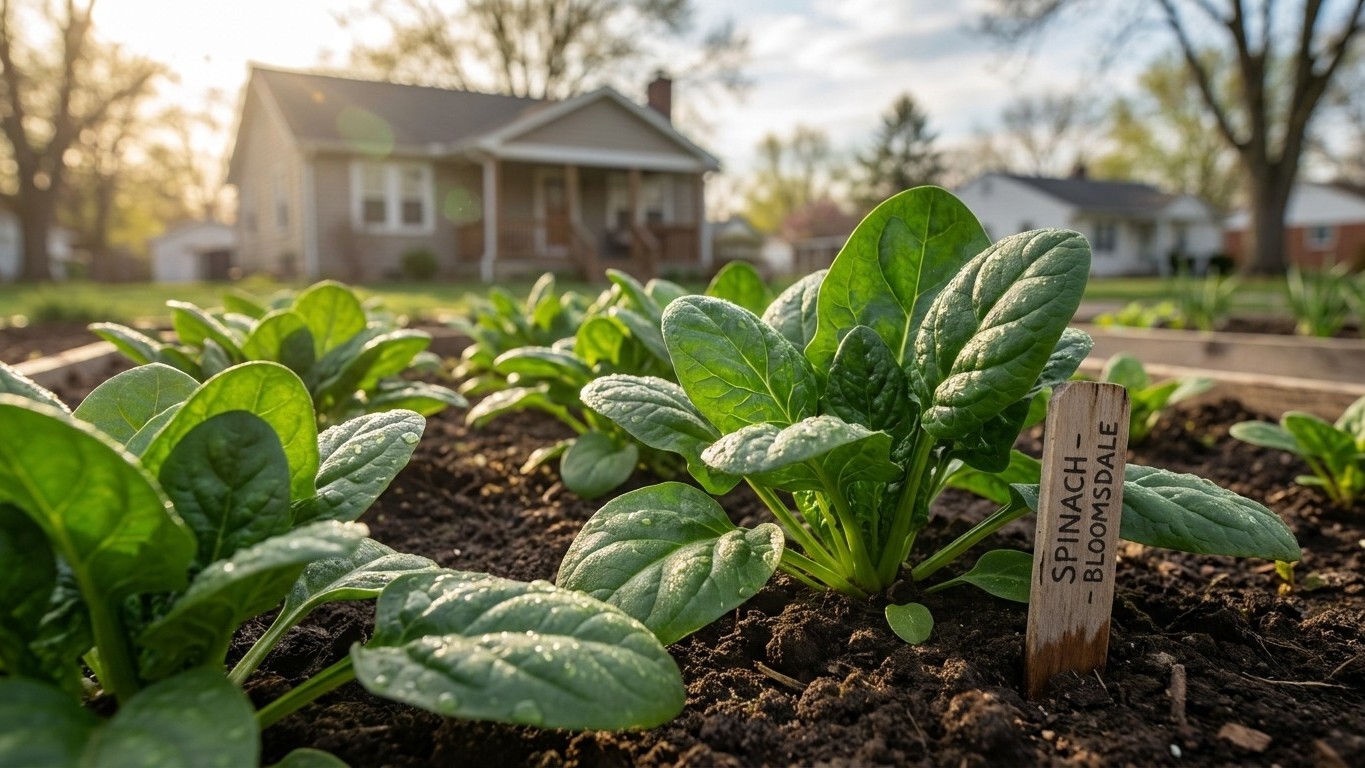

Will Spinach Bolt Early in Nova Scotia? Spinach here starts bolting once the days stretch out through late spring and into early summer, generally from late May through June, because it’s the lengthening daylight, not the region’s mild summer heat, that pushes the plant to flower. That timing gives gardeners here a real but short spring window, and a second, more forgiving planting in late summer for a fall crop—see When to Sow Autumn Spinach in Nova Scotia for that timing.
The short answer
At the reference city for this province, the longest day of the year brings 15 hours and 25 minutes of daylight. That’s a lot of light, and for spinach, light is the trigger that matters most. Spinach bolts under long days and warm temperatures together, but in a place where summer daylight runs this extended, the day-length signal alone is enough to send the plant to seed, even in a year that never gets particularly hot.
That last point matters more here than in most places, because Nova Scotia doesn’t get hot in the way a lot of North America does. The reference station averages 0.0 days a year at 90 F or above. Zero. Heat stress on spinach, the kind that pushes it past its 75 F growth ceiling and into bitter, bolting territory on temperature alone, is close to a non-issue in a typical Nova Scotia summer.
So the limiter here is day length, not heat. A cooler summer would normally be the gardener’s ally against bolting, buying extra weeks the way it might for other cool-season crops. Spinach doesn’t play by that rule. Once daylight climbs into the 14, 15-hour range heading into the solstice, the plant reads that as its cue to flower, and mild air temperatures don’t hold it back.
This is worth sitting with for a moment, because it runs against instinct. Gardeners moving to Nova Scotia from warmer, shorter-summer-day regions often expect the cooler coastal climate to stretch their spinach harvest. It doesn’t work that way. The trade-off is really the opposite: Nova Scotia’s near-total absence of extreme heat means the plant almost never bolts from temperature stress, but the region’s long summer daylight means it bolts from photoperiod stress on a schedule that’s fairly predictable year to year, tied to the calendar more than the thermometer.
Four spinach varieties come up often in extension guidance from Utah State University Extension, the source used for the growth thresholds on this page: Bloomsdale, Melody, Teton, and Olympia. That source doesn’t publish days-to-maturity figures or variety-by-variety bolt resistance data, so nothing more specific can be said here about how those four compare. What is published, and confirmed, is the mechanism: long days plus warmth equals bolting, and long days alone can do most of the work.
How long the spring window really is
- Start with the frost date. The average last spring frost at Halifax Stanfield is May 7. That’s a mean, not a guarantee. In roughly half of all years, frost arrives later than that date, so treat May 7 as the midpoint of a window rather than a green light.
- Back up two to three weeks for sowing. Spinach seed tolerates cold soil well enough to go in ahead of the last frost, so a sowing window of roughly mid to late April is reasonable for many Nova Scotia gardens, assuming the ground has thawed and dried enough to work.
- Track the growth ceiling. Spinach grows best where temperatures stay below 75 F. Given that the reference station averages zero days a year at 90 F, and Nova Scotia summers run cool relative to most of eastern North America, heat rarely pushes past that ceiling early in the season. The growing conditions, temperature-wise, stay favorable for weeks after sowing.
- Then watch the calendar, not the thermometer. The real deadline is day length. As daylight climbs toward the June high of 15 hours 25 minutes, spinach starts bolting regardless of how mild the air feels. That effectively closes the spring window somewhere in the range of late May into June for most plantings.
- Net result. A spring sowing made in mid to late April, once the soil is workable, generally yields somewhere around five to eight weeks of good harvest before lengthening daylight ends the run. That’s a narrower window than the mild temperatures alone would suggest, which is exactly why the day-length mechanism deserves more attention than the weather forecast.
The autumn crop, and when the soil lets you sow
Fall spinach flips the constraint. Instead of racing daylight, the gardener is racing shortening days and cooling soil, and the obstacle at the front end isn’t cold at all.
The soil is still too warm to germinate
Spinach seed germination drops off once soil temperature climbs above 80 F, according to Utah State University Extension. In Nova Scotia, with essentially no days reaching 90 F air temperature and a coastal-moderated climate, soil in most gardens is unlikely to sit above that 80 F mark for long stretches even at the height of summer, especially with some mulch or afternoon shade. That’s a real advantage over hotter regions, where growers have to wait out a scorching August before fall spinach seed will even sprout. In Nova Scotia, the practical opening for a fall sowing tends to arrive by late July or early August, once the height-of-summer soil temperatures ease back.
The frost that ends the season
The average first fall frost at Halifax Stanfield is October 18, again a mean date rather than a firm cutoff, with frost arriving later than that in roughly half of all years and earlier in the rest. Utah State University Extension’s guidance for a fall crop is to sow 50 to 75 days before the date you want to harvest, with no separate days-to-maturity figure published for spinach beyond that range. Counting back from a harvest target in early to mid-October, ahead of that average frost, puts the fall sowing window at roughly late July through late August, depending on how much of a buffer a gardener wants before the first frost risk sets in.
That gives Nova Scotia gardeners a fall crop that’s more forgiving than the spring one. There’s no long-day trigger working against the plant in autumn, since daylight is shrinking, not growing, and the frost itself, once it does show up, tends to improve spinach flavor rather than ruin the crop outright.
Checking this against your own county
Halifax Stanfield’s climate normals are the reference point used throughout this page, but Nova Scotia isn’t one climate zone. Inland valleys, the Annapolis Valley, and higher elevations in Cape Breton or the northern mainland can run weeks behind the coast on both frost dates, while some sheltered coastal pockets run a bit ahead. Before locking in a sowing date, it’s worth checking local conditions against the reference dates above rather than assuming they apply uniformly across the province.
The Nova Scotia Department of Agriculture, online at novascotia.ca/agri, is the provincial authority for growing guidance specific to local counties and districts. Reaching out through that channel, or checking any county-level resources it links to, is the most direct way to confirm frost timing and soil conditions for a specific piece of ground rather than relying on a single airport station’s averages.
Common questions
Can shade or row cover delay bolting in Nova Scotia?
Shade cloth can lower leaf temperature somewhat, which helps against the heat side of bolting, but it does nothing to change day length, which is the stronger trigger here given the region’s long summer daylight and near-absence of 90 F days. It may buy a modest amount of time, not weeks.
Is Nova Scotia’s cool summer actually a disadvantage for spinach?
Not really. The cool summer, reflected in zero average days at 90 F or higher, keeps spinach well under its 75 F growth ceiling for most of the season. The trade-off is that the region’s long summer daylight still triggers bolting on a fairly fixed calendar schedule, so the cool air doesn’t extend the harvest the way it might for a crop that bolts from heat alone.
Why does the source list four spinach varieties without comparing them?
Utah State University Extension, the authority used for the thresholds on this page, names Bloomsdale, Melody, Teton, and Olympia but doesn’t publish maturity days or bolt-resistance comparisons for them. Rather than guess, this page reports only what’s actually documented: the day-length and temperature mechanisms that apply to spinach broadly.
Should I plan around May 7 and October 18 as fixed dates?
No. Both are mean frost dates from Environment and Climate Change Canada’s 1981-2010 climate normals for the Halifax Stanfield station. In about half of all years, frost falls later than each of those dates, so they’re best used as the midpoint of a planning window, adjusted based on local conditions and confirmed against provincial guidance.