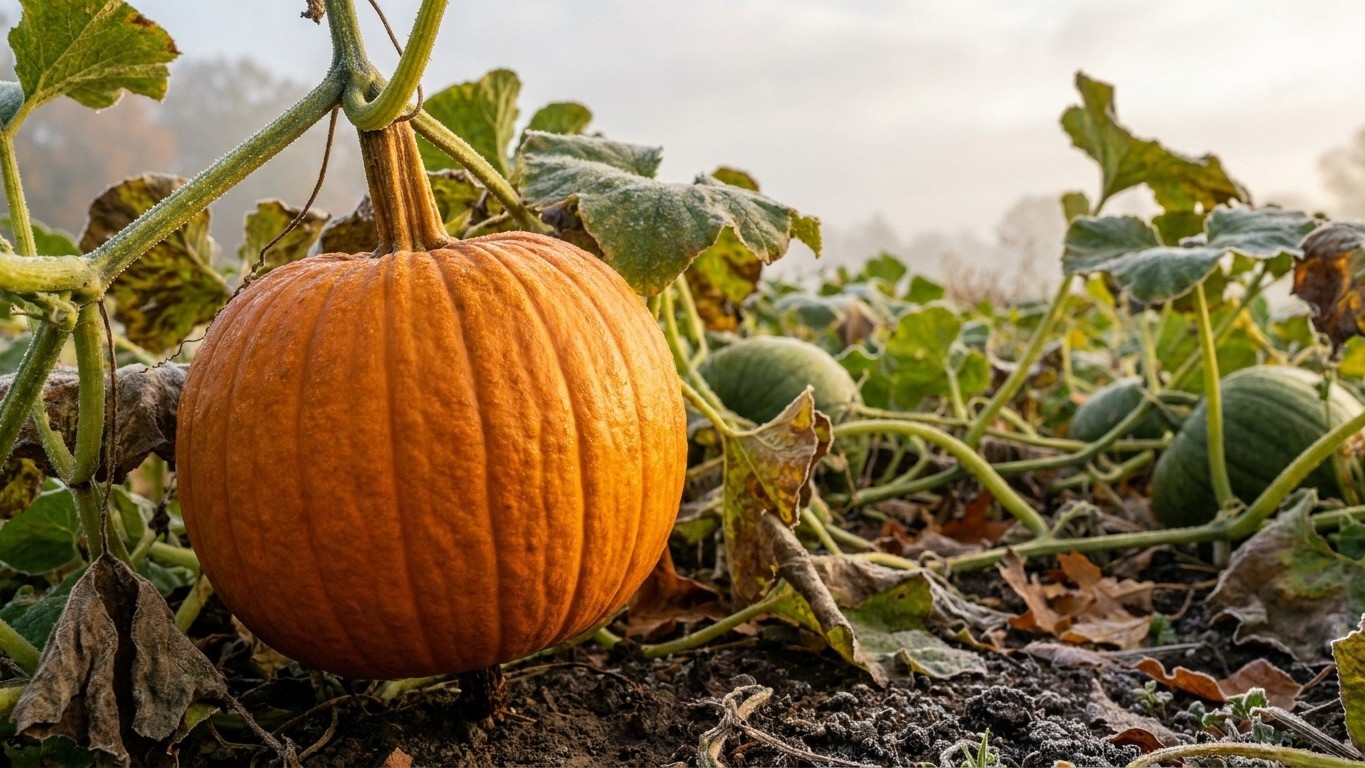

If a pumpkin flower opens by the first half of September in Oklahoma, it has a realistic shot at coloring up before frost. Push much later than that, and the plant runs out of runway. Understanding Will Pumpkins Ripen Before Frost in Oklahoma? comes from stacking two numbers against each other: the state’s fall frost arrival (October 29 to November 8) and the 45 to 55 days a pumpkin needs after its flower opens, not after the seed goes in the ground.
The short answer
Here’s where the math actually lands. If the first freeze shows up on the early side of the window, October 29, counting back the slower 55-day pumpkins puts the latest safe flowering date at September 4. If the freeze holds off until November 8, that same 55-day count lands on September 14. Swap in the quicker 45-day varieties and the range shifts to September 14 through September 24. Line up every combination and the practical cutoff for opening a flower in Oklahoma sits in a band roughly from September 4 to September 24, with the earlier half of that window being the one to build a plan around if you want a cushion instead of a photo finish against the first freeze.
This is the number that decides everything else about the season. It’s not about when seed goes into the soil in spring. A pumpkin plant can look lush and healthy through August and still fail if its flowers open after that late-September cutoff, because the fruit simply doesn’t get its 45 to 55 days before cold shuts the plant down. Female flowers, the ones that actually set fruit, don’t appear the moment a seed germinates. Vines spend weeks building leaves and root mass before they start flowering in earnest, and how long that takes depends on the variety, the weather that season, and how early the seed went in.
That’s why the flowering cutoff has to drive the sowing decision, not the other way around. Gardeners who sow late, wait too long to thin or trellis, or lose early growth to a cool snap are effectively shrinking their own safety margin without realizing it. A grower who sows in early May and gets vigorous flowering by late July has weeks of slack. One who doesn’t see reliable female flowers until early September is gambling on the loose end of the frost window holding, and on picking a variety that ripens on the faster 45-day side of that range rather than the 55-day side.
None of this changes because a pumpkin patch looks green and vigorous in late summer. Vine size and leaf color say nothing about whether there’s enough calendar left for a fruit to finish. The only question that matters is the date on the flower.
When to sow here
- Start with the last spring frost window for this reference station, March 28 to April 10. That date only tells you when the air stops freezing, not when it’s safe to put pumpkin seed in the ground—for a full breakdown of the ideal planting window, see When to Sow Pumpkins in Oklahoma.
- Wait for the soil, not the calendar. Pumpkin seed needs the soil itself at 65 F to germinate reliably, and soil temperature lags behind air temperature by weeks, because the ground holds its winter chill long after daytime air has warmed. Treating the last frost date as the sowing date is the single most common miscalculation with this crop.
- Use a black plastic mulch or a floating row cover over the bed ahead of sowing. That head start on soil warming typically buys about two weeks compared with bare, uncovered ground.
- Put the arithmetic together: last frost in early April, plus the weeks it takes bare soil to climb to 65 F, minus the two weeks a row cover or plastic mulch can claw back, and realistic direct-seeding for most of Oklahoma lands well into late April or into May, not right at the frost date.
- Count forward from that sowing date toward the flowering cutoff established earlier. If a vine doesn’t reach reliable female flowering by the safe window, roughly September 4 to September 24, no amount of vine growth afterward will produce a ripe pumpkin. This is the check that should happen in early summer, while there’s still time to plant a faster variety or accept a smaller crop, not in October when the flowers have already opened too late.
What goes wrong here
- A late flower that never colors. Once the calendar passes the safe flowering cutoff, new blossoms are a liability rather than a bonus. Pinch off flowers and small fruit that set after the cutoff date so the plant redirects its energy into fruit that still has a chance of finishing, rather than spreading resources across pumpkins that will stay green.
- A fruit caught by frost. A pumpkin that’s sized up and starting to color but hasn’t fully turned can still be lost if it’s left on the vine into the first freeze. Harvest with the stem attached before the fall frost window arrives, even if the color isn’t complete, and move the fruit somewhere it won’t freeze. There’s no published storage temperature or keeping-time for this step, only that guidance to keep pumpkins where freezing won’t reach them.
- A vine that dies back before the skin hardens. Vines weakened early in the season by squash bugs or cucumber beetles often collapse before the rind has toughened, leaving fruit exposed and short-lived even if it colored on time. Rather than re-covering pest identification here, see this site’s dedicated Oklahoma pages on squash bugs and cucumber beetles for how to catch and manage both before they take the vine down early.
Checking this against your own county
Every date in this article comes from a single airport weather station, and suburban and rural gardens across Oklahoma routinely see their last spring frost later and their first fall frost earlier than that station records, sometimes by one to two weeks, more at elevation. That gap can be the difference between a flowering window that closes September 24 and one that closes September 10.
Before locking in a sowing date or a variety choice based on the numbers above, check them against local data through Oklahoma State University Extension. County extension offices track frost patterns and planting guidance specific to their own soil and microclimate, and that local read is worth more than any statewide average when the entire season hinges on a two-and-a-half-week window.
Common questions
Can I still plant pumpkins in July in Oklahoma?
It depends entirely on the variety and how quickly it reaches flowering. A July sowing leaves very little margin against the September flowering cutoff, so a faster-maturing pumpkin and close attention to when the first female flowers actually open matter more than usual.
What if my pumpkin flowers but frost comes early?
A fruit that set well before the cutoff can still be lost if the first freeze arrives on the early edge of the October 29 to November 8 window. Harvesting with the stem attached ahead of that freeze, even if the color isn’t finished, protects the fruit better than leaving it exposed.
Do all Oklahoma counties share the same frost dates?
No. The dates cited here come from one reference weather station, and rural and higher-elevation areas typically see frost arrive earlier in fall and linger later in spring, sometimes by one to two weeks. County-level extension data is the way to check.
How do I know when to pick a pumpkin before frost?
Harvest with the stem attached before the fall frost window sets in, rather than waiting for perfect color if a freeze is close. There’s no published temperature or duration for how long a pumpkin keeps afterward, only guidance to store it somewhere it won’t freeze.