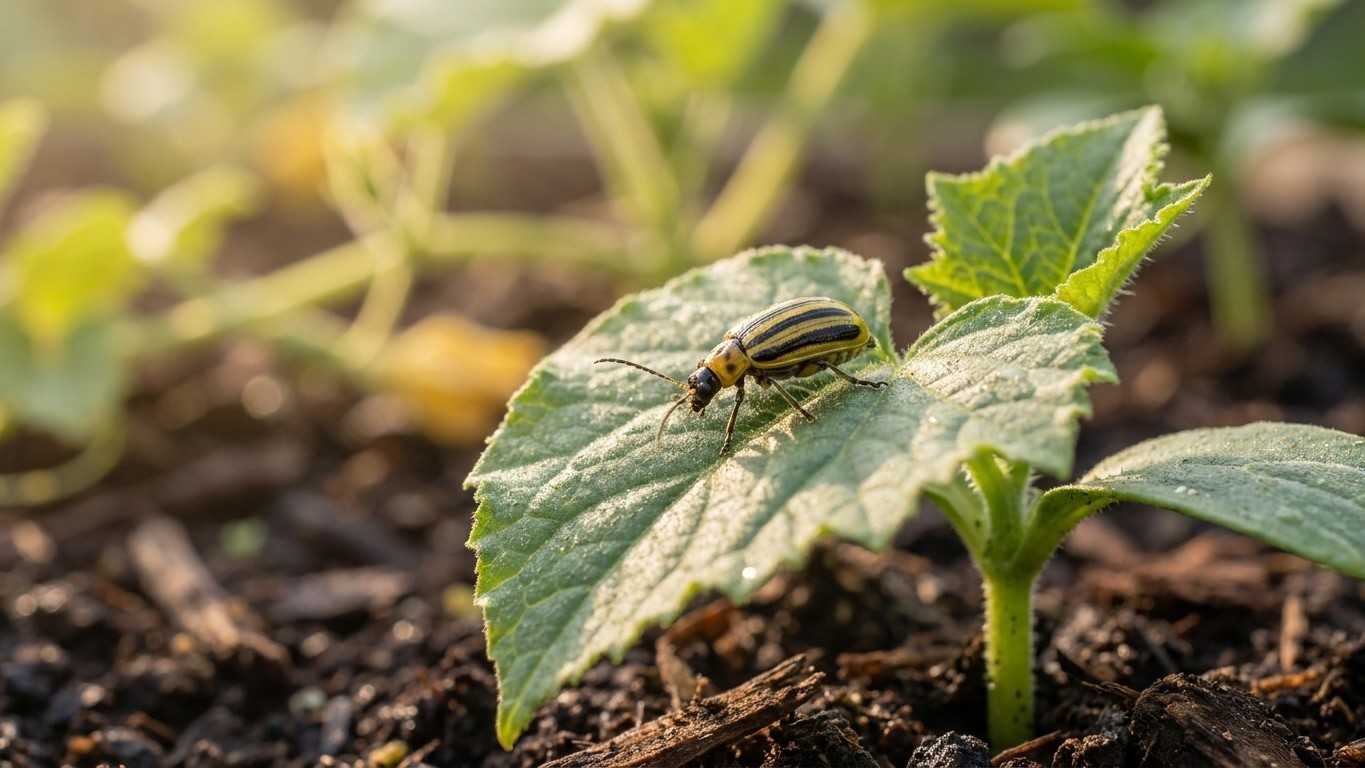

Striped and spotted cucumber beetles start crawling out of Oklahoma soil the moment daytime temperatures push past 60°F, which usually lands somewhere between mid-April in the southern counties and early May up near the Kansas border. They head straight for cucumber, squash, melon, and pumpkin seedlings, and they don’t come alone: both species carry bacterial wilt, a disease that can kill a healthy vine in under two weeks.
When Cucumber Beetles Actually Show Up in Oklahoma

Oklahoma sits in a transition zone between USDA hardiness zones 6b and 8a, and that split matters for beetle timing. Gardeners in the Panhandle and northern tier typically see first activity in late April to early May, right around the average last-frost window. Down in the Red River valley and southeastern counties, where soil warms faster, beetles can appear as early as the first week of April if the winter was mild.
Striped cucumber beetles (Acalymma vittatum) overwinter as adults in leaf litter, fence rows, and the edges of wooded areas. They wake up hungry and move into gardens looking for the earliest cucurbit seedlings they can find. Spotted cucumber beetles (Diabrotica undecimpunctata), sometimes called southern corn rootworm beetles in their larval stage, migrate up from Texas and Mexico on spring winds and tend to arrive a week or two later than the striped variety.
A second, often larger wave hits in July and August as the summer generation matures. This late-season push coincides with fall planting of squash and cucumbers, which means Oklahoma gardeners effectively face two full beetle seasons instead of one. Oklahoma State University Extension entomologists have noted that the second wave tends to do more transplant damage because populations have had a full generation to build up.
Why Oklahoma’s Climate Makes This Pest Persistent
Hot, dry Oklahoma summers don’t slow cucumber beetles down the way they do some other garden pests. Adults can survive extended dry spells by feeding on pollen from sunflowers, squash blossoms, and even weeds like goldenrod when their preferred crops aren’t available. This flexibility is part of why the beetle shows up on the state’s official pest lists for cucurbit growers year after year, from small backyard plots in Tulsa to commercial melon operations in the western counties.
How to Identify Cucumber Beetles Before They Do Damage
Striped cucumber beetles are about a quarter-inch long, yellow-green with three bold black stripes running lengthwise down the wing covers. Spotted cucumber beetles are similar in size but carry eleven black spots on a yellow-green background instead of stripes. Both have black heads and antennae, and both move fast when disturbed, which is often the first clue you’re dealing with beetles rather than slower-moving pests like squash bugs.
The damage pattern gives away the culprit just as clearly as the bugs themselves. Look for these signs on young cucurbit plants:
- Small, ragged holes chewed through cotyledons and true leaves, often clustered near the stem
- Scarring or gouging on the stem right at soil level, which can girdle very young seedlings
- Wilting that starts in one section of a vine and spreads, a red flag for bacterial wilt transmission
- Chewed petals and pollen loss inside open blossoms during the second summer wave
That wilting symptom deserves extra attention. Bacterial wilt, caused by the bacterium Erwinia tracheiphila, lives in the beetle’s gut and gets deposited in feeding wounds. Once a vine is infected, there’s no cure. The plant’s vascular system clogs with bacterial slime, and within one to two weeks the whole vine collapses even though the roots look fine. Cucumbers and muskmelons are the most susceptible; squash and pumpkins have somewhat more resistance, though they’re not immune.
What Actually Stops Cucumber Beetles in an Oklahoma Garden
Timing beats almost every other control method for this pest. Because bacterial wilt transmission happens in the first few weeks after transplanting, protecting seedlings during that window matters more than treating adult plants later in the season.
Row Covers and Physical Barriers
Floating row covers, made of lightweight spun polyester, keep beetles off seedlings entirely if they’re installed at planting and sealed tight along the edges with soil or stakes. The catch is that cucurbits need pollinators once flowering starts, so covers have to come off when blossoms appear, which is exactly when the second wave of beetles is often waiting. Some Oklahoma growers split the difference by covering plants only through the first three to four weeks, then removing covers and switching to daily hand-monitoring during bloom.
Straw or plastic mulch around the base of plants can reduce beetle landing sites somewhat, though it’s a minor assist rather than a standalone fix.
Trap Crops and Companion Planting
Blue Hubbard squash is one of the most attractive trap crops for cucumber beetles, and Oklahoma extension programs have documented its use in drawing beetles away from more valuable cucumber and melon plantings. Planting a border of Hubbard squash a week or two before the main crop gives beetles an early, preferred target, letting gardeners concentrate control efforts (or simply hand-pick beetles) on a smaller area instead of the whole garden.
Radishes, nasturtiums, and tansy have a reputation as beetle deterrents in home garden circles, though the research backing them is thinner than for trap cropping. They’re worth trying as a secondary layer, not a primary defense.
Chemical and Biological Controls
For gardeners who need a more direct response, a few options carry solid track records:
- Kaolin clay sprays coat leaves in a fine white film that beetles find irritating and hard to feed through, without harming pollinators
- Pyrethrin-based insecticides give quick knockdown on adult beetles but need reapplication after rain and should be sprayed in early morning or evening to spare bees
- Carbaryl and other broad-spectrum insecticides are effective but come with the tradeoff of also killing beneficial insects, so they’re best reserved for heavy infestations rather than routine use
- Beneficial nematodes applied to soil can target beetle larvae before they emerge as adults, though this works better as a preventive measure applied the season before a bad outbreak
Whatever spray gets used, timing it for early morning, before bees are active and while beetles are still sluggish from overnight cool temperatures, improves results without adding extra applications.
Variety Selection: The Long-Term Fix
Some cucumber varieties resist bacterial wilt even when beetles are present, which shifts the whole equation from “kill every beetle” to “tolerate some beetle activity.” County Fair and Saladin cucumbers have shown resistance in university trials, and butternut-type squash tends to shrug off wilt better than acorn or zucchini types. Swapping to a resistant variety doesn’t eliminate the beetle problem, but it removes the worst consequence of it, the sudden vine collapse that ruins a harvest overnight.
Delaying planting by even one to two weeks past the earliest safe date can also help, since it lets the first overwintering wave pass through before seedlings are vulnerable and tender enough to attract heavy feeding. That’s a tradeoff worth weighing against the shorter growing season it creates, especially for melons that need a long, hot stretch to mature.
One detail that surprises a lot of Oklahoma gardeners: cucumber beetle populations tend to be worse in gardens planted near where squash or melons grew the previous year, because adults overwinter close to their last known food source. Rotating cucurbit beds to the opposite side of the yard, even a modest 20 or 30 feet away, can measurably cut down on how many beetles find the new planting in spring.
Related guides
- Cucumber beetles in Missouri: When It Shows Up and What Stops It
- Cucumber beetles in Oregon: When It Shows Up and What Stops It
- Cucumber beetles in South Dakota: When It Shows Up and What Stops It
- Cucumber beetles in Virginia: When It Shows Up and What Stops It
- Cucumber beetles in West Virginia: When It Shows Up and What Stops It