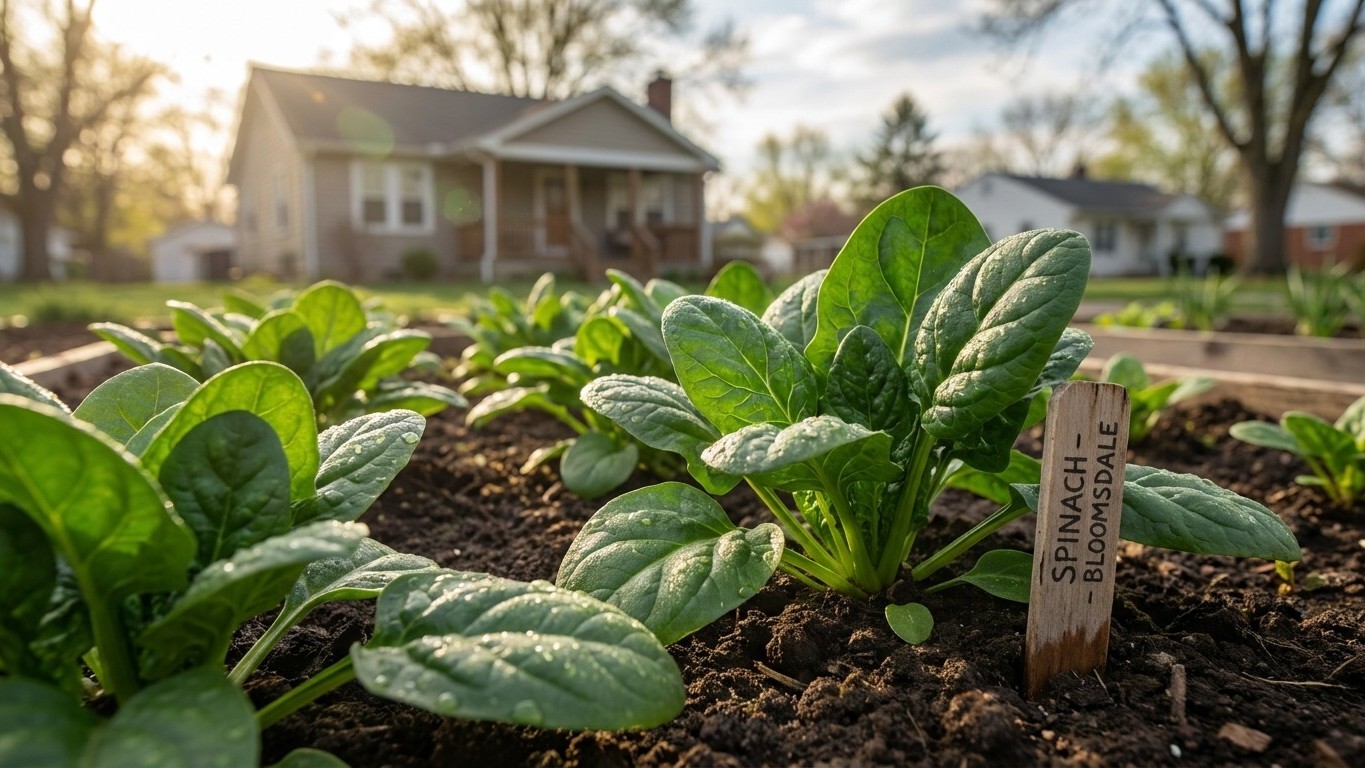

Spinach in South Carolina bolts fast because the state stacks two triggers at once: day length and heat. The reference city sees 14 hours and 10 minutes of daylight at the summer solstice, and that alone pushes spinach toward flowering. Add an average of 55.1 days a year at 90°F or hotter, and the plant runs out of cool days before it runs out of long ones. The real growing seasons here are short shoulder windows in late winter and early fall.
The short answer
Start with the number that matters most: 14 hours and 10 minutes of daylight on South Carolina’s longest day. That figure alone tells you something most gardeners miss. Spinach flowers, or bolts, once days grow long and temperatures climb, so a mild or overcast summer here would not rescue the crop even if one happened. The trigger is the calendar, not the thermometer alone, and South Carolina’s calendar delivers long days at almost exactly the same weeks it delivers heat.
That overlap is what makes this state harder on spinach than it looks on paper. Some regions get long summer days but stay cool enough that spinach limps along a few extra weeks anyway. South Carolina does not get that break. With 55.1 days a year averaging 90°F or above at the reference station, the heat load arrives right on schedule with the lengthening days of April and May. Both mechanisms point the same direction at the same time, which is why the plant bolts here with so little warning.
So is the limit day length, heat, or both? Both, and they reinforce each other rather than compete. Day length sets the biological clock that tells spinach to flower. Heat then accelerates that process and, separately, ruins the flavor of any leaves that are still edible. Will Spinach Bolt Early in South Carolina? Utah State University Extension notes spinach grows best where temperatures stay under 75°F, and in South Carolina that ceiling gets crossed early in spring and stays crossed until fall is well underway. There is no long, mild stretch here where the plant can simply sit and grow leaves for months.
What this means practically is that spinach in South Carolina is a two-season crop, not a one-season crop. You get a narrow spring run before the days lengthen and the heat builds, and a narrow fall run after the heat breaks but before frost shuts things down — see When to Sow Autumn Spinach in South Carolina for that second window. Anyone treating it like a summer-long leafy green, the way you might grow chard or kale through a mild season elsewhere, will watch it throw up a flower stalk and turn bitter within weeks. The fix is not a different variety or a shadier spot. It is timing the sowing to dodge the long-day, high-heat window entirely.
Four named varieties come up often in spinach discussions: Bloomsdale, Melody, Teton, and Olympia. There is no published data here on how any of them individually handle South Carolina’s heat or day length, so treat variety choice as a secondary decision. Timing the sowing correctly matters far more than which of these four you plant.
How long the spring window really is
- Start from the last frost date. NOAA climate normals for the 1991-2020 period put the last spring freeze at the reference station between February 28 and March 17. That thirty-two mile spread already tells you spring arrives on its own schedule here, not a fixed date you can circle on a calendar.
- Back up two to three weeks for sowing. Spinach seed goes in the ground before the last frost, not after, so the sowing window runs from roughly mid-February through the end of the first week of March, depending on where in the state you garden.
- Track how fast the days lengthen after that. By the time seedlings are up and growing, the days are already gaining length quickly heading toward the equinox. This is the part of the calendar where the long-day trigger starts building even though the calendar still says late winter.
- Watch the 75°F ceiling arrive. South Carolina’s spring temperatures climb quickly once March turns to April, and the days grow long at the same time. The two pressures converge within a matter of weeks of that February-to-March sowing date.
- Count the usable weeks. Practically, that leaves a spring harvest window of roughly six to eight weeks from a mid-February to early-March sowing before bolting becomes likely. Coastal areas, milder than the airport station used for these frost dates, may stretch that slightly; upstate gardens, running several weeks tighter at both ends, should expect the shorter end of that range.
None of this is a fixed number you can bank on year after year, since frost dates shift and spring heat arrives unevenly. But the shape of the window, a short run of six to eight weeks between last frost and the long-day, high-heat convergence, holds across most of the state.
The autumn crop, and when the soil lets you sow
Fall is the more forgiving season for spinach in South Carolina, but it comes with its own obstacle, and it is not the one most gardeners expect first.
Soil too warm to germinate
Utah State University Extension is specific on this point: spinach seed germination drops off once soil temperature climbs above 80°F. That is not an air temperature reading, it is soil, and South Carolina soil holds heat well into what feels like early fall on the calendar. With an average of 55.1 days a year reaching 90°F in the air, the ground underneath stays warm for weeks after the worst of the heat has technically passed. Sowing too early means scattering seed into soil that simply will not let it sprout, no matter how carefully you water it. The practical move is to wait until soil has genuinely cooled, checking it directly rather than trusting the date on a seed packet.
The frost that ends the season
On the other end, NOAA’s 1991-2020 climate normals put the first fall frost at the reference station between November 20 and December 5. That gives a natural target for a last realistic harvest, somewhere in the first half of November, safely ahead of that frost window. Counting back from there using the source’s guidance of sowing spinach 50 to 75 days before the desired harvest date lands the sowing window in mid-August to mid-September. That range also happens to be roughly when soil temperatures are finally easing down from summer’s peak, so the two obstacles, warm soil and approaching frost, largely resolve themselves into the same few weeks. Gardeners in the upstate, where frost arrives earlier, should shift that window earlier as well, since the region runs several weeks tighter at both ends than the coastal reference station.
There is no published days-to-maturity figure for spinach in the source material behind these numbers, so treat the 50-to-75-day sowing-to-harvest range as the operating figure rather than a fixed maturity date for any one variety.
Checking this against your own county
Every number above comes from a single reference station, and South Carolina’s climate is not uniform enough to treat that as gospel for every backyard in the state. Peninsular Charleston runs milder than the airport station these frost dates are drawn from, while upstate counties see both spring and fall frost windows tighten by several weeks compared to the coast. Before locking in a sowing date, check current conditions and local frost guidance with Clemson Cooperative Extension, which maintains county offices across the state and can speak to soil temperature and frost timing specific to your area. A five-minute call or a look at their county pages beats guessing from a statewide average, especially in a state where mountains, midlands, and coast can differ by weeks on both ends of the growing season.
Common questions
Can spinach survive a South Carolina summer at all?
Not in any practical sense. Between the long summer days and 55.1 average days a year at 90°F or hotter, both bolting triggers are active for months. Summer is the gap between the spring and fall crops, not a growing season of its own.
Does shade help delay bolting?
The two triggers behind bolting are day length and warm temperature, and neither is fully solved by shade. Shade can ease heat stress somewhat, but it does nothing about day length, which is the more surprising driver for many gardeners.
Is fall-sown spinach less likely to bolt than spring-sown?
Fall sowing avoids the approach into long, hot days that spring sowing runs straight into. The main risk in fall is timing sowing before soil has cooled below the 80°F germination threshold, not bolting itself.
Which of the four named varieties should I choose?
Bloomsdale, Melody, Teton, and Olympia are commonly mentioned spinach varieties, but no performance data tied to South Carolina’s day length or heat is published here for any of them. Sowing timing matters more than variety selection in this climate.