
In Kansas, pumpkin seeds go into the ground once soil temperature hits 65°F, typically well after the last spring frost clears (April 4 to April 18 at the reference weather station). But sowing date is only half the equation. The real deadline is when the last flower needs to open, because every pumpkin needs 45 to 55 days after that bloom to ripen before the first fall frost (October 23 to November 2).
The short answer
Kansas’s first fall frost typically arrives between October 23 and November 2, based on the airport weather station used for the official 1991-2020 climate normals. That’s the finish line for a pumpkin vine. Everything else works backward from it.
A pumpkin needs 45 to 55 days after its flower opens, not after the seed goes into the soil, to turn from a green globe into a hard, orange fruit ready for harvest. Run that math against the frost window and the last flower on the vine needs to open somewhere between late August and mid-September. If you’re counting on the longer end of ripening (55 days) and the earlier end of the frost window (October 23), that last flower can’t open any later than August 29. If your fruit only needs 45 days and fall stretches out toward November 2, you have until September 18 for the last bloom.
That’s roughly a three-week spread, and it exists because two things move independently: how quickly your particular vine sets and finishes fruit, and how mild your particular fall turns out to be. Neither is fixed, which is exactly why gardeners plan for the tighter end of the window rather than the looser one.
One caution matters here. These frost dates come from a single airport weather station, and suburban and rural gardens across Kansas often see their first fall frost arrive earlier, sometimes by a week or two, and even more at higher elevation. A garden in a low-lying valley or an open rural yard can freeze well before the reference date. That means the safe window for a late flower to open is often narrower in practice than the calendar suggests. Check your own county’s typical frost pattern rather than assuming the airport figure applies exactly to your yard.
The practical takeaway: if you want pumpkins with fully colored, hardened rinds by Halloween, your vines need to be setting flowers no later than early September in most Kansas gardens, and ideally a bit earlier if your site tends to run cool or sits in a frost pocket.
When to sow here
Working backward from that flowering deadline means figuring out when to actually put seed in the ground. The last spring frost at the reference station clears between April 4 and April 18, but that date only tells you when the air is safe. Soil temperature is a separate clock, and it runs slower.
- Air clears first. The last spring frost (April 4 to April 18) marks the point when a cold snap is unlikely to kill young seedlings above ground.
- Soil lags behind. Pumpkin seed needs soil at 65°F to germinate reliably, and the top few inches of ground warm much more slowly than the air above it. Waiting for the calendar date of last frost and sowing that same week almost always means cold, sluggish soil that rots seed rather than sprouting it.
- Row covers close some of the gap. Clear plastic row covers or black plastic mulch trap solar heat at the soil surface, and gardeners who use them can typically sow roughly two weeks earlier than they could with bare, uncovered ground, because the covered soil reaches 65°F sooner.
- Sow direct, not by transplant. Pumpkins are usually seeded straight into the spot where they’ll grow rather than started indoors and moved, since the vines dislike having their roots disturbed.
- Check the flowering math before you commit. Once you have a working sow date, count forward to when you expect flowers to open, and compare that against the late-August-to-mid-September window from the previous section. If the arithmetic doesn’t leave enough runway, move the sow date earlier with row cover rather than pushing flowering later.
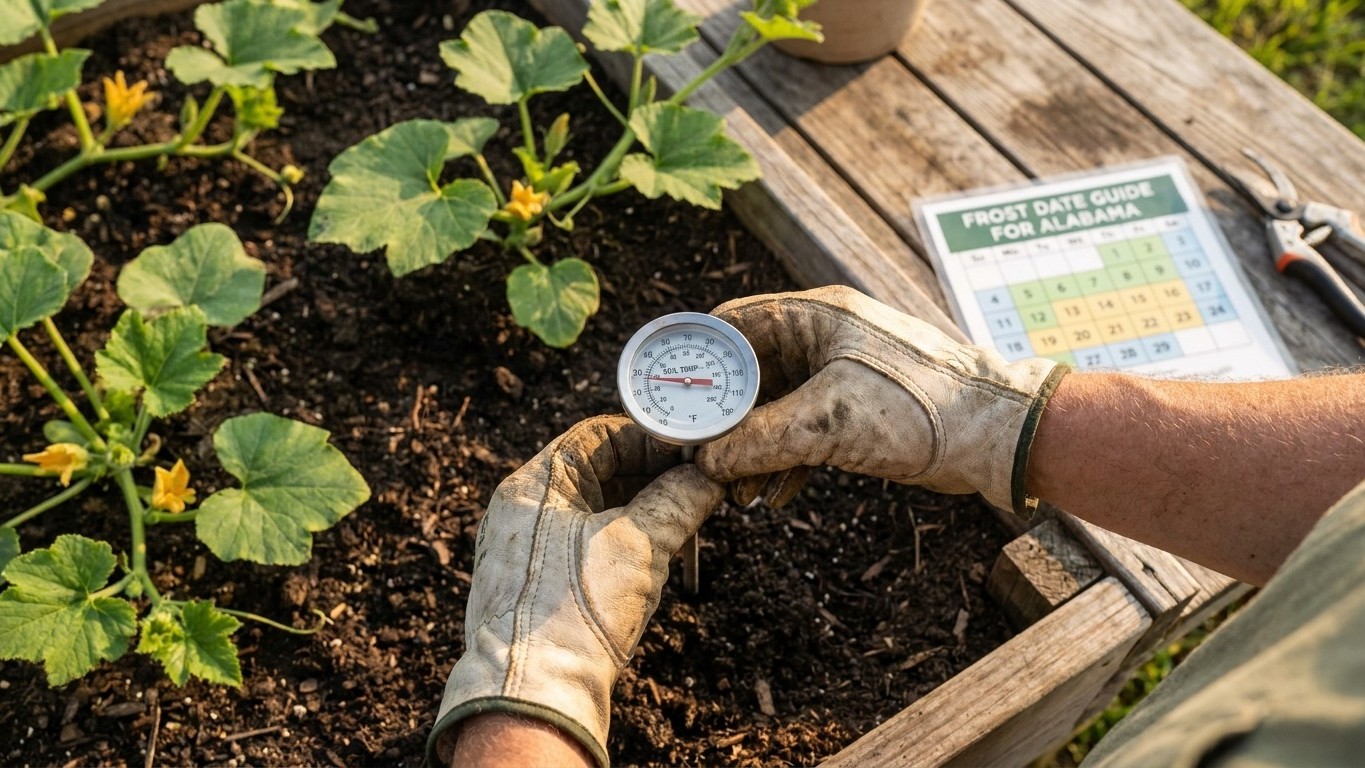
A soil thermometer pushed two to three inches into the bed is the only reliable way to know when 65°F has actually arrived. Calendar dates are a starting guide, not a substitute for checking the ground itself.
What goes wrong here
Kansas’s season length creates a handful of predictable failure points, all traceable back to the same arithmetic problem: not enough days between flowering and frost.
- A late flower that never colors. When the last bloom opens after the safe window, usually because seed went in too late or a stretch of cool weather delayed flowering, the resulting fruit stays green and never hardens off before frost. The remedy is sowing early enough (with row cover if needed) that flowering wraps up well before mid-September, and pinching off very late blooms so the vine’s remaining energy goes into fruit that already has a chance of finishing.
- A fruit caught by frost. Even a fruit that colored up can still be soft-skinned when the first hard freeze hits between October 23 and November 2. The remedy is watching the forecast closely in October and harvesting early, stem attached, rather than gambling on a few more days of ripening once frost is forecast.
- A vine that dies back before the skin hardens. Foliage disease or an early cold snap can kill the leaves that shade and protect ripening fruit, leaving the rind thin and vulnerable even if the fruit hasn’t technically frozen. The remedy is keeping vines healthy through the season and covering plants during unexpected September cold snaps, since a dead vine can’t finish hardening a rind no matter how many warm days remain.
- Pest pressure eating into the calendar. Squash bugs and cucumber beetles can weaken vines enough to shorten the effective growing window before frost ever becomes the limiting factor. For identification and control specific to these pests, see this site’s dedicated pages on squash bugs in Kansas and cucumber beetles in Kansas rather than treating the insect problem separately from the timing problem.
Common questions
Can I start pumpkin seeds indoors to get ahead of the season?
Pumpkins are typically direct-sown rather than transplanted, since the vines don’t handle root disturbance well. The more reliable way to gain time in Kansas is warming the soil faster with row cover, which can move the safe sowing date up by about two weeks compared to bare ground.
What if my soil is still below 65°F in late May?
Wait rather than sow into cold soil. Seed planted before the soil reaches 65°F tends to sit and rot instead of germinating, which costs more time than a short delay. A soil thermometer is the most reliable check.
How long can pumpkins be stored after harvest?
The source behind these figures doesn’t publish a specific storage temperature or keeping time, only that pumpkins should be kept somewhere they won’t freeze. Beyond that general guidance, storage details aren’t covered here.
Does frost date vary much within Kansas?
Yes. The October 23 to November 2 window comes from one reference weather station, and rural or low-lying gardens across the state often see frost arrive earlier, sometimes by a week or two, and more at higher elevation. Treat the reference date as a starting point and check local patterns for your own county.