
Mississippi gardeners should sow pumpkin seeds directly in the garden once soil temperatures hold at 65 F, which typically falls several weeks after the state’s last spring frost window of March 6 to March 22. For a Halloween-ready harvest, most growers need seeds in the ground well before summer’s peak heat, leaving enough time for vines to flower and finish ripening before the first fall frost arrives between November 7 and November 22, depending on the county.
The short answer
Mississippi’s first fall frost lands somewhere between November 7 and November 22, based on 30-year climate normals from the NOAA weather station used for the state. That two-week spread matters more than it looks, because it sets the last possible date a pumpkin flower can open and still leave enough time for the fruit to finish ripening before cold weather ends the season.
Utah State University Extension measures pumpkin maturation at 45 to 55 days counted from the day a female flower opens on the vine, not from the day a seed goes into the soil. Run that window against Mississippi’s frost dates and the numbers shift depending on where the frost falls locally. If frost arrives on the early side, around November 7, the last flower needs to open between September 13 and September 23 to have any real chance of coloring up in time. If frost holds off until November 22, that cutoff stretches later, to somewhere between September 28 and October 8.
Reading your own county’s frost date
The November 7 to November 22 window comes from a single reference weather station, and the caution that goes with it is worth repeating: home gardens, especially in low-lying or rural spots away from pavement and buildings, tend to see frost arrive earlier than an airport-based reading suggests, sometimes by a week or two. A garden in a valley or near open fields in the northern part of the state may need to treat late September as the real cutoff for flowering, not early October.
None of this is a single date you circle on a calendar. It’s a window, and it narrows or widens depending on where you garden inside Mississippi and which end of the 45 to 55 day range your particular vine falls into. Everything in the next section, the actual sowing date, gets worked out backward from this flowering deadline.
When to sow here
Soil temperature, not the calendar date of the last frost, is what actually triggers pumpkin seeds to germinate reliably. Mississippi’s last spring frost falls between March 6 and March 22 at the reference station, but soil doesn’t warm to the 65 F pumpkins need on that same day. Ground holds cold for weeks after the air clears, since soil lags behind air temperature by a wide margin in early spring. Sowing by the frost date alone, without checking the ground itself, is one of the more common ways gardeners lose a planting to rot or poor germination.
Working out your sowing date
- Start with the last spring frost window for your area. Mississippi’s reference range runs March 6 to March 22, but expect it to run later in home gardens away from urban heat.
- Don’t sow on that frost date. Wait, because the soil needs additional weeks after the air clears to climb to the 65 F pumpkins require for reliable germination.
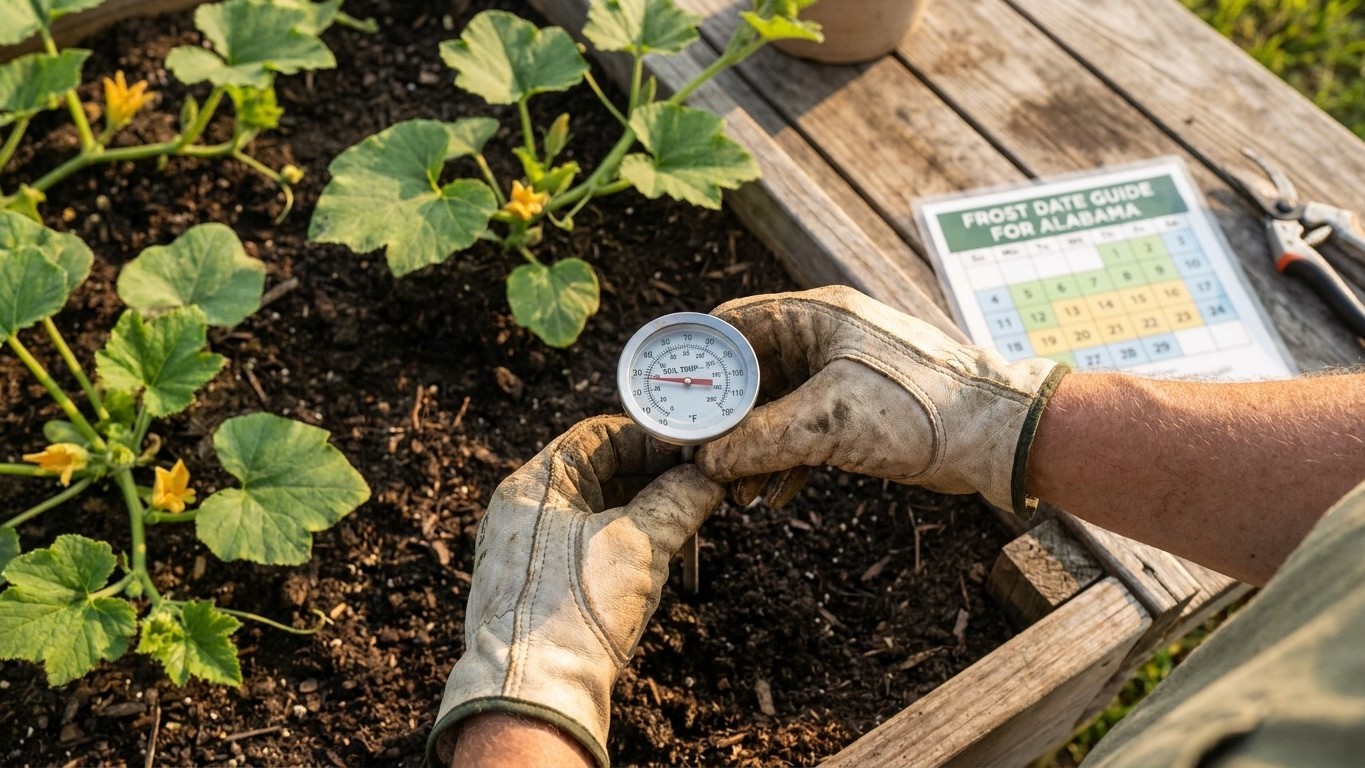
- Check the ground directly with a soil thermometer pushed a few inches into the bed, rather than guessing from the calendar or the air temperature.
- Consider a row cover if an earlier start matters. Covering the bed traps heat and can buy roughly two weeks over bare, uncovered soil, letting you sow sooner than you otherwise could.
- Sow once the soil holds steady at 65 F, and keep the flowering cutoff from the section above in mind. The goal is a sowing date early enough that flowers still have time to open before that late-summer or early-fall deadline, leaving the full 45 to 55 days to Ripen Before Frost.
That last step is the one gardeners skip most often. Sowing the moment soil hits 65 F feels safe, but if that date is too close to the flowering cutoff calculated earlier, there’s no room left for the vine to set and ripen fruit before frost ends the season.
What goes wrong here
Mississippi’s growing season gives pumpkins enough room in most years, but the margin is tighter than it looks once you account for a late soil warm-up in spring and an early frost in some counties come fall. A handful of failures show up again and again, and most trace back to the same arithmetic covered above.
Common failure points
- A late flower that never colors up. Flowers that open after the season’s cutoff simply don’t have 45 to 55 days left before frost. The fruit stays green and hard. The fix is watching bloom dates through late summer and pinching off new flowers that open too late to finish, so the plant’s energy goes into fruit that still has time to ripen.
- A fruit caught by frost before it’s ready. Utah State University Extension recommends harvesting with the stem attached and moving fruit somewhere it won’t freeze once frost threatens, even if the pumpkin hasn’t fully colored. A fruit close to mature but not quite there is usually worth saving over leaving it exposed to a hard freeze.
- A vine that dies back before the skin hardens. Vines weakened by squash bugs or cucumber beetles can collapse weeks before fruit is ready, leaving pumpkins with soft, thin rinds that won’t store. This site’s squash bug page for Mississippi and cucumber beetle page for Mississippi cover monitoring and timing in more detail. Keeping vines healthy through the last stretch of the season matters as much as the sowing date itself.
- Sowing too early into cold soil. Seeds sown before the ground reaches 65 F often rot or germinate unevenly, forcing a second planting that pushes the whole flowering window later, and closer to the fall frost cutoff than it should be.
Common questions
Can I still get pumpkins ready for Halloween in Mississippi?
Working backward from a fall frost between November 7 and November 22, and allowing 45 to 55 days from flowering to harvest, most Mississippi gardens can support pumpkins ready by October if flowers open through September. The tighter the frost window in your county, the earlier flowering needs to happen.
What if my soil never seems to reach 65 F?
Raised beds and row covers both help soil warm faster than open ground. A soil thermometer is the only reliable way to know; guessing from air temperature alone leads to sowing too early.
Is it better to sow too early or too late?
Neither is ideal, but sowing into cold soil below 65 F risks seed rot and uneven germination, which then delays flowering and shortens the ripening window before frost. A short delay to let soil warm properly is usually the safer trade-off.
Does a light frost end the pumpkin season immediately?
The sourced guidance here covers only harvesting before frost and storing fruit where it won’t freeze; it doesn’t break frost into separate light or hard thresholds. Once frost is forecast, the safest move is harvesting mature or near-mature fruit with the stem attached rather than waiting to see how cold it gets.