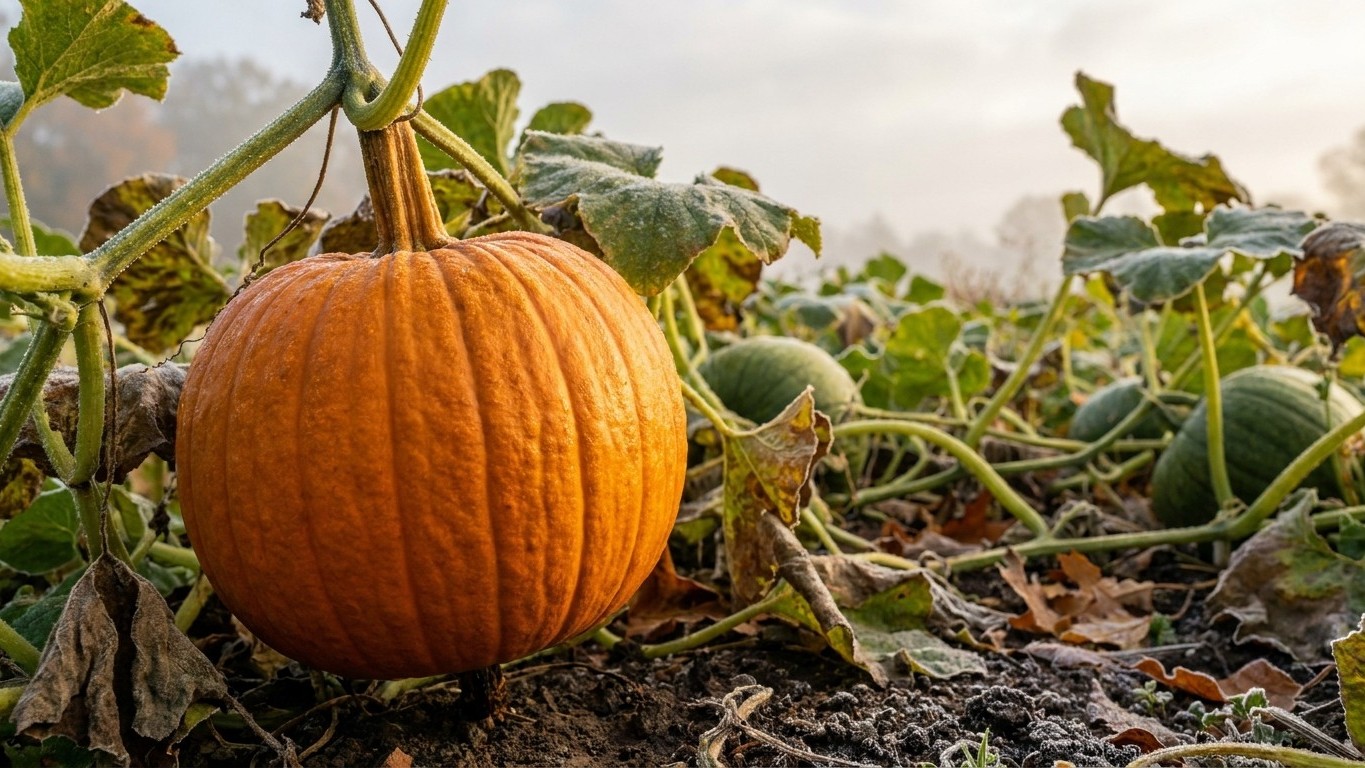

If a pumpkin flower opens after early October in most of Mississippi, the fruit behind it is running out of daylight before frost arrives. Get the flowering date right and the state’s long, warm fall does the rest. Get it wrong, and you’re left with a green pumpkin on a dead vine.
The short answer
Mississippi’s first fall frost, measured at the reference weather station used for the state’s climate normals, lands somewhere between November 7 and November 22. That’s the hard stop, and it’s the question at the heart of Will Pumpkins Ripen Before Frost in Mississippi?. Once a hard frost hits, an unripe pumpkin stops developing color and the vine that was feeding it collapses.
Work backward from that window using the maturation clock: a pumpkin needs 45 to 55 days after flowering, not from the day the seed went in the ground, to finish sizing up and hardening its skin. That distinction matters more than almost anything else on this page. A vine can put out its first female flowers weeks after the seed germinates, depending on the variety and the growing conditions, so counting from the sowing date will always give you a wrong, and dangerously late, answer.
Running the arithmetic against both ends of the frost window gives a range rather than a single date. If you assume the earliest frost date (November 7) and the longer 55-day maturation period, the last flower that can still turn into a ripe pumpkin needs to open by roughly September 13. If you assume the latest frost date (November 22) and the shorter 45-day window, that cutoff stretches to roughly October 8. Somewhere between those two dates is the real deadline for your particular yard, and which end of that range you’re closer to depends on your county, your elevation, and how cautious you want to be.
The safe move is to plan around the earlier end of that window, not the later one. Frost dates published from a single airport station are averages built from decades of data, not a promise for any one fall. A garden a hundred feet lower in a valley, or one sitting away from the moderating effect of pavement and buildings, can see frost show up a week or two before the reference station does. Treat September 13 as the date you’d like your last flowers open by, and treat early October as the absolute edge you don’t want to test.
None of this touches seed packet “days to maturity” numbers, which almost always count from transplant or direct sowing, not from flowering. That’s a different clock, and it’s worth knowing which one you’re reading before you plan your calendar backward from frost.
When to sow here
Sowing too early doesn’t just risk frost damage to seedlings, it wastes weeks. For a detailed breakdown of ideal planting windows by region, see When to Sow Pumpkins in Mississippi. Pumpkin seed sitting in cold soil doesn’t germinate faster because you got it in the ground sooner; it just sits, sometimes rots, and waits for the soil to warm up regardless of what the calendar says. The steps below lay out the sequence in order.
- Let the last spring frost window pass first. Across Mississippi’s reference climate data, that falls between March 6 and March 22. This date matters for seedling survival, but it is not the number that governs sowing.
- Wait for the soil itself to reach 65°F. Soil warms weeks slower than the air above it, especially in a heavy clay ground common across parts of the state, so the point when garden soil is holding a steady 65°F often lands well into spring, past the last frost window by a meaningful stretch rather than a few days.
- Use a soil thermometer, not the calendar, to confirm 65°F. A five-minute check at a two-inch depth in mid-morning is more reliable than any date on a chart.
- Consider row covers if you want to move sooner. Row covers trap daytime heat against the soil and can shave roughly two weeks off the wait for that 65°F mark, letting you sow earlier without gambling on frost.
- Count forward to your flowering window once seed is in. Vines typically put out their first flowers well after germination, and from that flowering date you have your 45 to 55 days to work with before frost closes the door.
- Check the running total against the fall deadline. If your expected flowering date lands after early October, the planting date needs to move earlier, or the harvest expectation needs to shift toward smaller, faster-finishing fruit rather than large show pumpkins.
What goes wrong here
Mississippi’s growing season is generous compared to states further north, but the same length that grows big vines also tempts gardeners into planting later than the flowering math allows. These are the failures that follow.
- A late flower that never colors. This happens when the last flush of female flowers opens in mid-to-late October instead of by early October. The fruit swells but frost or shortening days stop it before the rind hardens or the color develops past a dull green. The remedy is entirely upstream: sow as soon as soil hits 65°F rather than waiting for a “safer” late date, and remove any new flowers that appear after your calculated cutoff so the vine’s energy goes into fruit that still has time to finish.
- A fruit caught by frost. Even a pumpkin that colored up can be sitting in a field when the first freeze rolls through the November 7 to November 22 window. Frost-touched flesh softens and rots fast, even if the outside still looks fine. The remedy is to harvest as soon as the rind is fully colored and resists a fingernail press, stem attached, rather than leaving fruit on the vine “for good measure” once frost is forecast within a few days.
- A vine that dies back before the skin hardens. Powdery mildew, borers, or simple summer exhaustion can kill the foliage weeks before the fruit is actually done curing on the vine. Once the leaves are gone, the fruit stops getting fed and the rind stays soft. Two pests that commonly trigger this collapse early, squash bugs and cucumber beetles, are worth checking for well before the vines look obviously stressed, since damage compounds fast once populations build.
Checking this against your own county
Every date on this page comes from one reference weather station, which is a reasonable starting point but not a guarantee for a particular yard. Frost arrives on its own schedule depending on elevation, tree cover, and how close a garden sits to a river bottom or open field. Before locking in a sowing date, check current frost projections and local planting guidance with the Mississippi State University Extension Service, which tracks conditions at the county level rather than from a single airport gauge. Their county offices can also confirm whether a given fall is running early or late against the normal pattern, which matters more some years than others.
Common questions
Can I still plant pumpkins in Mississippi in July?
It depends entirely on where your soil sits relative to the flowering deadline described above. If a July sowing gives the vine enough time to flower before the early-October cutoff, it can still work, but it leaves little margin for delays caused by pests, disease, or a cool stretch that slows growth.
Does a light frost kill an unripe pumpkin outright?
The figures published for this state cover a general first fall frost window, not a separate light-frost threshold, so no distinct “safe but chilly” temperature is documented here. The safest approach is to treat any frost in the forecast as the end of the growing window for fruit still on the vine.
How do I know when a pumpkin has actually finished ripening?
Full color, a hardened rind that resists a fingernail press, and a dried, woody-looking stem are the practical signs. Harvest with the stem attached and get the fruit somewhere it will not freeze once cut from the vine.
Will row covers alone let me skip waiting for 65°F soil?
No. Row covers speed up how quickly the soil reaches that mark, buying roughly two weeks, but the seed still needs the soil itself to hit 65°F to germinate reliably. Covers shift the timeline; they don’t replace the temperature requirement.