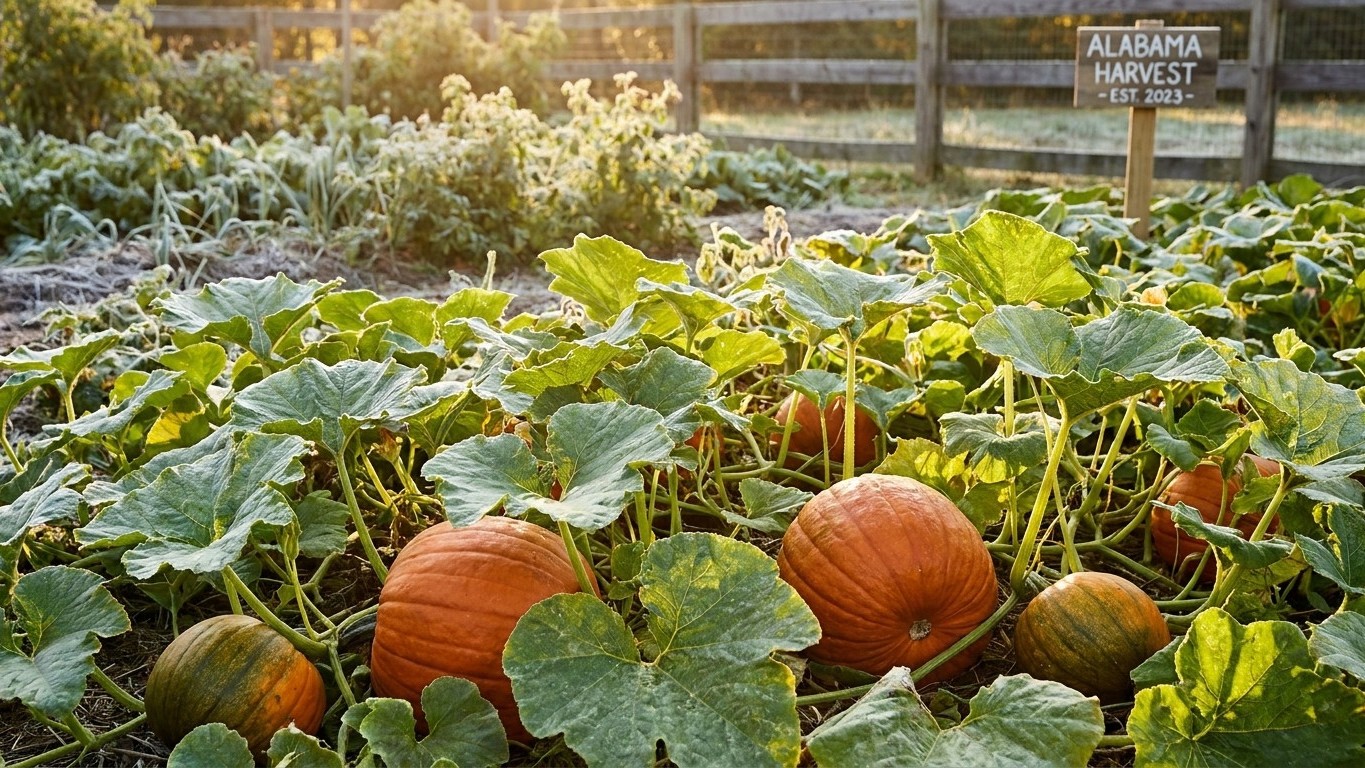

Nevada doesn’t have one answer to this question, it has two. In the low desert around Las Vegas, the first fall frost can hold off until Dec. 8 to Dec. 23, giving a fall pumpkin patch plenty of room to finish coloring. In Reno, Carson City, and anywhere at elevation, frost lands months earlier, and the same 45 to 55 day flower-to-harvest clock runs out of runway fast. Your county’s actual frost date decides which situation applies to you.
The short answer
Start with the one hard number available here: at the Las Vegas airport weather station, the 1991-2020 NOAA Climate Normals put the first fall freeze (32°F) between Dec. 8 and Dec. 23, using the 30 to 70 percent probability band. That’s a late window for a fall frost by national standards, and it shows up because the reading comes from a paved, built-up desert site that holds daytime heat long after dark. It describes that station, not Nevada as a whole.
Still, it’s useful for showing the mechanics of the calculation. Pumpkins need 45 to 55 days after the flower opens, not after the seed goes into the ground, to size up and harden their skin. Count backward from a Dec. 8 frost and the safe window for a last flower closes somewhere in late October to early November, depending on whether the fruit needs the full 55 days or can finish in 45. Count backward from Dec. 23 and that window slides a couple of weeks later. In that particular desert location, a flower opening through most of October generally still has time to become a ripe, stem-hardened pumpkin before real cold sets in.
That math falls apart the moment you leave the valley floor. Reno sits around 4,500 feet, Carson City higher still, and the mountain and high-desert counties between them see their first freeze weeks to months ahead of what the Las Vegas figure suggests. A flower that would ripen comfortably in the low desert can get caught green by an early frost at elevation. Nevada doesn’t have one statewide date to subtract 45 to 55 days from, because its frost calendar swings by months across a few hundred miles of elevation change.
The only version of this calculation worth trusting is a local one. Pull your own county’s frost records or call the nearest University of Nevada Cooperative Extension office, confirm the first fall frost date that actually applies to your yard, and subtract 45 to 55 days from it to find the last date a flower can safely open. Everything below is about hitting that flowering date on schedule.
When to sow here
Sowing date isn’t set by the calendar on the wall, it’s set by the soil under the seed. Pumpkin seed wants a steady 65°F at planting depth, and that threshold arrives well after the last spring frost has passed, not the same week. Here’s how the sequence actually runs.
- Confirm your real frost dates first. The published last spring frost window for the Las Vegas airport (Jan. 7 to Feb. 1) reflects an extreme desert heat-island site and doesn’t apply to Reno, Carson City, or any elevated county. Your county’s Cooperative Extension office can give you the last spring frost date that applies to your garden specifically.
- Let the air warm first. Air temperature climbs past the last frost date fairly quickly, but soil lags behind for weeks afterward. A garden bed can still be too cold for pumpkin seed well after frost risk has technically passed.
- Check the soil directly instead of trusting the outdoor thermometer. Push a soil thermometer to seed depth in the morning for several days in a row. A steady 65°F, held over multiple readings rather than hit once on a warm afternoon, is the actual signal to sow.
- Use a row cover to close the gap. Covering the bed traps daytime heat in the soil and can move your sowing date up by about two weeks compared with waiting for bare, uncovered ground to reach 65°F on its own.
- Count forward from the sowing date, not backward from frost, once seed is in. From there the clock that matters is germination to flowering, then the 45 to 55 days from flower to harvest covered above. Sowing early into cold soil doesn’t save time, it just leaves seed sitting in ground it can rot in before it ever sprouts.
What goes wrong here
Given how wide Nevada’s frost calendar swings from valley floor to mountain county, most of the failures below trace back to the same root cause: someone used a frost date or a soil reading that didn’t match their actual garden.
- A late flower opens past the safe cutoff and the fruit never colors up. It sizes some, then stalls green when the days shorten and cools. The fix is pinching off any new blossoms once you’re inside the 45 to 55 day danger zone before your local frost date, so the plant’s energy goes into fruit already set instead of flowers that can’t finish.
- Frost catches a fruit that’s close but not quite there. Utah State University Extension’s guidance is to harvest with the stem attached before frost hits, even if the pumpkin hasn’t fully hardened. Move it somewhere it won’t freeze rather than leaving it on the vine gambling on a few more warm days, since the source doesn’t publish a storage temperature or keeping time, only that “will not freeze” standard.
- The vine collapses before the skin has a chance to harden, often from pest pressure rather than weather. Squash bugs and cucumber beetles both weaken vines enough to cause early dieback well before frost is even a factor; if that’s the pattern in your patch, the state-specific pages on squash bugs in Nevada and cucumber beetles in Nevada cover identification and control in more detail than fits here.
Common questions
Does the 45 to 55 day count start at seeding or at flowering?
Flowering, not seeding. Counting from the day seed goes into the ground overstates how much season is left, because it skips the weeks a plant spends germinating and growing before it ever sets a bloom. Utah State University Extension ties the 45 to 55 days specifically to the flower opening.
Is the Las Vegas frost date good for the whole state?
No. It comes from a single airport weather station in a paved desert setting that holds heat later into the year than the surrounding region. Reno, Carson City, and any Nevada county at elevation see frost arrive far earlier in fall and linger later in spring, so a county-level check is the only reliable source for your own garden.
Why does 65°F soil matter more than the last frost date?
Because the two don’t move together. Air temperature can climb well past frost risk while soil several inches down is still too cold for pumpkin seed to germinate reliably. Treating the last frost date as a green light to sow skips the actual soil-temperature step Utah State University Extension recommends checking first.
Can I harvest a pumpkin early if frost is coming and it’s not quite ripe?
Yes, and Utah State University Extension recommends doing exactly that. Cut it with the stem attached and move it somewhere it won’t freeze. The source doesn’t specify a storage temperature, humidity level, or how long an underripe fruit will keep, only that guidance to keep it away from freezing conditions.