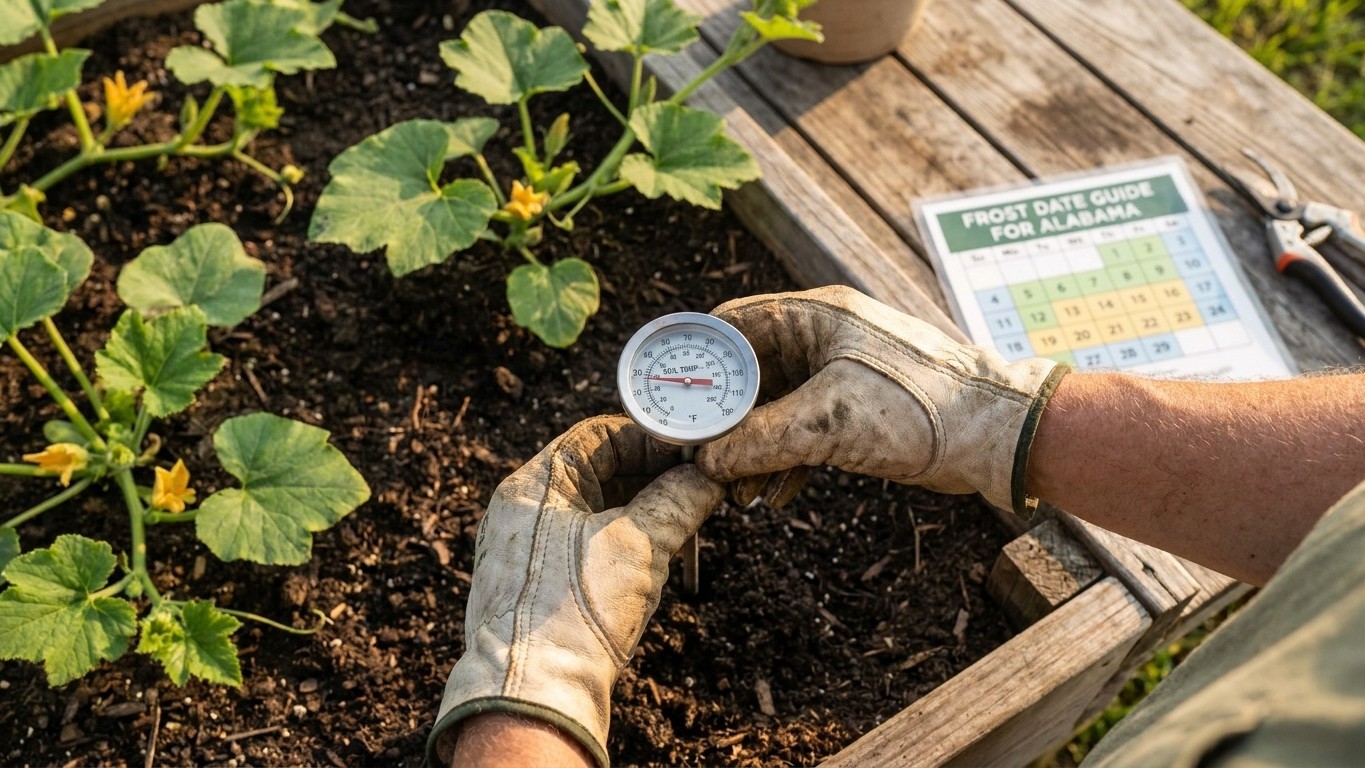

Soil temperature drives the calendar here, not the frost date. In most of New Jersey, that means waiting until soil hits 65°F before dropping seed, typically stretching from late May into early June. Push later than the first half of June and the math for a colored, hard-shelled pumpkin by fall gets tight fast.
The short answer
Start from the back end of the season, because that’s where pumpkins actually fail. At the reference weather station used for New Jersey’s climate normals, the first fall frost lands somewhere between November 4 and November 16. That’s already a wide window, and it’s worth remembering it comes from one airport station, not your backyard. Suburban and rural gardens across the state often see frost arrive one to two weeks earlier than that, more if you’re gardening at elevation or in a low-lying frost pocket.
Pumpkins need 45 to 55 days after flowering, not after sowing, to go from open blossom to a ripe, harvestable fruit. That distinction matters more than almost anything else on this page. A flower that opens in early October isn’t behind by a week or two; if that fruit needs 55 days to mature, it’s asking for late November weather that New Jersey usually doesn’t deliver.
Run the subtraction both ways. Take the earliest frost date, November 4, and subtract the longer maturation window, 55 days, and you land on September 10. Take the latest frost date, November 16, and subtract the shorter window, 45 days, and you land on October 2. So the true safe zone for a flower’s last realistic opening date falls somewhere between September 10 and October 2, depending on which end of each range your particular season and plant land on.
Given that spread, the smart move is to plan around the earlier date, September 10, not the later one. That assumes the worst combination, an early frost paired with a slow-ripening fruit, and it’s the only assumption that doesn’t leave you standing in the garden in late October with a green pumpkin and no more warm days left to fix it. Anything flowering after that date is a gamble, and anything flowering by late August or earlier gives you real cushion.
This is also why variety choice matters more in New Jersey than in states with a longer fall. A pumpkin flowering in mid-September needs every one of those 45 days to work in its favor, with no cold snap, no cloudy stretch, nothing slowing it down. The tighter your flowering date sits against that September 10 to October 2 window, the less room there is for a bad week of weather to undo the whole crop.
When to sow here
The last spring frost at the reference station falls between March 29 and April 6, and it’s tempting to treat that as the green light for sowing. It isn’t. Soil warms far slower than air, and pumpkin seed rots in cold, wet ground before it ever germinates. The 65°F soil threshold that pumpkins actually need shows up weeks after that frost date has come and gone, not on it.
- Don’t sow at the frost date. Late March through early April, the ground is still cold from winter even once the air stops freezing. Sowing now risks seed rot, not an early harvest.
- Check soil, not the thermometer for air. Push a soil thermometer four inches deep at midday over several consecutive days. Pumpkins need that reading to hold at 65°F, and in New Jersey that typically doesn’t happen until several weeks past the last frost, as the garden moves from cool spring into warmer late-spring conditions.
- Use row covers to buy time. Clear plastic or fabric row covers over pre-formed hills trap solar heat and warm the soil faster than open ground. That typically moves your safe sowing date up by about two weeks compared to bare soil left to warm on its own.
- Count forward from sowing to expected flowering. Once seed is in the ground, track the plant toward its first female flowers. Compare that flowering date against the September 10 to October 2 cutoff from the section above, and adjust if the calendar is running tight.
- Consider transplants for a late start. If a wet spring or a delayed soil reading pushes you past your ideal window, starting seed indoors and transplanting out saves calendar days pumpkins otherwise spend germinating in the ground.
What goes wrong here
- A late flower that never colors. When a fruit sets from a flower opening after early October, it often runs out of warm days before it finishes turning orange, even if frost hasn’t hit yet. The remedy is upstream: pinch off new blossoms once you’re past the safe flowering window so the plant’s energy goes into fruit already set, rather than starting more that can’t finish in time.
- A fruit caught by frost before harvest. Even a fruit that’s mostly colored can be damaged by a hard freeze if it’s still on the vine when temperatures drop. Watch the forecast as you approach the November 4 to November 16 window (remembering your yard may see frost a week or two earlier than that), and pick anything close to ripe rather than leaving it exposed overnight.
- A vine that dies back before the skin hardens. Pumpkin skin needs time on an intact vine to cure into a hard, storable shell. Vines weakened or killed early by pests cut that process short. Squash bugs and cucumber beetles are common culprits in New Jersey gardens; both have their own detailed pages on this site covering identification and control, so check those rather than guessing at the cause here.
Common questions
Can I still sow pumpkins in July in New Jersey? Generally no, not for a fall harvest. A July sowing pushes flowering well past the October 2 outer edge of the safe window described above, leaving little to no margin against frost arriving between November 4 and November 16.
What should I do if a pumpkin flowers close to the safe cutoff? Watch it closely rather than assuming the worst. Track how many of the 45 to 55 days since flowering have passed against your local frost expectations, and if frost is forecast before the fruit finishes coloring, harvest early and finish curing off the vine in a sheltered spot rather than risking freeze damage in the field.
How should I store pumpkins after harvest? The available guidance on maturation and harvest timing doesn’t specify a storage temperature or humidity range, only that fruit should be kept somewhere it won’t freeze. Beyond that, this page doesn’t have a sourced figure to offer, so don’t assume a specific number without checking a dedicated storage source.
Does the Jersey Shore differ from inland counties for sowing dates? The frost windows used here come from one reference station, and coastal areas often run a bit milder in fall than inland or higher-elevation counties, which tend to see frost arrive earlier. Check your own county’s typical frost pattern rather than applying the reference dates statewide.